Can you fix a leaking hot tub yourself, or do you need a pro? Short answer: you can find most leaks yourself. Many repairs belong to someone else. In Los Angeles backyards, from Valley patios to hillside decks in Silver Lake, this checklist shows where the line falls.
Use it in order. Confirm the leak first, then sort it into DIY or professional work.
First, confirm it’s actually a leak
Water loss isn’t always a leak. Evaporation can account for more than people expect, especially in dry weather.
- Mark the water line with tape and check it again after a set period with the jets off and the cover on.
- Run the same test with the jets running. Then compare how fast the level drops.
- Note whether the water stops dropping at a certain height, because that often points to a fitting or jet at that level.
- Check the ground around the base for damp soil, standing water, or stained concrete.
- Look for white crust or green staining on the cabinet panels. It can signal a slow drip behind them.
- Rule out splash-out and evaporation by keeping the cover on between uses during the test.
- Write down what you find. A technician can then skip the guesswork.
If the level holds steady with the cover on, you may not have a leak at all. Good news.
Leaks a homeowner can usually handle
Some fixes are simple, low-risk, and need nothing beyond hand tools. They are about seals and fittings you can reach without opening electrical compartments.
- Turn off power at the breaker before you open any cabinet panel, even to look.
- Hand-tighten loose union fittings on either side of the pump and heater.
- Replace a worn or flattened O-ring in a union fitting with a matching one.
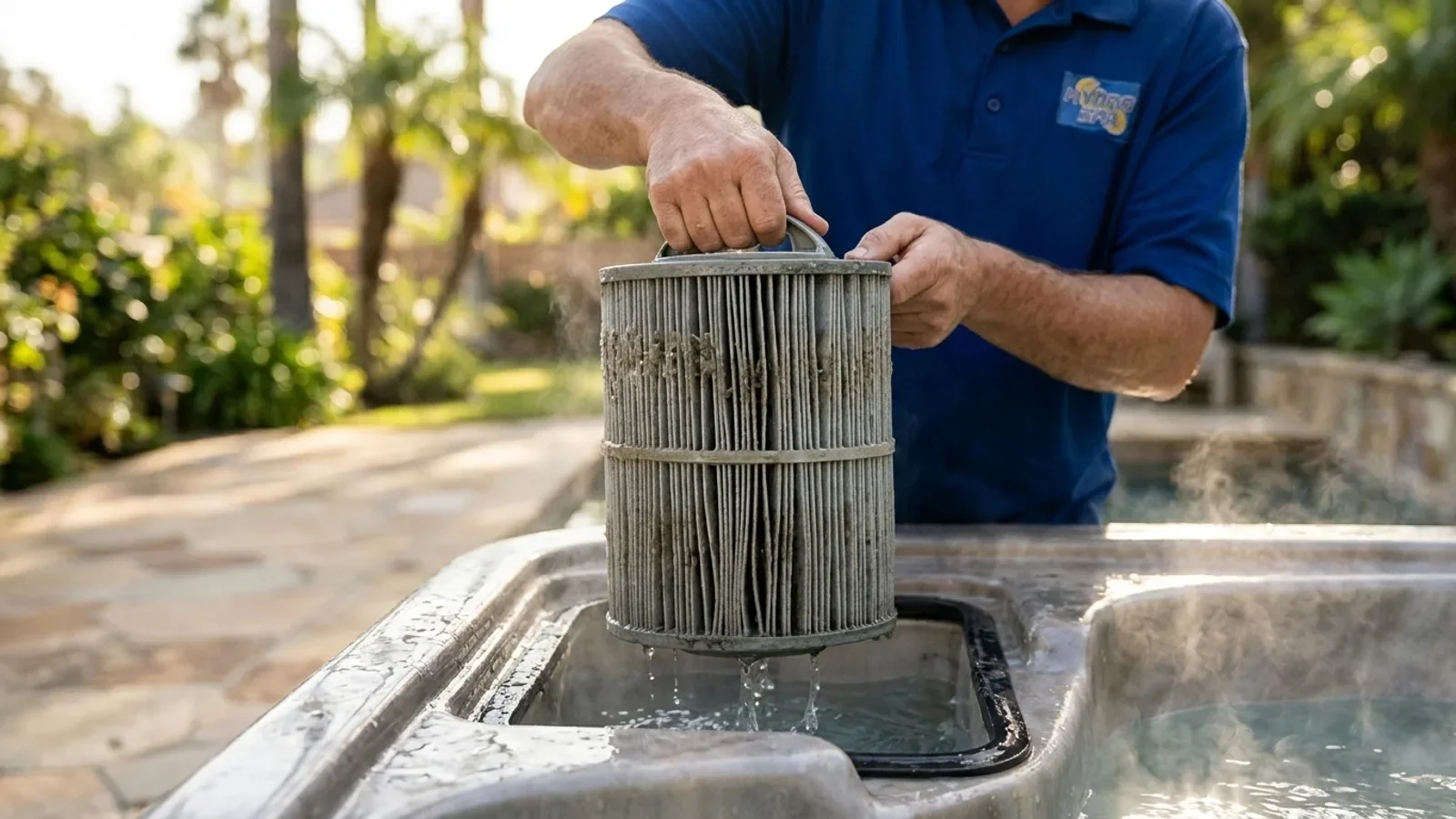
- Reseat the filter housing lid and inspect its gasket for cracks or debris.
- Tighten the drain valve cap. Check that the valve is fully closed.
- Clean grit off the threads of the filter canister so it seals properly.
- Swap out a cracked jet face or loose jet insert you can reach from inside the tub.
- Apply a spa-safe sealant to a tiny hairline gap only where the manufacturer’s manual says it’s appropriate.
- Refill and recheck the water line after each single change so you know what worked.
Change one thing at a time. Otherwise you’ll never know which fix stopped the drip.
Signs it’s time to call a professional
Plenty of leaks hide where a homeowner can’t safely or practically reach. This is where spa troubleshooting from a Los Angeles repair team earns its keep. A surface crack can sit on top of a structural or plumbing problem you can’t see.
- Call for help if water is pooling near the heater, pump motor, or control pack.
- Stop and call if the breaker trips after you notice water inside the cabinet.
- Get a pro to look at any crack in the acrylic shell that grows or flexes when you press on it.
- Hand off leaks that appear to come from under the foam insulation. Locating them often means removing it.
- Ask for a diagnosis if the pump seal is weeping. That job involves the motor assembly.
- Bring in a technician if the heater housing itself is dripping or corroded.
- Request an inspection when the leak returns after you’ve already replaced O-rings and tightened fittings.
- Leave pressure testing of buried or hidden plumbing lines to someone with the right equipment.
- Call when you can’t find the source after a full round of water-line tests.
Water and electricity share that cabinet. If the leak is anywhere near wiring, it’s a pro job, full stop. Our guide on why a spa keeps tripping its breaker covers how moisture and power problems often show up together.
What to avoid while you wait for help
- Avoid running the heater with a low water level. It can damage the element.
- Skip household glues and general-purpose caulks that aren’t rated for spa water and chemicals.
- Don’t cut into foam insulation blindly hunting for a pipe.
- Avoid opening the control box or touching any wiring.
- Don’t keep topping off a fast leak for weeks. Hidden water can damage the cabinet and the base underneath.
- Keep kids and pets out of the area if water is near any electrical equipment.
- Leave the cover on to limit evaporation and keep your test results accurate.
A quick shutoff and a phone call often save more than a weekend of trial and error.
Los Angeles-specific considerations
Leaks behave a little differently here. Local conditions are worth factoring into your DIY-or-pro decision.
- Factor in our hard water, which tends to leave scale on fittings and seals. It can make old O-rings stiff and leak-prone.
- Expect faster evaporation during dry Santa Ana wind events. Run your water-line test on a calm day for a cleaner read.
- Check cabinet panels and shell edges on tubs that sit in strong sun all day, since UV exposure can age materials over time.
- Inspect the base on hillside and sloped lots, where uneven settling can stress the shell and plumbing.
- Look closely at tubs set on older patios or wood decks common in established neighborhoods. A shifting surface can pull fittings loose.
- Recheck fittings after any noticeable earth tremor, as movement can loosen connections.
- Plan around cooler late-fall and winter evenings, when most Angelenos use their spas more. A heater-area leak becomes harder to live with.
- Check your city and HOA rules before any repair that changes electrical or plumbing. Requirements vary by area, and a licensed pro can advise.
None of this means LA tubs are fragile. It means local wear patterns are predictable, and that helps diagnosis.
How to hand off to a pro without wasting time
- Share your water-line test results, including how much it dropped with jets on and off.
- Take photos of any wet spots, cracks, or crusty buildup inside the cabinet.
- Note the make, model, and approximate age of the tub.
- List every DIY fix you already tried.
- Clear a path to the cabinet panels so the technician can get to work quickly.
- Ask how the repair will be tested before the tub is refilled.
- Compare quotes by scope of work, not just the total. Know what each one covers.
Not sure who to trust with the job? Our checklist on picking a spa repair technician in LA walks through the questions worth asking. When you’re ready, you can book a leak diagnosis with our repair crew and we’ll trace the source before recommending a fix.
Frequently Asked Questions
How do I know if my hot tub is leaking or just evaporating?
Mark the water line, keep the cover on, and check it after a set period. If the level drops noticeably with the cover on and jets off, a leak is likely. If it barely moves, evaporation is the more probable cause.
Is it safe to fix a hot tub leak myself?
Simple jobs like tightening union fittings, replacing O-rings, or reseating a filter lid are usually reasonable with the power off at the breaker. Anything near the heater, pump motor, control pack, or wiring should go to a licensed professional.
Can a small crack in the shell be patched at home?
A stable hairline flaw may be manageable if your manufacturer’s manual allows it. Cracks that grow, flex, or keep leaking can signal a structural issue. It’s worth having a local hot tub repair specialist take a look.
The takeaway: find the leak yourself, fix only the easy seals, and call a pro for anything near power or structure. If you’re in the Los Angeles area, Hydro-Spa Outlet is happy to help you sort it out.