The tech packs up, the jets kick on, and for the first time in days you hear that steady hum instead of silence or a fault beep. The water looks clear. It feels like the job is done. For Los Angeles spa owners, though, the hours and weeks after a pump or heater replacement are when good hot tub care after repair matters most, because the water you run through that new equipment decides how long it lasts.
This guide walks through the steps we recommend at Hydro-Spa Outlet after a repair anywhere in the LA area, from Valley homes to Westside patios. None of it requires tools beyond a test kit and a little patience. If a code comes back after you’ve balanced everything, our guide to diagnosing jacuzzi error codes in Los Angeles is the next place to look.
Before you start
Gather these before you touch the chemistry. Having everything within reach keeps you from leaving the cover off longer than needed.
- A fresh test kit or test strips (check the expiration date, since old reagents read badly)
- Alkalinity increaser and pH increaser/decreaser suited to spas
- Calcium hardness increaser, and a scale or metal sequestrant
- Your chosen sanitizer (chlorine or bromine), used consistently
- A clean or new filter cartridge
- A pre-filter or hose filter for any refill water
- Your repair paperwork, so you know which parts were replaced
One rule covers all of it. Never mix chemicals together, and add them one at a time with the pumps running.
Step 1: Confirm the spa is running normally
Before testing water, watch the spa through one full heating and filtration cycle. Listen for a smooth pump sound with no grinding or rattling. Check that the display shows no codes and the water is climbing toward your set temperature. Look under the cabinet edge and around the equipment bay for drips. If anything looks off, stop here and call us rather than adjusting chemistry around a mechanical problem. Water balance can’t fix a loose fitting.
Step 2: Test the water and write the numbers down
Test total alkalinity, pH, sanitizer level, and calcium hardness. Write every reading down with the date. A short log is the single most useful tool you’ll have if a heater acts up later, because it shows a technician what the equipment has been living in. If the spa was drained and refilled during the repair, this is your true starting point. If it wasn’t, expect the numbers to have drifted while the tub sat idle.
Step 3: Adjust total alkalinity first
Alkalinity acts as a buffer that holds pH steady. Fix it first. If you chase pH while alkalinity is off, pH will keep bouncing and you’ll burn through chemicals. Follow the product label for dosing based on your spa’s gallon capacity, add a partial dose, circulate with the jets on and the cover open for a short while, then retest. Small corrections beat one big dump. Most spa manufacturers publish a recommended alkalinity range in the owner’s manual, so use that as your target.
Step 4: Bring pH into range
Once alkalinity holds, set pH. Low pH makes water aggressive, which can corrode heater elements, pump seals, and metal fittings. High pH pushes calcium out of solution so it coats the inside of the heater. Neither is good for brand-new parts. Adjust in small steps, run the jets, and retest after circulation. Then leave it alone for a bit. pH often settles on its own once the buffer is right.
Step 5: Manage calcium hardness for LA water
This step deserves the most attention in Los Angeles, so we cover the local reasons in detail below. In short, keep calcium hardness within your manufacturer’s range and add a scale or metal sequestrant on a regular schedule. If your heater was replaced because of scale, this step is how you avoid repeating that repair. Our article on how scale builds up on heater elements explains what that buildup does inside the heater housing.
Step 6: Set your sanitizer and keep it steady
Bring chlorine or bromine to the level your spa’s manual recommends, then hold it there. Big swings, especially heavy shocking right after a repair, are hard on new seals and gaskets. Avoid switching sanitizer types without draining first, since mixing chlorine and bromine systems causes trouble. Shock after heavy use, not on a fixed whim. And keep the cover cracked briefly after shocking so gas can vent instead of sitting against the underside and the equipment.
Step 7: Clean or replace the filter
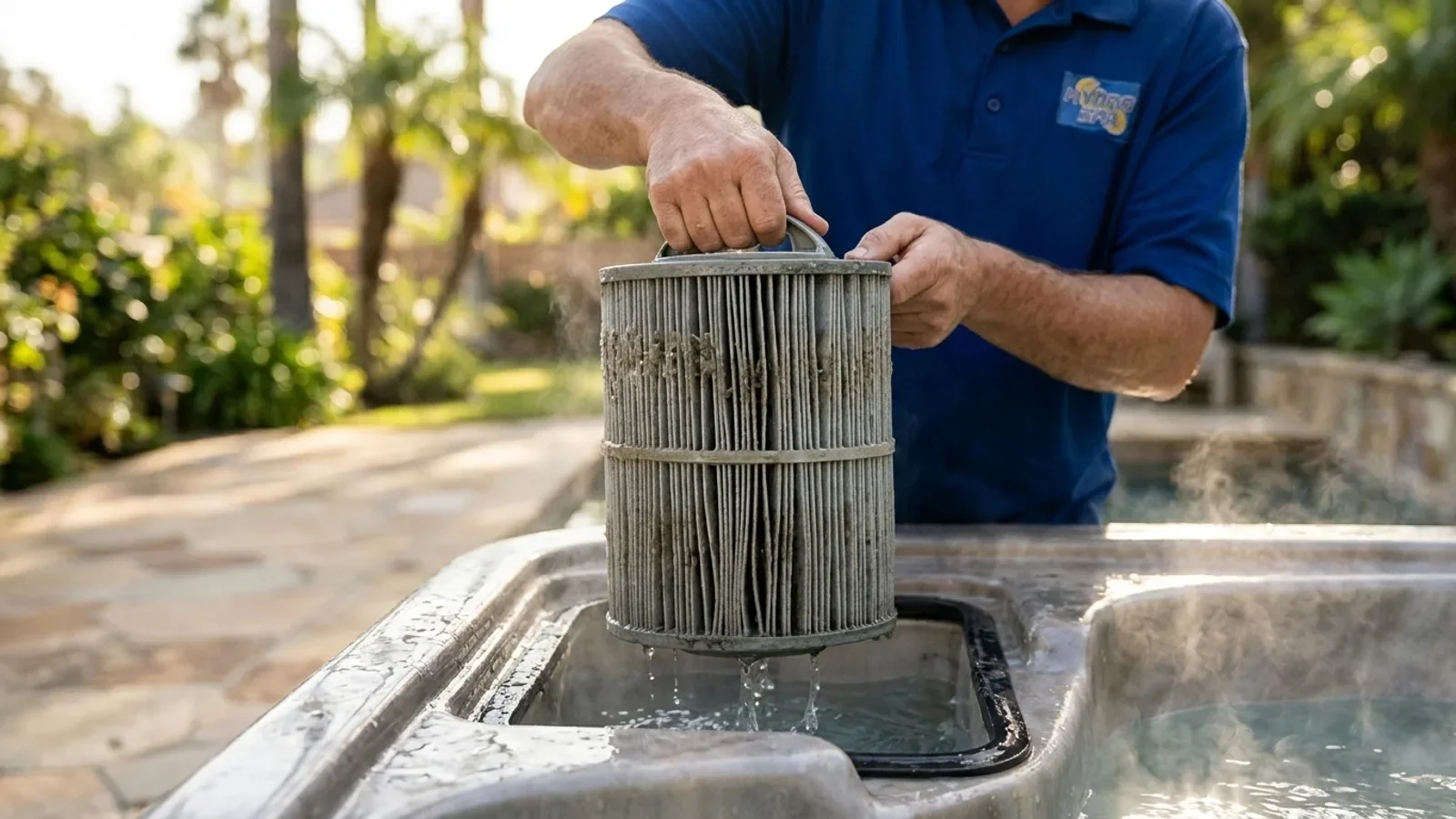
A clogged filter makes a new pump work harder and can starve a heater of flow, which is a common trigger for flow and overheat codes. Rinse the cartridge, and if it’s old, replace it. Debris knocked loose during the repair often ends up here, so the first rinse after service tends to be dirtier than usual. Rinse it again a week later. If you do see a flow-related fault, our breakdown of why FL errors show up on a jacuzzi covers the usual suspects.
Step 8: Build a weekly routine for the first month
New equipment settles in over the first few weeks. Test two or three times a week during that stretch and log each result. After a month of stable readings, most households can drop to a weekly check. Keep an eye on water level too, because a low level can pull air into the pump. If the numbers keep drifting no matter what you do, that pattern tells us something. Bring the log when you call.
Why LA water makes post-repair care harder
Los Angeles has a specific set of conditions that work against spa equipment, and they’re worth knowing.
First, the tap water. Much of the region’s supply comes from imported sources, including the Colorado River, which is known for carrying a high mineral load. Households across the LA basin are familiar with white crust on faucets and showerheads. Put that water in a tub you heat to around a hundred degrees and evaporate constantly, and the minerals concentrate. That’s where heater scale comes from. Water character also varies by neighborhood and supplier, so a spa in the San Fernando Valley may not behave like one near the coast.
Second, evaporation. Long dry stretches and warm Santa Ana wind events pull water out of an uncovered spa quickly. Every top-off adds more minerals. That’s why the sequestrant and a hose pre-filter matter so much here.
Third, mid-autumn timing. Around this time of year, LA evenings cool off and people use their spas more, while daytime can still turn hot and dry. More soaking means more sanitizer demand and more top-offs at exactly the point when a new heater is working its hardest. Fast temperature swings between afternoon and night also make the heater cycle more often.
Finally, many LA homes are older properties with spas added later on existing patios or circuits. Electrical quirks can look like water or equipment problems. If your breaker trips after a repair, read our notes on what a tripping breaker usually means and leave the electrical work to a licensed electrician.
When to call a professional in Los Angeles
Balancing water is homeowner territory. Some things aren’t. Call us if you notice any of these:
- An error code returns after the water tests balanced
- Water won’t heat, or overheats, even with a clean filter
- Leaks, damp insulation, or puddles near the equipment bay
- Grinding, screeching, or humming from the pump without water movement
- Readings that won’t stay put despite careful dosing
- A tripped breaker or any burning smell
Never open the control pack or work on wiring yourself. Our team handles hot tub repair across Los Angeles and ongoing maintenance, including drain and cleaning visits that reset your water to a clean starting point. If you’re unsure what to tell us, our list of questions we ask during a spa diagnostic helps you prepare. You can also work through our Los Angeles jacuzzi troubleshooting steps first to narrow things down.
Frequently Asked Questions
How soon can I use my hot tub after a repair?
Usually once the water has reached temperature and your sanitizer and pH test within range. If the spa was drained and refilled, give the chemistry time to circulate and settle before soaking.
Should I drain the hot tub after a pump or heater replacement?
Not always. If the water is old, cloudy, or hard to balance, starting fresh is often easier, and our drain and cleaning service can handle that for you.
Can bad water chemistry damage a new heater?
Yes, it can shorten its life. Low pH can corrode metal parts, while high pH and high calcium can leave scale that makes the heater work harder.
How often should I test the water after a repair?
Two or three times a week for the first month is a sensible routine. Once readings stay stable, a weekly check usually works for most households.
Keep the new parts working
A repair fixes the hardware. The water decides how long that fix holds up. Test, adjust alkalinity before pH, watch calcium closely in LA’s mineral-heavy water, keep the filter clean, and log what you see. It’s a small habit. If anything still seems wrong, reach out to Hydro-Spa Outlet and we’ll take a look, or set up regular maintenance so balancing stays off your list.