You lift the cover after dinner, expecting steam, and the water is barely warm. Or the pump makes a grinding hum it never made before. If you own a spa anywhere in Los Angeles, from a hillside deck in Silver Lake to a patio in the Valley, those small changes are usually the first hint that something needs attention. This guide walks through the warning signs we see most often in hot tub repair across Los Angeles, what each one usually means, and when it’s time to call a technician.
Why small symptoms matter more than you think
Most spa failures don’t happen all at once. They build. A slightly weak jet, a puddle that shows up only after the pump runs, a heater that takes longer each week to reach temperature. Each one is easy to shrug off.
The trouble is that hot tub systems are connected. A circulation problem can strain the heater. A slow leak can let the water level drop below the skimmer, which starves the pump of water. One issue quietly creates the next.
Catching problems early usually means a simpler repair. It also means less downtime, which matters when the tub is part of your evening routine. At Hydro-Spa Outlet, our technicians handle hot tub repair for Los Angeles homeowners every week, and the most manageable jobs are almost always the ones caught at the first symptom.
Hot tub heater issues: when the water won’t stay warm
Heating complaints are the most common reason people call us. They’re also among the most varied, because several different parts can cause the same symptom.
What you’ll notice
- Water takes far longer than usual to reach your set temperature.
- The temperature drifts down overnight even with the cover on.
- The control panel shows a heater, flow or high-limit error code.
- The spa heats unevenly or the heater cycles on and off rapidly.
What’s often behind it
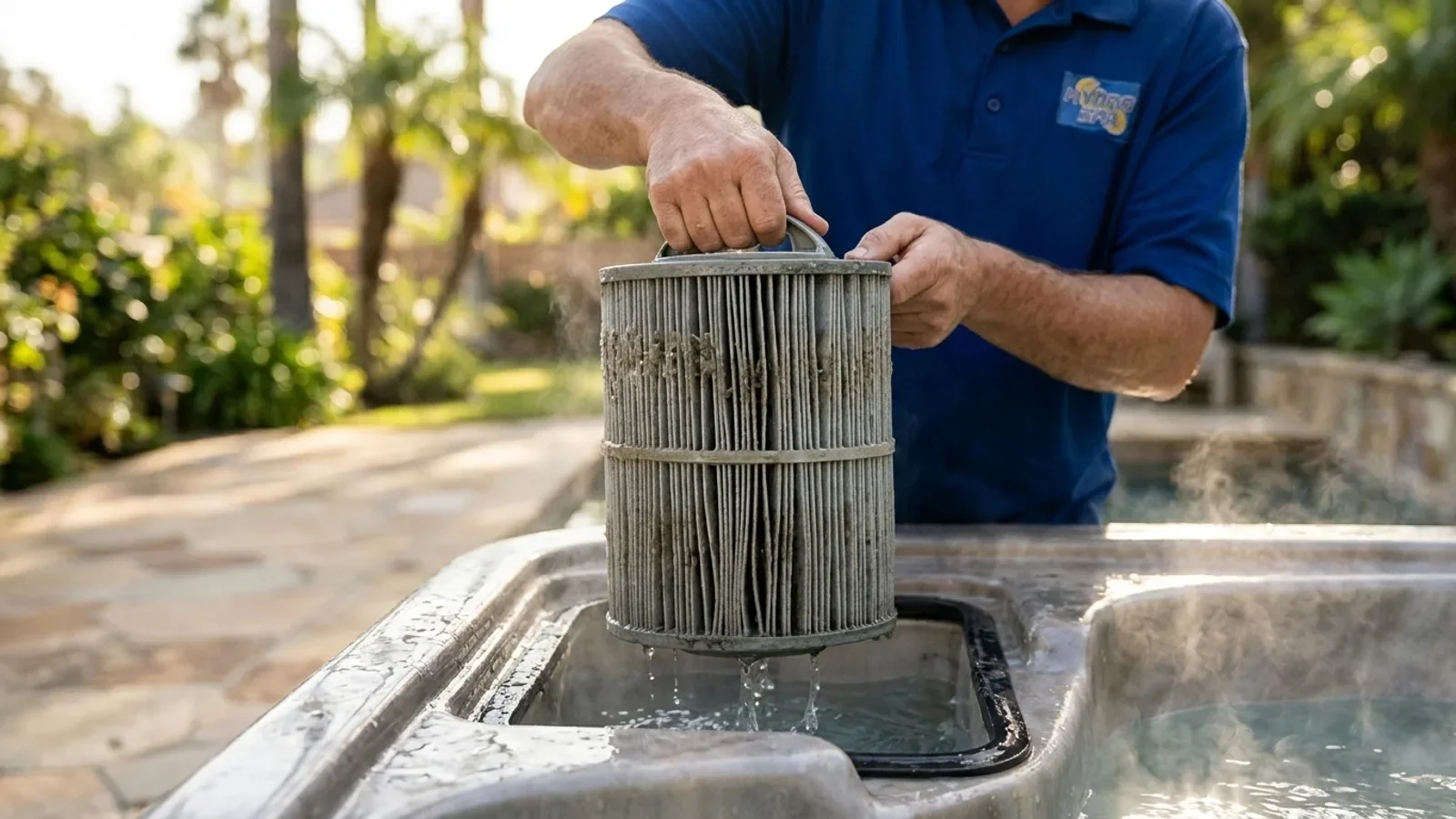
Sometimes the cause is simple. A dirty filter restricts water flow, and many spa controls will shut the heater off to protect it when flow drops. Replacing or cleaning the filter is safe homeowner maintenance, and it’s worth checking first.
If a clean filter doesn’t fix it, the problem may be a failing heater element, a faulty pressure or flow switch, a bad temperature sensor, or a control board issue. These involve high-voltage components. That’s work for a trained technician, not a weekend project.
Worn or waterlogged covers also play a role. A cover that has absorbed water gets heavy and stops insulating well, so the heater runs constantly trying to keep up.
Leaking hot tub repair: finding where the water is going
Every spa loses some water to evaporation, especially during warm, dry stretches. A leak is different. If you’re topping off noticeably more often than usual, or you see damp spots, staining or puddles under the cabinet, something is escaping.
Common leak sources include:
- Loose or cracked unions at the pump and heater
- Worn pump seals
- Cracked fittings or jet bodies
- Plumbing joints that have shifted over time
- Damage to the shell itself, which is less common but serious
Leaks are tricky because water travels. A drip that appears on one side of the cabinet can start several feet away. Our team traces the source before replacing anything, so you’re not paying for parts that weren’t the problem. If you’re weighing whether to tackle a leak yourself, our breakdown of when a leak is safe to handle yourself and when it isn’t covers the tradeoffs honestly.
One more point. Water near electrical components is a safety concern. If you see water pooling around the equipment bay, turn the spa off at the breaker and call a professional.
Strange noises, weak jets and other jacuzzi repair signs
Many people search for "jacuzzi repair" when they mean any jetted spa, and the warning signs are the same regardless of brand. Here are the ones worth taking seriously.
Sounds that weren’t there before
A healthy pump has a steady hum. Grinding, screeching or rattling often points to worn motor bearings. A loud buzzing with no water movement can mean a seized pump or a failing capacitor. Gurgling and sputtering often means air is getting into the lines, sometimes because the water level is low.
Jets that lose their punch
Weak jets can come from something as simple as a clogged filter or closed diverter valves. They can also signal a failing pump, an airlock or a blockage in the plumbing. If cleaning the filter and opening the valves doesn’t restore pressure, it’s time for a diagnosis.
Cloudy water that won’t clear
Persistent cloudiness, foam or odor despite balanced chemistry can mean poor circulation or filtration. Sometimes the fix is a thorough drain and refill. Sometimes it points back to a pump or ozonator problem. Our guide to keeping a spa in shape after service explains the routine care that helps water stay clear between visits.
Electrical warning signs you shouldn’t ignore
Electrical problems need respect. A spa combines water and high-voltage equipment, so symptoms in this category are not DIY territory.

Watch for:
- The GFCI breaker tripping repeatedly
- The control panel going blank or flickering
- Burning smells near the equipment bay
- Lights or pumps working intermittently
A tripping breaker is actually doing its job. It’s telling you that something, often moisture in a component or a failing part, is causing a fault. Resetting it over and over without finding the cause isn’t a fix. We go deeper on this in what a tripping spa breaker usually means.
If you smell burning or see scorch marks, shut the power off at the breaker and leave it off. Then call a licensed professional.
What Los Angeles conditions do to backyard spas
Los Angeles is easy on hot tubs in some ways and hard on them in others. Knowing the local factors helps explain why certain problems show up here more than elsewhere.
Sun and UV exposure. Strong sun most of the year breaks down cover vinyl, cabinet finishes and exposed plastic fittings. A cover that has faded and cracked lets heat escape and water in, which puts extra load on the heater.
Hard water. Much of the Los Angeles area has hard water, which leaves mineral scale on heater elements, jets and surfaces. Scale on a heater element makes it work harder and can shorten its life. Regular draining and cleaning helps keep buildup in check.
Dry heat and Santa Ana winds. Hot, dry wind events speed up evaporation and blow dust, leaves and ash into the water. That debris clogs filters fast. A sudden drop in water level from evaporation can also leave the pump pulling air.
Cool winter nights. Daytime temperatures stay mild through much of the cooler season, but nights can get chilly, especially in the Valley, the foothills and canyon neighborhoods. That’s when weak heaters and tired covers show their limits. A spa that kept up fine in summer may struggle once evenings cool down.
Tight lots and hillside installs. Many LA backyards are compact, sloped or tucked behind narrow side yards. Equipment bays wedged against fences or retaining walls can trap heat and moisture, and limited access makes regular inspection easy to skip. Settling on hillside or uneven pads can also stress plumbing over time.
Local requirements for electrical work and spa placement vary by city across the region. If repairs involve wiring or relocation, check with your local building department or a licensed pro about what applies to your property.
Spa troubleshooting in Los Angeles: symptom-by-symptom guide
Use this table as a quick reference. The "safe first check" column covers light maintenance only. Anything beyond that belongs with a technician.
| Symptom | Common causes | Safe first check | Call a pro when |
|---|---|---|---|
| Water won’t heat | Dirty filter, flow switch, heater element, sensor, control board | Clean or replace the filter, confirm set temperature | Clean filter doesn’t help or an error code appears |
| Water level dropping fast | Leaking unions, pump seals, fittings, plumbing joints | Look for damp spots around the cabinet base | You see water near equipment or loss continues |
| Grinding or screeching pump | Worn bearings, failing motor | Check that the water level is above the skimmer | The noise persists with proper water level |
| Weak jets | Clogged filter, closed valves, airlock, failing pump | Clean filter, open diverter and air valves | Pressure stays low after basic checks |
| Breaker keeps tripping | Moisture in components, failing heater or pump, wiring fault | None beyond leaving the power off | Immediately, if it trips more than once |
| Cloudy or foamy water | Chemistry, poor filtration, circulation problems | Test and balance water, clean filter | It won’t clear after a drain and refill |
Choosing who works on your spa
The right technician diagnoses before replacing parts. That’s the single biggest difference you’ll notice.
When you call a repair service, it’s reasonable to ask how they diagnose problems, whether they work on your type of spa, and how they explain findings before starting work. Cost depends mostly on what’s failing, how accessible the equipment is, and whether parts need to be ordered. A clear explanation up front helps you compare options fairly. For a fuller checklist, see our guide on questions to ask a spa repair technician.
Hydro-Spa Outlet works across Los Angeles on repair, maintenance, drain and cleaning service, installations and moves. Because we handle the whole lifecycle of a spa, we can also tell you plainly when a repair makes sense and when an older tub may be nearing the end of its useful life. If your spa is showing any of the signs above, reach out through our contact page to schedule a diagnostic visit.
Frequently Asked Questions
How do I know if my hot tub needs repair or just maintenance?
Start with the basics: clean the filter, check the water level and balance the chemistry. If the problem continues after that, such as weak heating, odd noises or a tripping breaker, it likely needs a technician’s diagnosis.
Is it safe to keep using a hot tub that’s leaking?
A small, slow leak away from equipment may not be an immediate hazard, but it can worsen and lower the water level enough to strain the pump. If water is near electrical components, turn the power off at the breaker and call a professional.
Why does my hot tub struggle to heat in winter in Los Angeles?
Cooler nights expose weaknesses that summer hides, like a worn cover, scale on the heater element or a failing heater part. A technician can check which one is the cause.
Do you repair jacuzzi-brand spas and other brands?
Many people use "jacuzzi" to mean any jetted hot tub. Contact us with your spa’s make and model and we’ll let you know how we can help.
Can hard water damage my hot tub?
Hard water can leave mineral scale on heater elements, jets and surfaces, which may reduce efficiency over time. Regular draining, cleaning and balanced chemistry help limit buildup.
Get your spa back to normal
A hot tub usually tells you when something’s wrong. Lukewarm water, a new noise, a puddle that wasn’t there last week. Paying attention early keeps repairs simpler. If you’ve noticed any of these signs at your Los Angeles home, contact Hydro-Spa Outlet to book a visit and get a clear answer on what’s going on.