A repaired spa that gets ignored for a few weeks rarely fails all at once. It drifts. The water chemistry slides out of range, scale starts coating the brand-new heater element, a seal that was just reseated dries out, and by the time anyone notices, the tub is back where it started. That pattern shows up in backyards across Los Angeles, from hillside homes in Eagle Rock to tight patios in Culver City. Good hot tub care after repairs in Los Angeles is mostly about the first month, and it’s simpler than most owners expect.
Picture the usual scene. The technician packs up, the jets are running, the water is warming, and you finally get your evening soak back. Then life happens. The cover stays off a little too long on a windy night, nobody tests the water for ten days, and a filter that looked fine gets left in place. None of that feels urgent. Together, it’s exactly how a fresh repair gets undone.
The problem nobody mentions when the repair is done
A repair fixes a part. It doesn’t reset the whole system.
When we replace a heater element, a pump seal, a jet fitting or a circulation pump, the rest of the spa is still the same tub it was the day before. The plumbing may still hold biofilm. The filter may still be loaded with debris. The water, if it wasn’t drained, may still carry the dissolved minerals and sanitizer byproducts that helped cause the trouble in the first place.
That’s why the days right after service matter so much. A new component is often more sensitive to bad water than a worn one, because it hasn’t built up any protective scale or residue yet. Corrosive water, water that’s too acidic, eats at fresh metal. Scaling water, too alkaline or too hard, starts laying down deposits on a clean heating surface immediately. Either way, you’re shortening the life of the part you just paid to replace.
Owners also tend to relax after a repair. It’s understandable. The tub works again, so the problem feels solved. But this is the window where a little attention pays off most.
Why Los Angeles water and weather make aftercare harder
This is the part that’s specific to where you live, and it’s worth understanding.
Much of Los Angeles is served by imported water that runs hard, meaning it carries a lot of dissolved calcium and magnesium. Hard water is the main reason we see scale on heater elements, crusty jet faces and cloudy water in LA spas. When you refill a tub after a repair, you’re starting over with a fresh load of those minerals, and the heater is the first place they want to settle. Owners who skip the calcium hardness test after a refill are often the ones who call us later about hot tub heater issues that look like a second failure but are really scale buildup.
Then there’s the climate. Our dry, sunny weather means fast evaporation, especially when the cover is left open. Evaporation leaves minerals behind and concentrates them, so water that tested fine on day one can read very differently a week later. Strong sun also breaks down chlorine quickly in an uncovered tub. And around this time of year, the Santa Ana winds can blow dust, ash and leaf debris straight into an open spa, loading the filter and throwing off the chemistry overnight.
Housing plays a role too. A lot of Los Angeles homes are older, with electrical panels and backyard circuits that weren’t originally planned for a spa. After certain repairs, especially anything involving the heater or pump, an older circuit can show its limits. If your breaker starts tripping after service, read our walkthrough on why a spa breaker keeps tripping in LA homes before resetting it over and over, and call a licensed professional rather than working on the panel yourself.
Cooler evenings change things as well. Late fall into winter is when most Angelenos actually use their tubs the most, so the heater runs longer and harder. That’s good news for enjoyment and a real test for a newly serviced heating system.
What proper aftercare actually looks like
Start with the refill, if the repair required a drain. Use a hose-end pre-filter if you have one, since it can catch some sediment and metals before they reach the tub. Fill through the filter well rather than straight into the footwell, which helps push air out of the lines and reduces the chance of an airlock around the new parts.
Then balance the water in the right order. Total alkalinity first, because it steadies pH. Then pH. Then calcium hardness, which in LA usually means managing water that’s already on the hard side rather than adding more. Sanitizer comes last. A scale-control or metal-sequestering product is worth considering on a fresh fill here, given how mineral-heavy local water can be. Follow the product label and your spa manufacturer’s guidance on amounts.
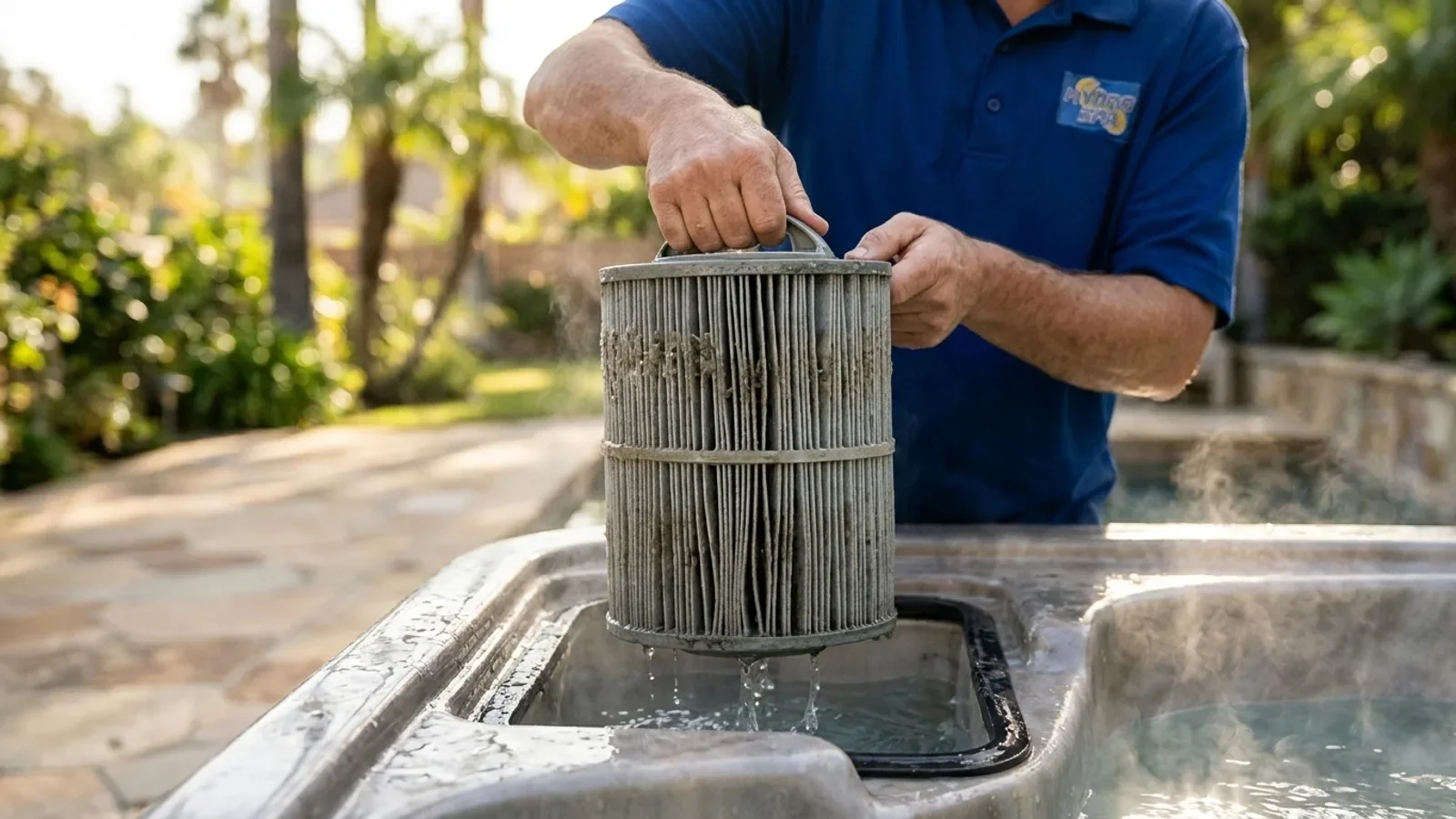
Clean or swap the filter. This is the easiest, highest-value step after any repair. A clogged filter restricts flow, and restricted flow makes heaters run hot and pumps work harder. If your cartridge is old or the pleats look matted, replacing it is usually smarter than trying to rinse it back to life.
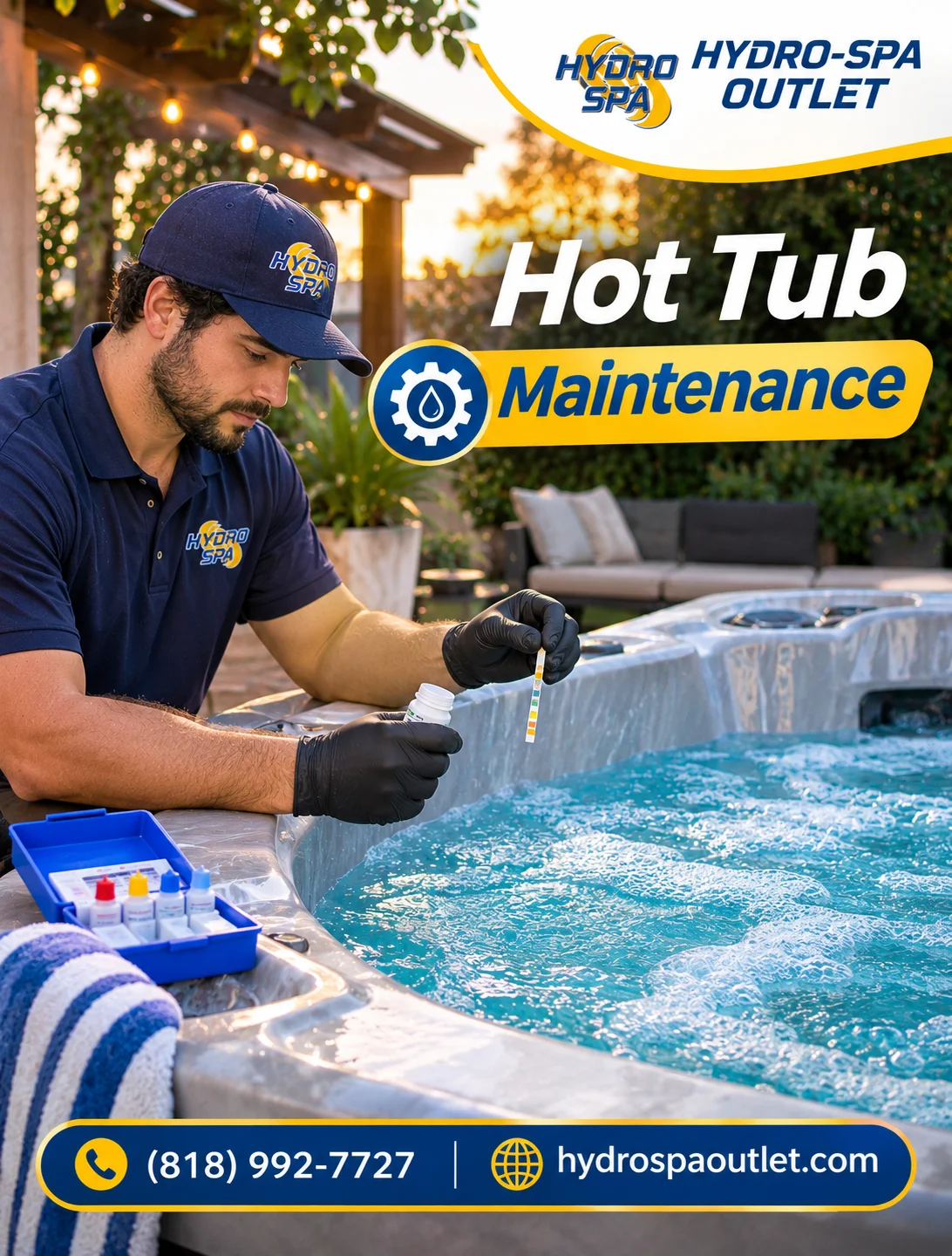
Test more often for the first couple of weeks. Every day or two is reasonable at the start, then you can ease back to your normal routine once readings hold steady. Write the numbers down. A simple log makes patterns obvious, and it’s very helpful if a technician ever needs to troubleshoot.
Keep the cover on whenever the tub isn’t in use. In our sun and wind, that one habit protects your sanitizer, cuts evaporation, keeps debris out and reduces how hard the heater has to work on cool nights. If your cover is waterlogged, cracked or no longer seals at the edges, it’s worth replacing.
If you’d rather not juggle all of this, our team handles routine ongoing spa maintenance visits so the chemistry and filters stay on track after a repair.
Watching the repaired part without worrying about it
You don’t need to hover. You just need to know what normal looks like.
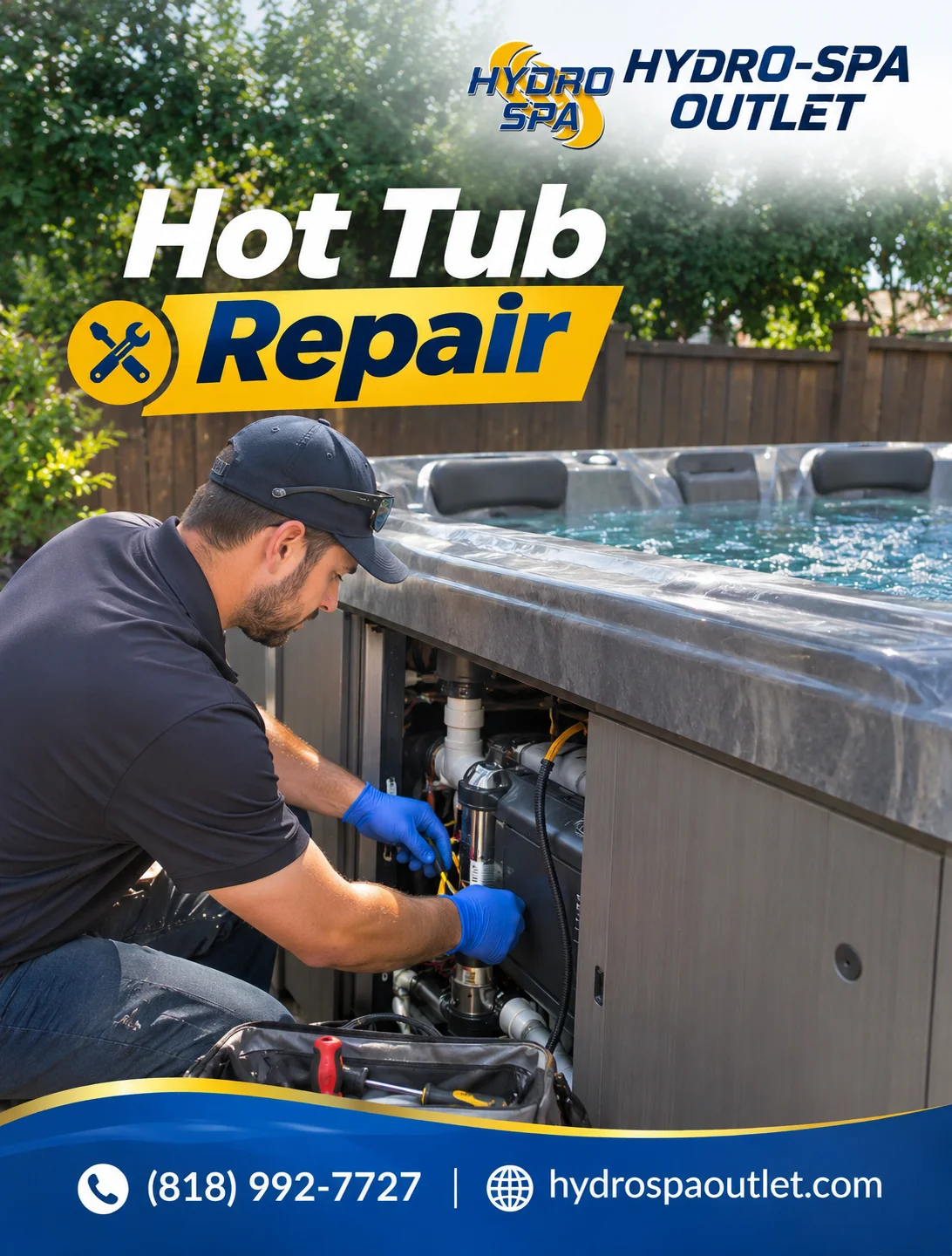
After heater work, note how long the tub takes to reach your set temperature on a typical evening. That time should stay roughly consistent. If it starts creeping up, or the water won’t hold heat overnight with the cover on, that’s a signal worth acting on. Error codes on the topside panel deserve attention too, so jot them down rather than clearing them and moving on. Our guide to common hot tub warning signs in Los Angeles covers the heater symptoms that usually mean it’s time for a technician.
After pump or plumbing work, look at the equipment bay a day or two later. A little condensation can be normal. Drips, a damp floor or a steady drop in water level are not. Listen as well. A healthy pump has a steady hum, while grinding, screeching or a pump that cycles on and off unexpectedly can point to a problem.
After leak repairs, keep an eye on the water line for the first week. Mark it with a bit of tape if that helps. Some drop is normal from evaporation, especially with the cover off, so compare covered and uncovered days. If the level falls noticeably faster than you’d expect, the leak may not be fully resolved or a second one may have shown up. Our article on handling spa leaks yourself versus calling a pro explains which checks are safe for owners and which aren’t.
What you should never do is open electrical compartments, adjust wiring or try to bypass a safety switch to get the heater running. Those components carry real risk. That’s work for a licensed technician.
What to expect in the weeks after service
Most owners find the first week is the busiest. You’re testing often, adjusting chemistry and learning how the refreshed tub behaves. By the second or third week, readings usually settle, and the routine starts to feel automatic.
Some things are normal. Fresh water can look slightly different or foam a little as it balances. A newly replaced pump may sound a touch different from the old one. A clean filter will often make jets feel stronger than they did before the repair, which surprises people pleasantly.
Other things aren’t normal, and they’re worth a call: the same error code returning, a breaker tripping, heat that won’t hold, water that stays cloudy despite balanced chemistry, or a level that keeps dropping. Catching these early usually means a smaller fix. Waiting tends to mean a bigger one.
Owners often tell us the tub feels better than it has in years once the aftercare routine sticks. That’s not luck. It’s clean water, a clear filter and a heater that isn’t fighting scale.
If you need a hand, our Los Angeles hot tub repair team can come back out, check the work and walk you through anything that looks off. And if you’re still deciding who to trust with future service, our guide on picking a spa repair technician you can rely on lays out the questions worth asking.
Frequently Asked Questions
How soon can I use my hot tub after a repair in Los Angeles?
Usually once the water has been balanced and sanitized and has reached a comfortable temperature, which is often the same day or the next. If the tub was drained and refilled, give the chemistry time to settle and test before your first soak.
Should I drain my hot tub after a heater repair?
Not always. If the water was old, heavily scaled or part of the problem, a fresh fill makes sense, but in hard-water areas of LA you’ll want to test and manage calcium right away. Ask your technician what they recommend for your specific repair.
Why is my water cloudy after the repair?
Cloudiness after service often comes from disturbed debris in the plumbing, an overloaded filter or chemistry that’s out of balance. Clean or replace the filter, rebalance alkalinity and pH, then sanitize, and call us if it doesn’t clear within a few days.
How often should I test the water in the weeks after service?
Every day or two at first is a good habit, especially with LA sun and evaporation pushing readings around. Once your numbers hold steady for a week or so, you can return to your normal testing schedule.
Keeping the repair working
A repair gets your tub running. Aftercare keeps it running. In Los Angeles, that mostly means respecting hard water, keeping the cover on against sun and wind, staying on top of the filter and noticing early when something changes. Do those things and you give new parts the best chance at a long, quiet life.
If anything looks off after your service, or you’d simply like help keeping the water right, reach out to Hydro-Spa Outlet. We’re happy to take a look.