Most owners think a heater error means the heater is dying. Often it isn’t. In Los Angeles, the bigger culprit is usually hot tub heater scale buildup from our mineral-heavy tap water. It coats the element and confuses the sensors. This checklist covers how to spot it, slow it down, and know when to call a pro.
Spot the early signs of scale
Scale rarely announces itself all at once. It creeps in. Run through these checks whenever the water looks off or heating slows.
- Check the waterline for a chalky white or gray crust that won’t wipe away with a soft cloth.
- Feel the jet faces and fittings for a gritty, sandpaper texture.
- Note how long the spa takes to reach your set temperature compared with a few months ago.
- Watch for heater-related error messages that come and go, especially after the spa has run for a while.
- Listen for faint crackling or ticking near the equipment bay while the heater runs.
- Look for cloudy water that stays cloudy even when your sanitizer reading looks normal.
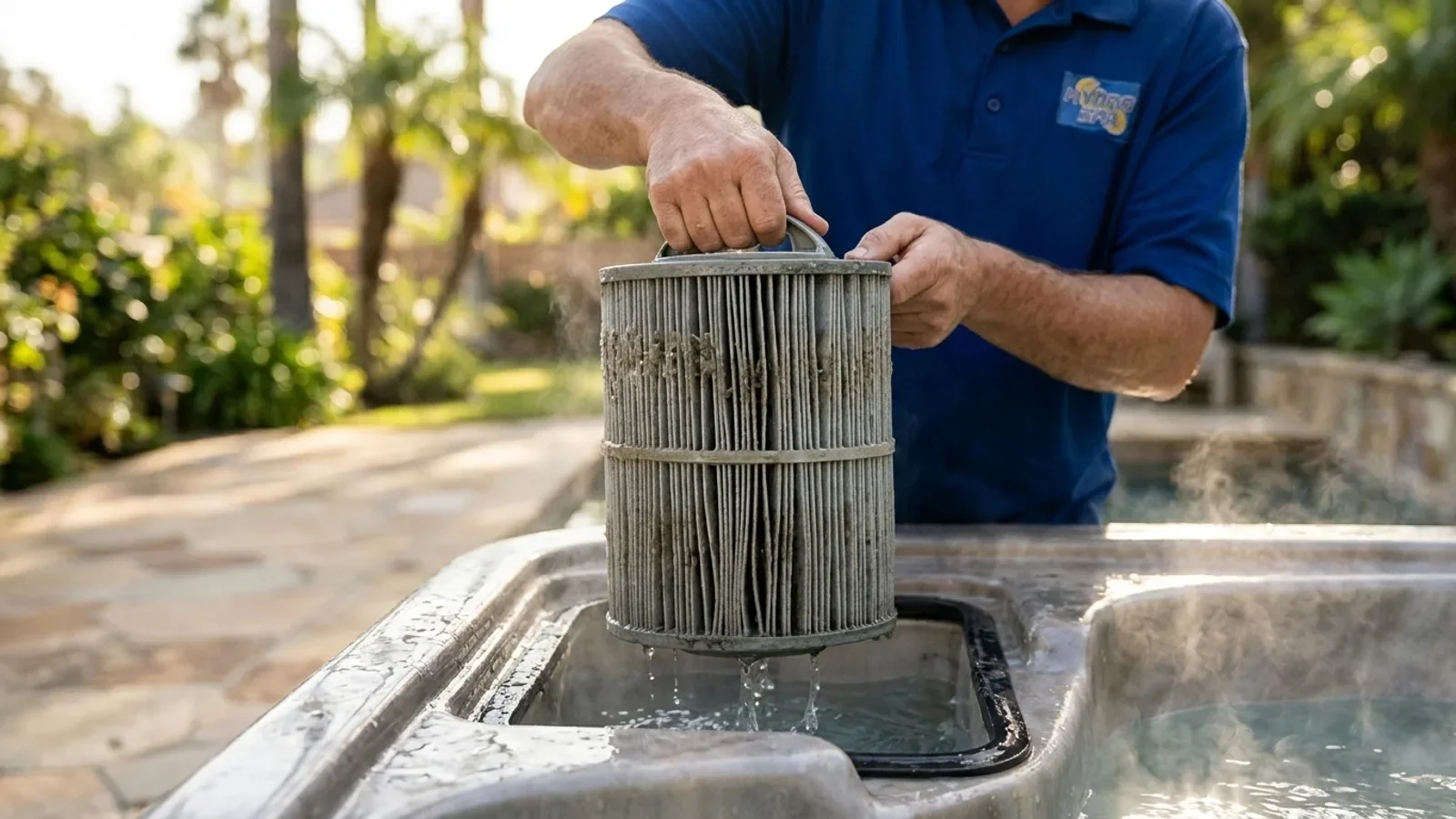
- Inspect the filter pleats for hard, flaky deposits instead of soft, rinseable debris.
- Record any flow or pressure warnings. Scale narrows the plumbing and can starve the heater of water.
Intermittent flow and heater warnings often overlap with other issues. If you’re seeing a specific code, our guide to reading Jacuzzi error codes in Los Angeles walks through what each one usually points to.
Why scale hits the heater first
Heat drives minerals out of the water. The hottest surface in the spa is the heating element. That’s where calcium deposits form fastest. Here’s what that means in practice.
- Understand that a scaled element runs hotter internally because the crust acts like insulation.
- Expect heater high-limit trips to become more frequent as that crust thickens.
- Recognize that scale on the element can flake off and travel into sensors, jets, and the pump.
- Keep in mind that restricted flow from scaled plumbing can trigger the same flow codes as a dirty filter.
- Treat recurring heater faults as a water chemistry clue, not just a parts problem.
Flow-related faults deserve their own look. Our breakdown of what usually triggers an FL code pairs well with this list.
Daily and weekly habits that slow buildup
You can’t stop hard water at the tap. You can slow what it does once it’s in the tub. These are safe, homeowner-level steps.
- Test water at least weekly with strips or a kit that reads calcium hardness, pH, and total alkalinity.
- Keep pH in the range your spa manufacturer recommends. High pH speeds up scaling.
- Balance total alkalinity before adjusting pH so the pH holds steady.
- Add a sequestering or scale-control product made for spas, following the label exactly.
- Rinse the filter with a garden hose every week or two during regular use.
- Soak the filter in a spa filter cleaner periodically to dissolve mineral film the hose won’t remove.
- Keep a spare filter on hand so you can rotate while one dries fully.
- Close the cover between soaks to reduce evaporation, which concentrates minerals.
- Top off with fresh water rather than letting the level drop low for long stretches.
- Avoid adding chemicals all at once. Dose one product, circulate, then test before the next.
Los Angeles-specific considerations
Local water and climate shape how fast scale forms here. A spa in LA lives a different life than one in a soft-water region.
- Expect hard tap water across much of the LA area. A large share of the region’s supply is imported and tends to carry significant dissolved minerals.
- Check your water supplier’s annual water quality report. Hardness varies between neighborhoods and between city and municipal utilities across the basin.
- Plan for faster evaporation during hot, dry stretches in the San Fernando and San Gabriel valleys, where minerals concentrate quicker.
- Watch closely during Santa Ana wind events. They bring dry air and can pull water levels down faster than usual.
- Use a pre-filter on your fill hose when you refill, which can catch sediment and some metals before they reach the tub.
- Ask before relying on a home water softener for fill water, since softened water can affect chemistry balance differently.
- Factor in heavier use through the cool months. Late fall and winter evenings are when many LA owners run their spas hardest and heaters work longest.
- Shade the equipment bay if it sits in afternoon sun, since high cabinet temperatures add stress to an already-scaled heater.
- Keep an eye on coastal properties too, where salt air can corrode exposed fittings and compound mineral problems.
Short version: local water pushes scale harder. Plan for it.
When to drain, and when to call a pro
Some scale is a maintenance task. Some is a repair. Knowing the line matters, because the heater is an electrical component.
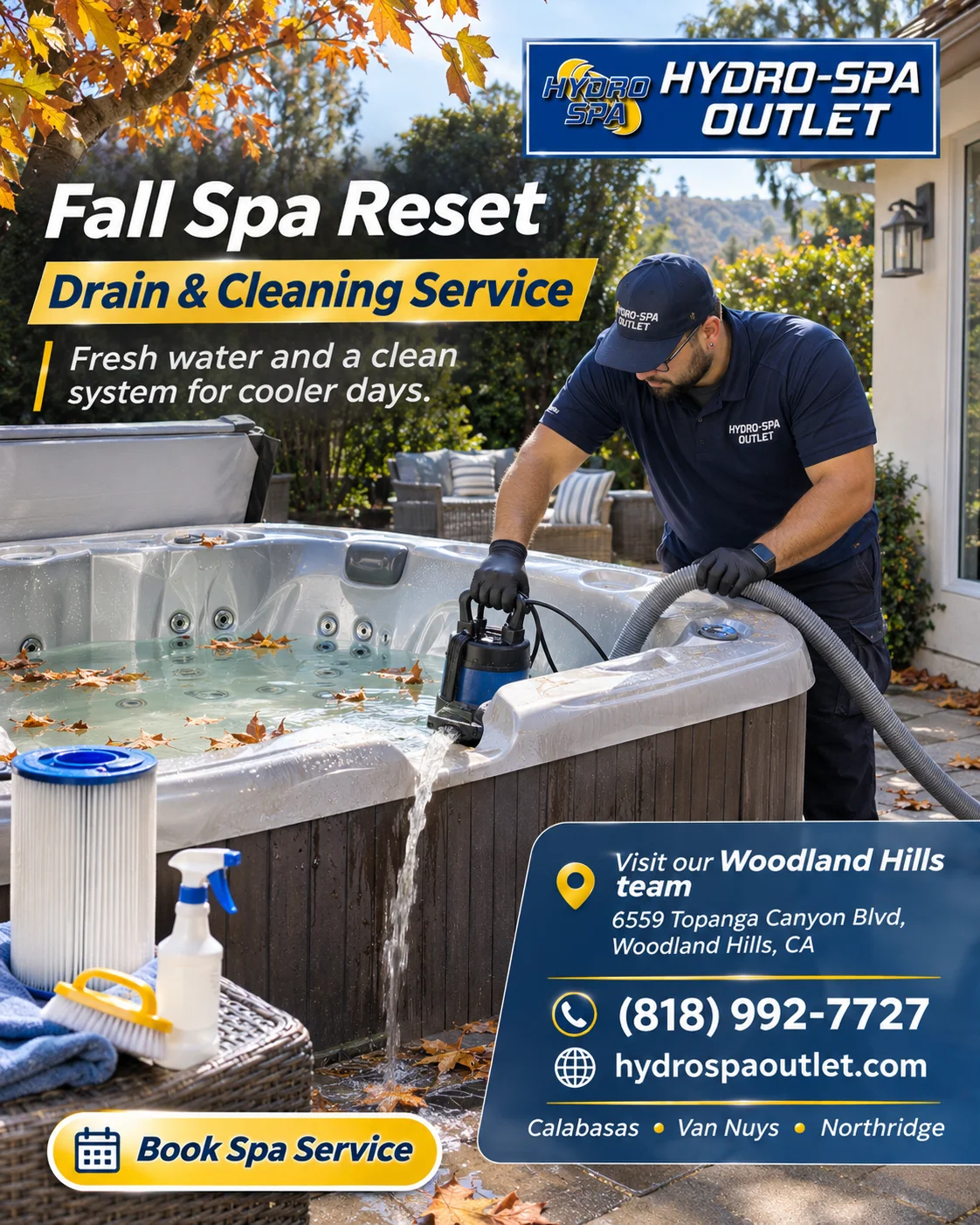
- Schedule a full drain and refill roughly every three to four months, or sooner if your test strips show hardness climbing fast.
- Use a spa-specific line flush product a day before draining to loosen buildup inside the plumbing.
- Wipe the shell with a cleaner made for acrylic spa surfaces. Skip abrasive pads that scratch.
- Refill through a hose pre-filter and rebalance chemistry before turning the heater on high.
- Leave the heater housing, wiring, and element removal to a trained technician.
- Turn the spa off at the breaker and call for service if you see scorching, smell burning, or notice the breaker tripping.
- Request a heater inspection if error codes return within days of a fresh fill.
- Ask about professional descaling or element replacement if the crust is visible on the heater itself.
Breaker trips need careful handling. Our notes on why a spa keeps tripping the breaker explain what to check safely and what to leave alone.
If you’d rather hand the whole job off, Hydro-Spa Outlet offers scheduled drain, clean, and maintenance visits across Los Angeles. We test, flush, clean filters, and look over the heater area. Small buildup shouldn’t become a bigger repair.
After a heater repair, protect the new part
A new element in old water scales again. Fast. Use this short list once a repair is done.
- Drain and refill with fresh, pre-filtered water rather than reusing the old fill.
- Rebalance pH, alkalinity, and calcium before the first long heat cycle.
- Add scale control from day one instead of waiting for crust to appear.
- Replace or deep-clean the filter so loose flakes don’t recirculate.
- Log your test readings for a few weeks to catch drift early.
For a fuller routine, see our water care plan for the weeks after a repair. Do heater codes keep showing up despite good chemistry? Then it’s time for a professional Jacuzzi diagnosis in Los Angeles rather than another round of guessing.
Frequently Asked Questions
Can hard water really cause hot tub heater errors?
Yes, it’s a common contributor. Mineral scale insulates the heating element and restricts flow. That can trigger high-limit and flow-related warnings even when the heater itself is still working.
How often should I drain my hot tub in Los Angeles?
Many LA owners drain every three to four months. With hard tap water and heavy use, testing calcium hardness regularly is the better guide. Draining sooner when it climbs is reasonable.
Can I remove scale from the heater element myself?
Surface scale on the shell and filter is fine to handle yourself. The heater is different. It involves electrical components, so removing or descaling the element itself should be left to a trained technician.
Takeaway: in Los Angeles, steady water testing and regular drains do more for your heater than any single fix. When the codes won’t quit, Hydro-Spa Outlet is a call away.