A spa that throws the same error twice is telling you the first fix didn’t reach the cause. Meanwhile the water sits warm and unfiltered, the heater cycles on a weak element, and a small sensor fault turns into a scorched board. In Los Angeles, where many tubs run year-round on patios from the Valley to the Westside, that slow slide happens faster than most owners expect.
So the real decision isn’t whether to call someone. It’s how to choose a hot tub repair technician in Los Angeles who will find the cause the first time. This guide compares the three common ways repairs get handled, explains what to ask about licensing, diagnostic fees and parts, and gives a straight verdict for LA homes. If you already know what’s wrong and want a tech on site, our Los Angeles hot tub troubleshooting and repair service is the place to start.
Option one: the parts-swap approach
Some repairs follow a simple pattern. The tech reads the error on the topside panel, matches it to the most likely failed part, replaces that part and leaves. Sometimes that’s exactly right. A heater element that has visibly failed doesn’t need an hour of testing.
The trouble is that error codes describe symptoms, not causes. A flow error can come from a dirty filter, an airlocked pump, a failing pressure switch or a partially closed valve. Swap the switch when the real issue is a clogged filter and the code comes back within days. You’ve paid for a part you didn’t need.
Good questions to ask if a tech leans this way:
- What did you test to confirm this part failed?
- If the code returns, what’s the next step and who pays for the return trip?
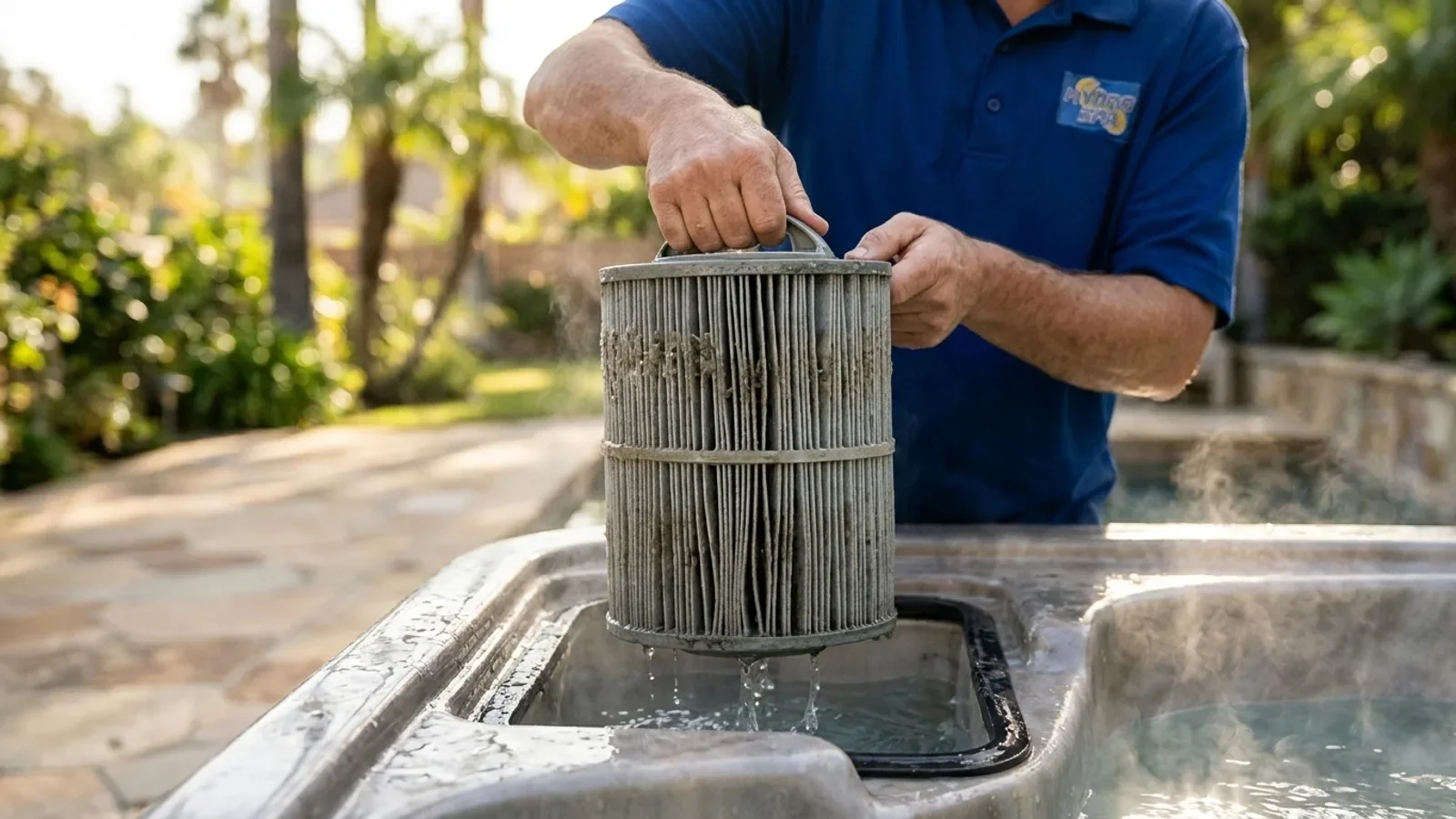
- Can I keep the old part so I can see the damage?
A confident technician answers these easily. Hesitation tells you something.
Option two: a full diagnostic visit first
The second approach separates diagnosis from repair. A technician comes out, checks power at the pack, tests sensors and switches, inspects the pump, heater and wiring, then explains what’s wrong before any parts are ordered. You get a clear picture and a written recommendation.
This takes longer on day one. It also tends to catch the chain of problems that one error code hides. A tub that keeps tripping a breaker, for example, might have a leaking pump seal dripping onto the heater terminals. Replace the heater alone and the trip returns. Our walkthrough on why a spa keeps tripping its breaker shows how often moisture and electrical faults are linked.
Ask about the diagnostic fee up front. Specifically, ask whether it’s credited toward the repair if you go ahead, what the visit covers, and whether you’ll get the findings in writing. We won’t quote figures here because the right answer depends on the tub and the travel involved, but any reputable shop should explain its structure plainly before arriving.
Option three: repair bundled with ongoing service
The third model treats repair as part of a maintenance relationship. The same team that services the tub regularly handles breakdowns, so they already know its history: when the filter was last changed, how the water chemistry has trended, which components were replaced.
That history is valuable. Scale buildup, for instance, rarely shows up as a single dramatic failure. It creeps onto heater elements over months and eventually triggers high-limit or flow errors. A tech who has seen your water every few weeks spots it early. If hard water is a concern at your address, read up on how mineral scale affects spa heaters.
The tradeoff is commitment. Not every owner wants scheduled visits, and a tub that’s otherwise healthy may only need occasional help. Ask whether repair is available without a maintenance plan, and whether plan customers get any scheduling priority.
Side by side: how the three approaches compare
Here’s how each option stacks up on the factors that decide whether a repair actually sticks.
| Criteria | Parts-swap | Diagnostic visit first | Repair plus ongoing service |
|---|---|---|---|
| Root-cause accuracy | Depends on the code being straightforward | High, because components are tested before replacement | High, aided by service history |
| Speed to first repair | Fastest when the guess is right | Slower; parts may be ordered after testing | Varies; regular visits may catch issues before failure |
| Risk of repeat errors | Higher with multi-cause codes | Lower | Lower |
| Written findings | Often not provided | Usually provided | Ongoing records kept |
| Best fit | Obvious single-part failures | Recurring or confusing errors | Owners who use the tub year-round |
Licensing, permits and parts: what to ask in LA
This is where Los Angeles specifics come in. Most hot tubs here run on dedicated 240-volt circuits, and many sit on older properties. Plenty of homes in neighborhoods like Silver Lake, Highland Park and the older parts of the San Fernando Valley date back decades, with electrical panels that were never designed for a spa load. Some tubs were added later by previous owners, and the wiring doesn’t always match current practice.
That changes the questions worth asking:
- Licensing. Ask what licensing the company holds and whether electrical work beyond the spa pack is handled by a licensed electrician. Requirements vary by city and by the scope of work, so a good tech will tell you plainly when something falls outside their lane. You can confirm contractor license status through California’s state licensing board.
- Permits. Repairs inside the equipment bay usually don’t need a permit, but new circuits or panel work may. Requirements differ between the City of Los Angeles and surrounding cities like Burbank, Pasadena or Santa Monica, so check locally or ask your licensed pro.
- Parts sourcing. Ask whether replacement parts are OEM or compatible equivalents, how long sourcing takes, and what warranty applies to the part and the labor. Boards and heaters for discontinued models can take time to find.
- Environment. LA’s dry heat and coastal salt air both affect equipment. Inland Valley tubs see intense summer heat in the equipment bay, while beach-adjacent tubs deal with corrosion on terminals and screws. A tech who mentions these unprompted knows the area.
Water is the other local factor. Much of LA’s supply is hard, and that mineral load shows up on heaters, jets and sensors. Ask how the tech will address water chemistry after the fix, not just the broken part.
The questions that separate a good tech from a guess
Bring this short list to any call. It works whatever approach the company uses.
- What exactly does the error code mean on my specific control system?
- What will you test before replacing anything?
- How is the diagnostic fee handled if I approve the repair?
- Are parts OEM, and what warranty covers parts and labor?
- Who handles electrical work outside the spa pack?
- What should I do with the water after the repair?
That last question matters more than people think. After a heater or board replacement, the water often needs rebalancing before the tub goes back into daily use. We cover the steps in our guide to caring for spa water after a repair.
Which is right for Los Angeles homes
Here’s the short version. For most LA owners, a diagnostic-first visit is the safer choice.
The mix of older wiring, hard water and year-round use means errors here often have more than one cause. Testing before replacing reduces the chance of buying a part you didn’t need and seeing the same code next week. The parts-swap approach still makes sense when the failure is obvious and isolated. And if you use your tub several times a week, pairing repair with regular service is worth considering, because history catches slow problems early.
What you want, whichever route you pick, is a technician who explains the cause in plain language and puts findings in writing. That’s the standard we hold ourselves to on every call through our spa error code diagnosis and repair work across Los Angeles.
Frequently Asked Questions
Should I pay a diagnostic fee for hot tub repair?
A diagnostic fee is common and often reasonable, since testing takes real time. Ask before the visit whether the fee is credited toward the repair if you approve the work.
Can I check a spa error code myself before calling?
Yes, light checks are fine. Clean or replace the filter, confirm the water level is correct and make sure valves are open, then leave anything electrical or inside the equipment bay to a licensed professional.
How do I know if a technician is licensed in California?
Ask the company for its license details and verify them through the state contractor licensing board online. If electrical work is needed outside the spa pack, ask who will perform it.
Are OEM parts always better than compatible parts?
Not always, but OEM parts match the original specifications and are usually the safer default for boards and heaters. A good tech will explain the tradeoffs and the warranty that applies to each.
Why does my hot tub show the same error after a repair?
Repeat errors usually mean the root cause wasn’t addressed, or more than one component was involved. A diagnostic visit that tests the full system often finds the remaining issue.
Getting the right tech on the first call
A broken spa rarely fixes itself, and every week it sits idle or limps along adds strain somewhere else. Ask the questions above, insist on clear findings, and choose a technician who tests before replacing. Hydro-Spa Outlet handles hot tub repair, maintenance, drain and cleaning, and swim spa service throughout Los Angeles. When you’re ready, book a hot tub repair visit with our team and we’ll walk you through what we find.