
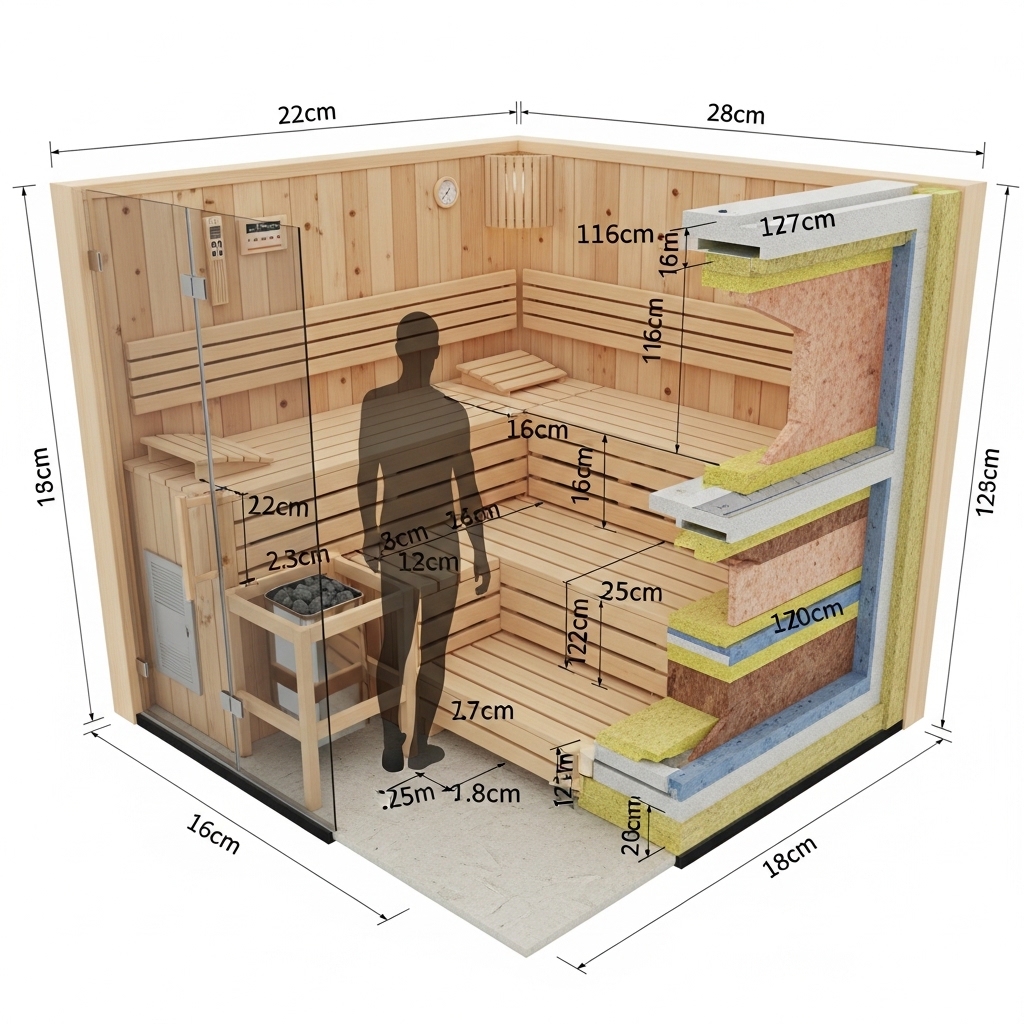
When considering the perfect setting for relaxation and wellness, nothing compares to a Traditional Sauna. In the tranquil confines of Woodland Hills, California, the call for such a sanctuary is on the rise. But what are the ideal dimensions for a traditional sauna room that maximizes its benefits? As a hot tub installation expert in the area, I often receive queries about the specifics and intricacies related to sauna dimensions, ensuring they blend solace with functionality. Whether you’re ready to dive into the world of sauna ownership or merely seeking knowledge, let’s explore the necessary elements together.
Understanding Sauna Dimensions
The dimensions of a sauna significantly affect the overall experience. A sauna that is too small can lead to an overcrowded feeling, while one that is overly spacious can lead to inefficient heating and a less intimate atmosphere. For a comfortable size, many experts recommend a sauna that accommodates at least 7 to 10 square feet per person. This allows for both enough space to move and the close-knit environment that saunas are known for.
Height Matters
The height of your sauna plays a critical role in the effectiveness of the sauna experience. Most traditional saunas have ceiling heights ranging from 7 to 8 feet. This height not only accommodates the heat properly but allows for proper ventilation, ensuring that the warmth circulates efficiently. Taller ceilings can lead to unnecessary heat loss, which can detract from the sauna’s heat retention application.
Optimal Dimensions for Different Uses
In Woodland Hills, where outdoor living space is plentiful, many homeowners opt for saunas in their backyards or basement. For a compact sauna designed mainly for individual use, dimensions around 4 feet by 6 feet serve well. However, for family use or small groups, a spacious layout, such as 6 feet by 8 feet, commonly allows for seating arrangements that promote relaxation and conversation.
Material Considerations
When adjusting the sauna dimensions, also take into account the thickness of the walls and the type of insulation. Cedar is often the preferred material for traditional saunas, known for its natural resistance to moisture and pleasant aroma when heated. Utilizing thicker walls can also enhance heat retention, ensuring that your sauna stays warm and inviting. The traditional wooden structure should be complemented with proper insulation to maintain the desired heat inside.
Airflow and Ventilation
Proper ventilation is an integral component that contributes to a pleasant sauna experience. A sauna’s design should include vents positioned both near the ceiling and at the base to facilitate air circulation. This setup not only enhances user comfort but also prolongs the life of your sauna. A well-ventilated sauna helps ensure consistent air exchange without creating drafts, making every session enjoyable.
FAQs About Sauna Room Dimensions
What is the Best Size for a Family Sauna?
For families, a sauna dimension of around 6 feet by 8 feet is ideal, accommodating 4 to 6 adults comfortably while allowing room for movement.
How Many People Can Fit in a Small Sauna?
A small sauna of 4 feet by 6 feet typically fits two people comfortably. While it may be cozy, it offers a more intimate sauna experience.
Can I Customize the Dimensions?
Absolutely! Saunas can be tailored to fit your space and preferences. Ensure any adjustments still adhere to the principles of adequate heating and airflow.
Deciding on the right dimensions for a sauna room can pave the way for countless relaxing moments. Therefore, if you’re thinking about enhancing your home with a Traditional Sauna, don’t hesitate to reach out to us for guidance and installation options.
Hydro-Spa Outlet
6559 CA-27, Woodland Hills, CA 91303, United States
Phone: +1 (818) 992-7727