How do you know if your hot tub plumbing is full of biofilm? Usually the water tells you first. It foams, smells off, eats sanitizer, or turns cloudy right after you fix it. For Los Angeles spa owners, these signs of spa biofilm buildup often show up between drains, and they point to the same hidden problem: slime living inside the pipes you can’t see.
Biofilm is a layer of bacteria and organic gunk that glues itself to the inside walls of spa plumbing, jet bodies, and filter housings. Once it’s established, it shields itself from normal sanitizer levels. Shocking the water helps the water. It doesn’t do much for the pipes. Here are the five signs we look for, plus what actually clears the problem out.
1. Flakes or slime blow out of the jets
This is the most direct sign, and it’s hard to miss once you’ve seen it. You turn on the jets after the spa has sat for a while, and small brown, gray, or white flecks shoot into the water. Sometimes it’s a fine haze. Sometimes it looks like wet tissue paper.
Those flakes are pieces of biofilm breaking loose from the inside of the plumbing. The jet lines, especially ones that don’t run often, are a favorite spot because water sits still in them between soaks. Still water plus warmth plus body oils is exactly what biofilm wants.
A quick check: run a clean white cloth around the inside of a jet face or the skimmer opening. If it comes away with a slick, slippery film, that’s a strong hint the same layer is lining the pipes behind it. Wiping the surface won’t reach where most of it lives.
2. Your sanitizer disappears faster than it should
You add chlorine or bromine, test a few hours later, and the reading has dropped to almost nothing. You add more. Same result. This pattern frustrates a lot of owners, and it’s one of the quieter signs of biofilm.
Here’s why it happens. Biofilm creates a steady demand on your sanitizer. The chemical spends itself attacking the outer layer of the slime and the contaminants it keeps releasing into the water. The protected bacteria underneath stay put, so the cycle repeats every time you dose.
Of course, heavy bather loads, sunlight on an uncovered tub, and an old filter can also burn through sanitizer. Rule those out first. If the cover’s on, the filter is clean, and the spa barely gets used, yet sanitizer still vanishes overnight, the plumbing deserves a hard look.
3. Foam and cloudy water keep coming back
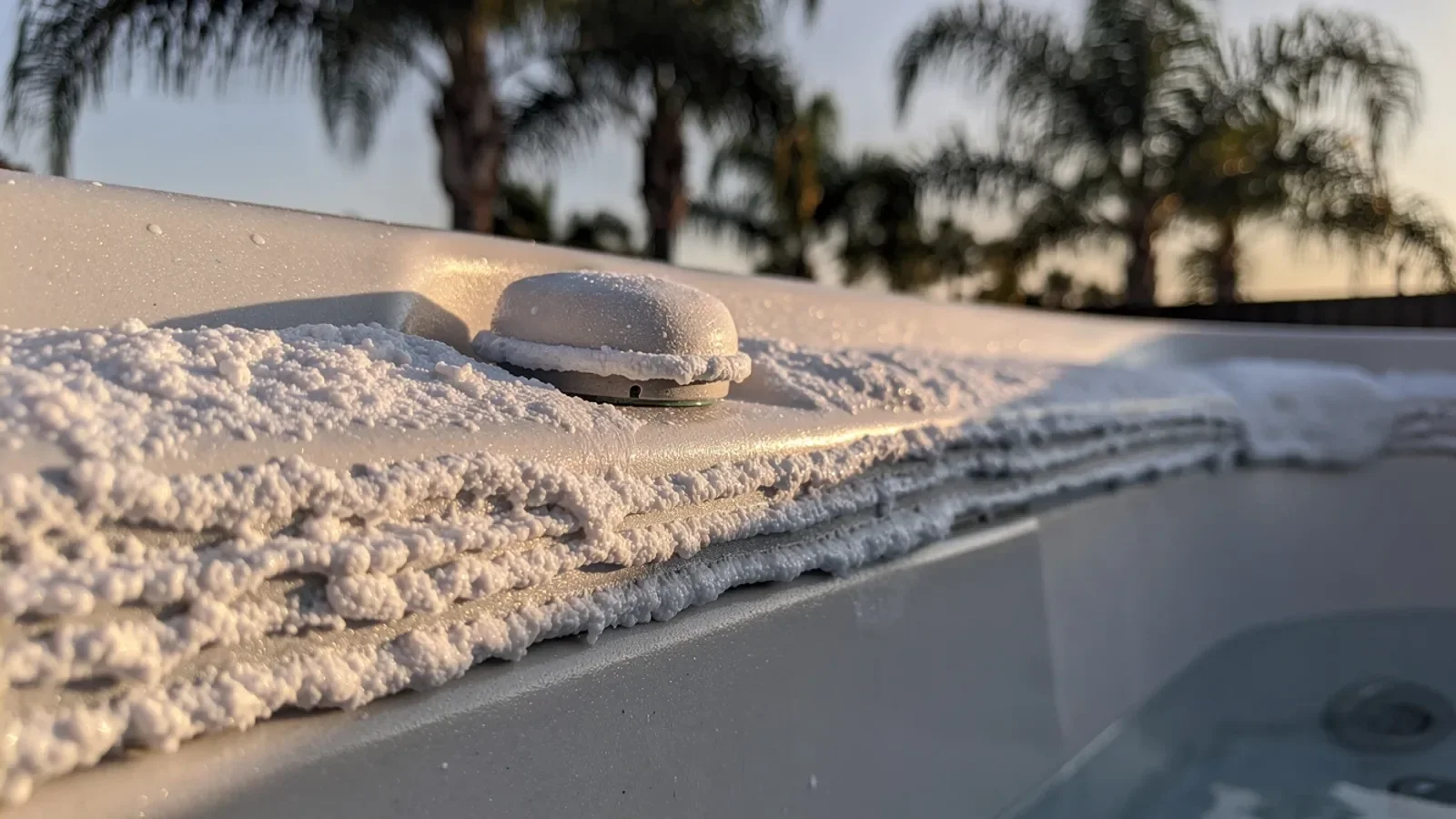
Foam that piles up when the jets run, or water that turns dull and milky a day after you balance it, is often blamed on lotions and detergent residue from swimsuits. Sometimes that’s right. But when foam and cloudiness return no matter what you do, biofilm is a likely suspect.
As biofilm sheds, it releases organic material that makes water foam and scatters light. A defoamer knocks the bubbles down for an afternoon. A clarifier might clear things briefly. Neither one touches the source.
We cover the other common causes in our guide on why spa water turns cloudy in LA, which is worth reading if you’re trying to narrow it down. The tell for biofilm is persistence. If you’ve worked through the usual fixes and the haze still returns within days, the problem probably isn’t in the water itself.
4. Musty or swampy smells, even with balanced chemistry
Properly sanitized spa water shouldn’t smell like much. A light chemical scent is normal. A damp, musty, earthy, or swampy odor is not, especially if your test strips say everything is in range.
That smell often comes from bacteria living in protected pockets of the system, including jet lines, the filter cavity, and the underside of the cover. You may notice it most when you first lift the cover after a few days, or when the jets kick on and push water from stagnant lines into the tub.
Don’t try to mask it with fragrance products. Scents add more organic load and can make foaming worse. Instead, pull and inspect the filter, check the cover’s underside for mildew, and note whether the smell gets stronger when specific jets run. That pattern tells you something useful about where buildup is concentrated.
5. Los Angeles conditions that give biofilm a head start
Biofilm grows anywhere, but a few things common in Los Angeles make it easier to get established, and they’re worth knowing as an LA spa owner.
First, the water. Much of the LA area gets hard, mineral-heavy tap water. That scale roughens the inside of pipes and jet bodies, and rough surfaces give biofilm more places to grip. Scale and slime tend to build together. If you’re fighting white crust on the waterline, read our notes on handling LA’s hard water in a spa.
Second, the climate. Our mild weather means many hot tubs run year-round. Late fall and winter are peak soaking season for a lot of households here, so the tub gets more bathers, more oils, and more organic load right when people start using it daily again.
Third, usage swings. Plenty of LA spas sit untouched through long, hot summer stretches, then come back into heavy use as evenings cool down. Those idle periods let water stagnate in the lines, which is how a thin film becomes a thick one.
Why shocking alone won’t fix biofilm
Most owners respond to these signs by shocking harder. It’s a reasonable instinct, and it can help the water for a bit. The problem is that biofilm’s outer layer protects the colony underneath, and normal or even elevated sanitizer levels struggle to penetrate it.
Clearing it takes a different approach. A line purge product is circulated through the plumbing before draining to loosen buildup from pipe walls. Then the spa is drained completely, the shell and filter housing are cleaned, the filters are deep cleaned or replaced, and the tub is refilled and rebalanced. That’s the core of a deep hot tub drain and cleaning, and it’s the step that actually reaches the pipes.
Timing matters too. A purge works best right before the drain, so the loosened gunk leaves with the old water instead of resettling. If you’d like to see each stage laid out in order, our full drain, purge, and refill checklist for LA spas walks through it.
What you can safely check yourself
Some light inspection is fine for any owner and can help you decide whether a full cleaning is due:
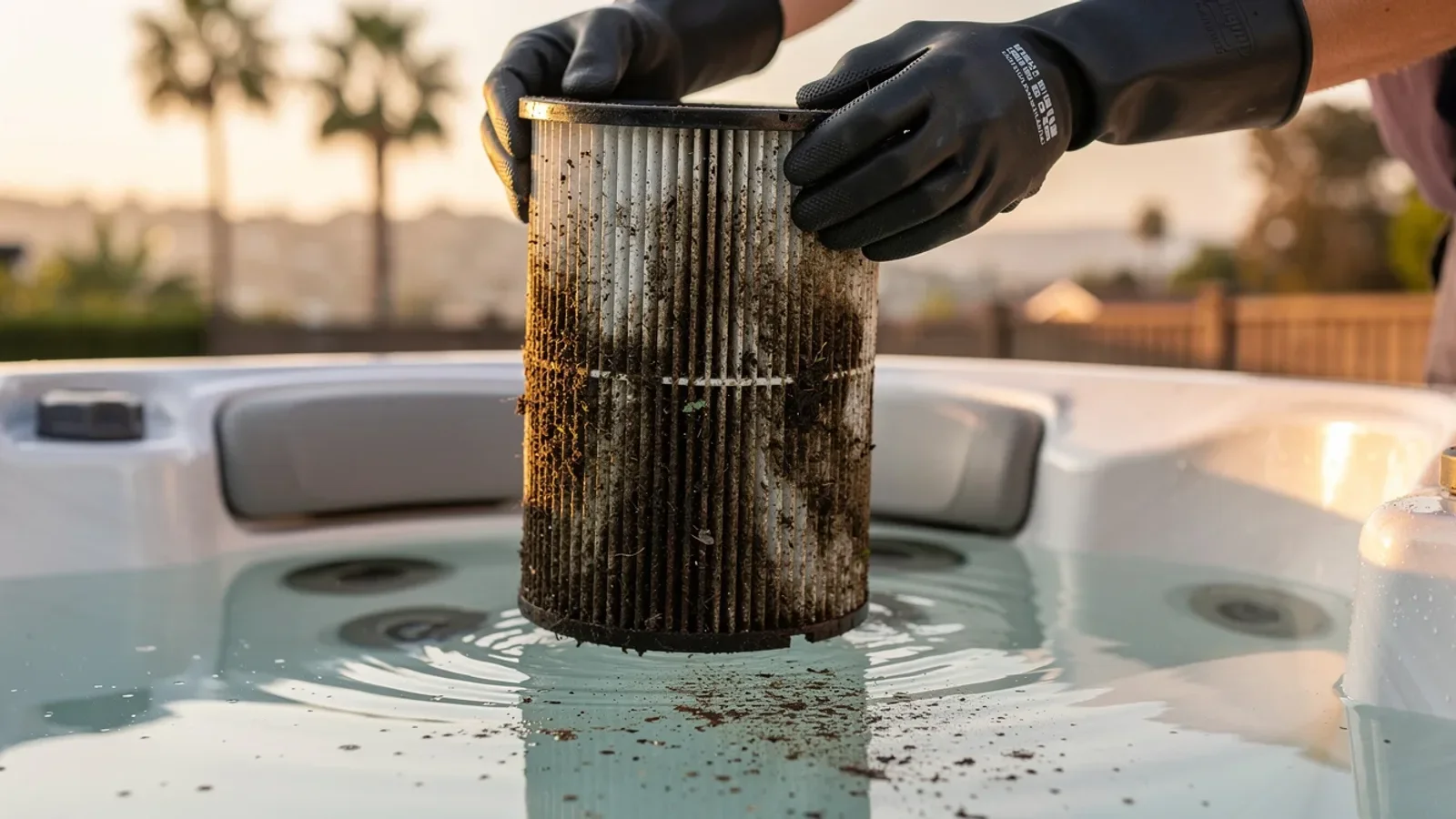
- Pull the filter. Look for slime between the pleats, a gray tint, or a sour smell. Rinse it with a hose and see whether it comes clean.
- Wipe the jets and skimmer. A slippery feel on a white cloth is an early clue.
- Check the cover underside. Mildew spots or a damp smell mean moisture and organics are collecting.
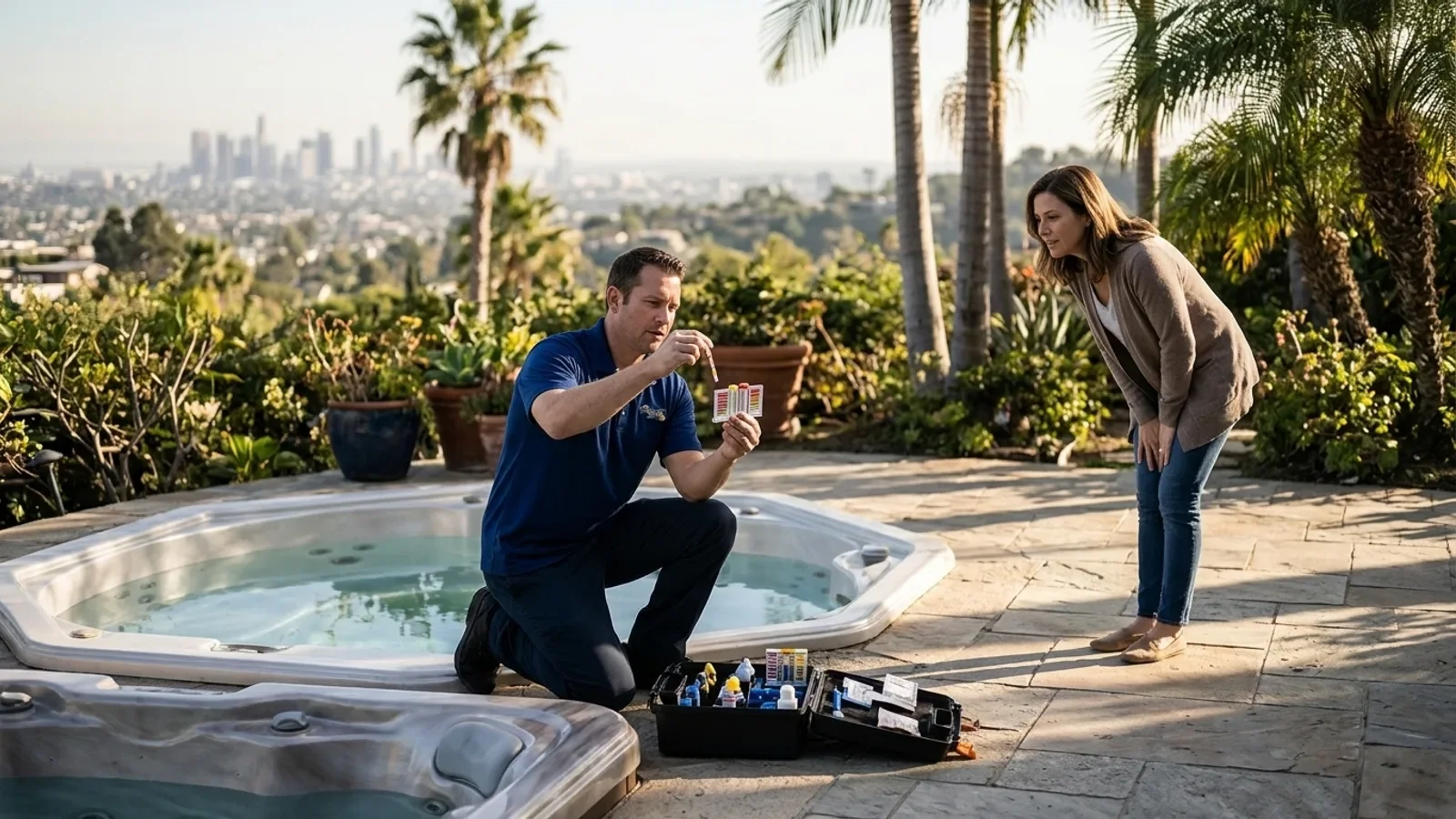
- Track sanitizer for a few days. Write down readings morning and evening. Steady, unexplained drops are worth noting.
- Note which jets spit debris. It helps a technician focus on the worst lines.
Leave anything involving the heater, electrical panel, pump housings, or internal plumbing connections to a professional. Spas combine water and high-voltage power, and that’s not a place for guesswork.
When to bring in a pro
If you’re seeing two or more of these signs at once, the plumbing likely needs a proper purge and drain rather than another round of chemicals. The same goes if it’s been a long stretch since the last full drain, or if the tub sat idle through summer and is now back in regular use.
Hydro-Spa Outlet handles drain and cleaning visits for hot tubs and swim spas across Los Angeles, and we also offer ongoing maintenance for owners who’d rather not chase water problems at all. If you’re comparing options, our guide to what to expect when hiring a drain and clean crew covers the questions worth asking. You can also book a spa purge and cleaning with our team and we’ll look at what’s going on in your lines.
Frequently Asked Questions
Can biofilm come back after a full drain and purge?
Yes, it can rebuild over time, especially with heavy use and inconsistent sanitizer levels. Regular filter cleaning, steady chemistry, and periodic purges before scheduled drains help reduce the risk of it getting reestablished.
How often should a Los Angeles hot tub be drained?
It depends on how many people use it and how often. Many owners drain every few months, and tubs with heavy use or recurring foam and cloudiness often benefit from a shorter interval. A technician can suggest a schedule based on your usage.
Is biofilm the same as scale buildup?
No. Scale is mineral deposit from hard water, while biofilm is a living layer of bacteria and organic material. In LA they often appear together, because rough scale gives biofilm more surface to cling to.
The bottom line
Flaking jets, vanishing sanitizer, stubborn foam, and musty smells usually point to the pipes, not the water. More chemicals won’t reach them. A proper purge and drain will, and our Los Angeles team is happy to take a look when you’re ready.