You lift the cover on a cool November evening and something’s off. A faint musty smell. A thin ring at the waterline that wasn’t there last month. For spa owners across Los Angeles, from the Valley to the Westside, that’s usually the tub asking for a full drain and clean. This checklist walks through how proper hot tub cleaning actually works, step by step, and where our team at Hydro-Spa Outlet can take it off your hands.
The short version
A real drain and clean is more than emptying the water and refilling it. It has four parts: purging the plumbing while the old water is still in, draining safely, cleaning the shell, filters and cover, and then refilling and rebalancing for local water.
Skip the purge and you refill into lines that may still hold biofilm. That’s why fresh water can turn cloudy within days. Skip the rebalance and Los Angeles tap water starts leaving scale on your heater and jets almost immediately.
Most owners do this a few times a year, depending on how many people use the tub and how well the chemistry is kept. Heavy use, lots of guests, or water that won’t hold sanitizer all point to doing it sooner.
Signs your spa is due for a drain and clean
The calendar is a rough guide. The water itself tells you more. Here’s what we look for when a Los Angeles customer calls:
- Sanitizer disappears fast. You add chlorine or bromine and it’s gone by the next day.
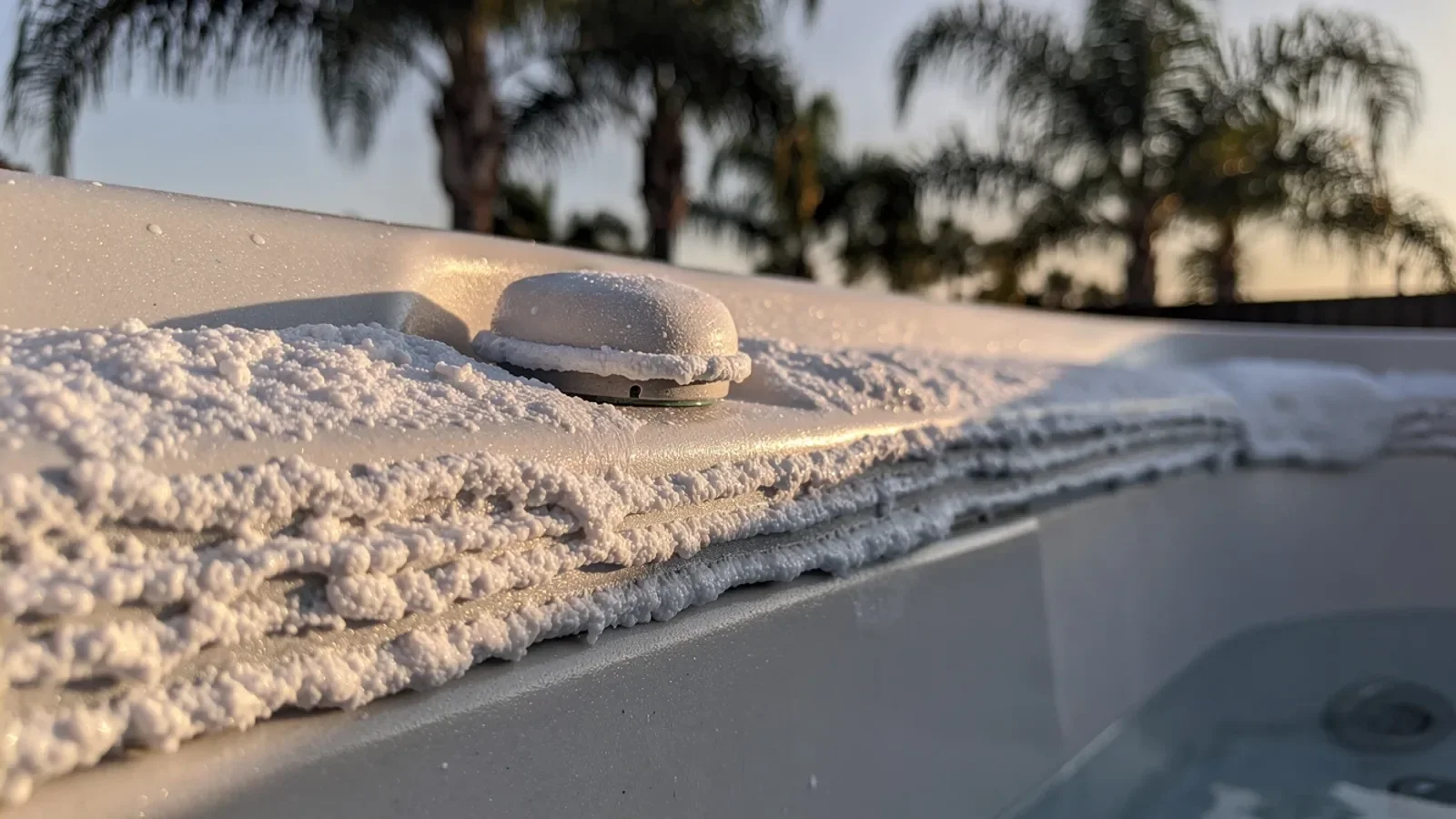
- Foam that won’t settle. Lotions, soaps and body oils build up dissolved solids over time.
- Cloudy or dull water even after shocking. We cover the common causes in our guide on why spa water turns cloudy in LA.
- Slimy feel on the shell or inside the jets. Often an early sign of buildup in the lines.
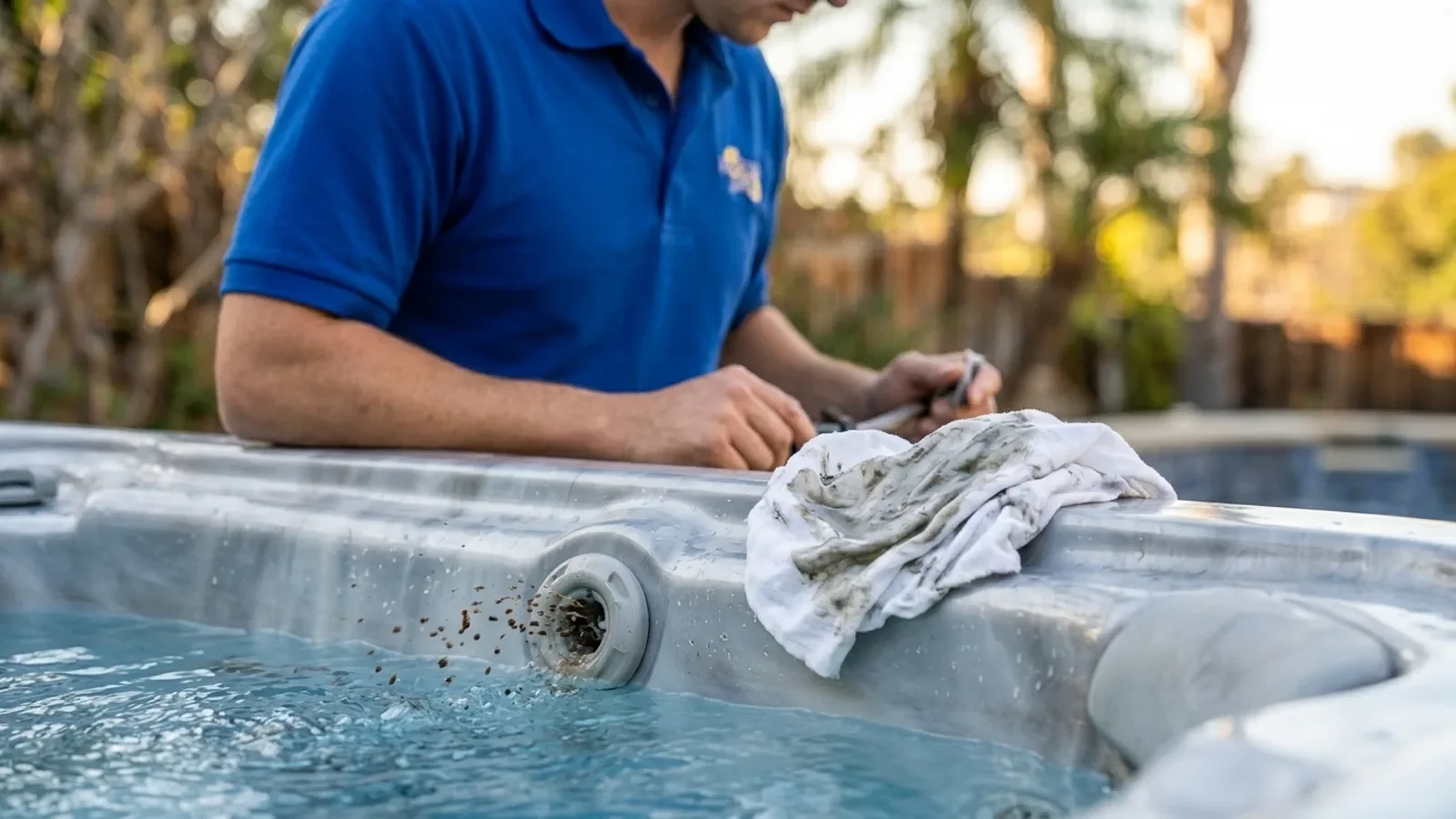
- Flakes or dark specks blowing out of the jets. That’s frequently biofilm breaking loose from the plumbing.
- A crusty white ring at the waterline. Classic hard water scale.
If two or more of these sound familiar, it’s time. The flakes and slime in particular deserve attention, and our article on spotting biofilm hiding in your spa’s plumbing explains what’s going on inside those pipes.
Why Los Angeles water changes the routine
This is where a generic checklist falls short. Spa care in Los Angeles has a few local wrinkles worth knowing.
Hard water and scale
Much of the region’s tap water is imported from the Colorado River and Northern California, and it tends to run on the hard side. Hardness varies by neighborhood and by which supply your home draws from. High calcium means scale on heater elements, jet faces, and the waterline. A heater coated in scale works harder to hold temperature. That’s why refilling in LA almost always calls for testing calcium hardness and total alkalinity first, not just tossing in sanitizer. Our deeper guide on caring for a spa on LA’s hard water covers products and prefilters in more detail.
Chloramine in the supply
Many local water utilities disinfect with chloramine rather than plain chlorine. It behaves differently in a spa and can affect how your first dose of sanitizer reads. Testing right after the fill, then again after the water heats and circulates, gives a truer starting point.
Where the drain water goes
Southern California takes runoff seriously, since storm drains here generally flow to creeks and the ocean without treatment. Chemically treated spa water is a concern. Rules on where you can discharge it vary by city across LA County, so check with your local city or a licensed pro before pointing a hose at the street. In many cases, letting the sanitizer dissipate and draining to landscaping or a sanitary cleanout is the approach owners are directed toward.
The mild-winter factor
We don’t have freezing winters to force a seasonal shutdown. Spas here run year-round, and use typically climbs once evenings cool off in late fall. More soaks mean more oils and dissolved solids. A fresh start before the busy cool-weather stretch makes sense for a lot of households.
The step-by-step hot tub cleaning checklist
Here’s the full sequence our technicians follow. Use it to understand the process, or to check that any service you book covers every stage.

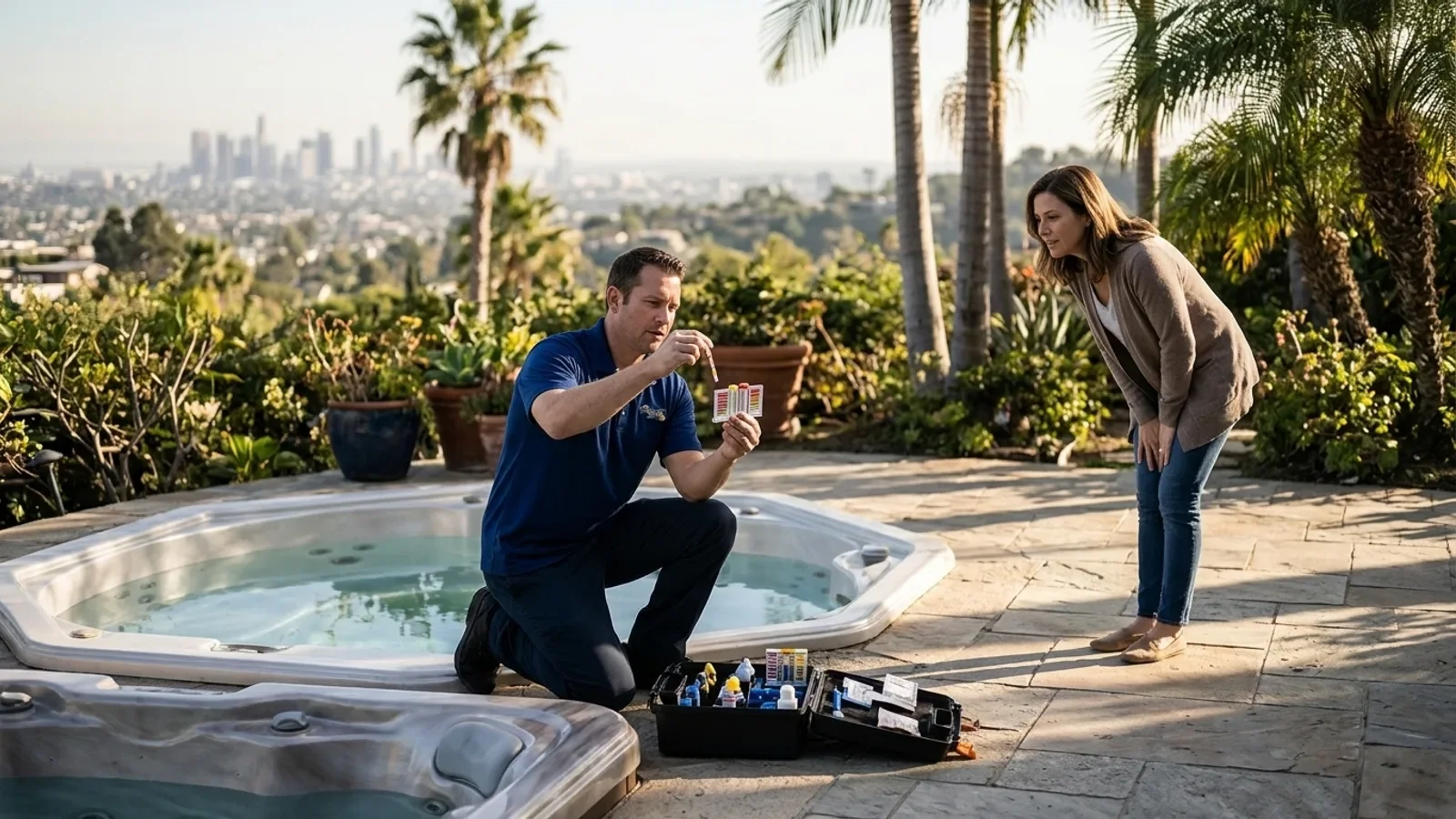
- Test the old water. A quick reading tells us how hard the water has been working and whether there’s a chemistry issue to address after the refill.
- Run a line purge (the spa purge procedure). A plumbing cleaner goes into the old water with jets running. It circulates through the lines, loosening biofilm and residue that the drain alone would leave behind. Expect foam and some gunk to surface. That’s the point.
- Cut power before draining. The spa must be fully powered off at its disconnect before any water comes out. Running pumps or heaters dry can cause damage. If you’re unsure how your unit is wired, leave this to a professional.
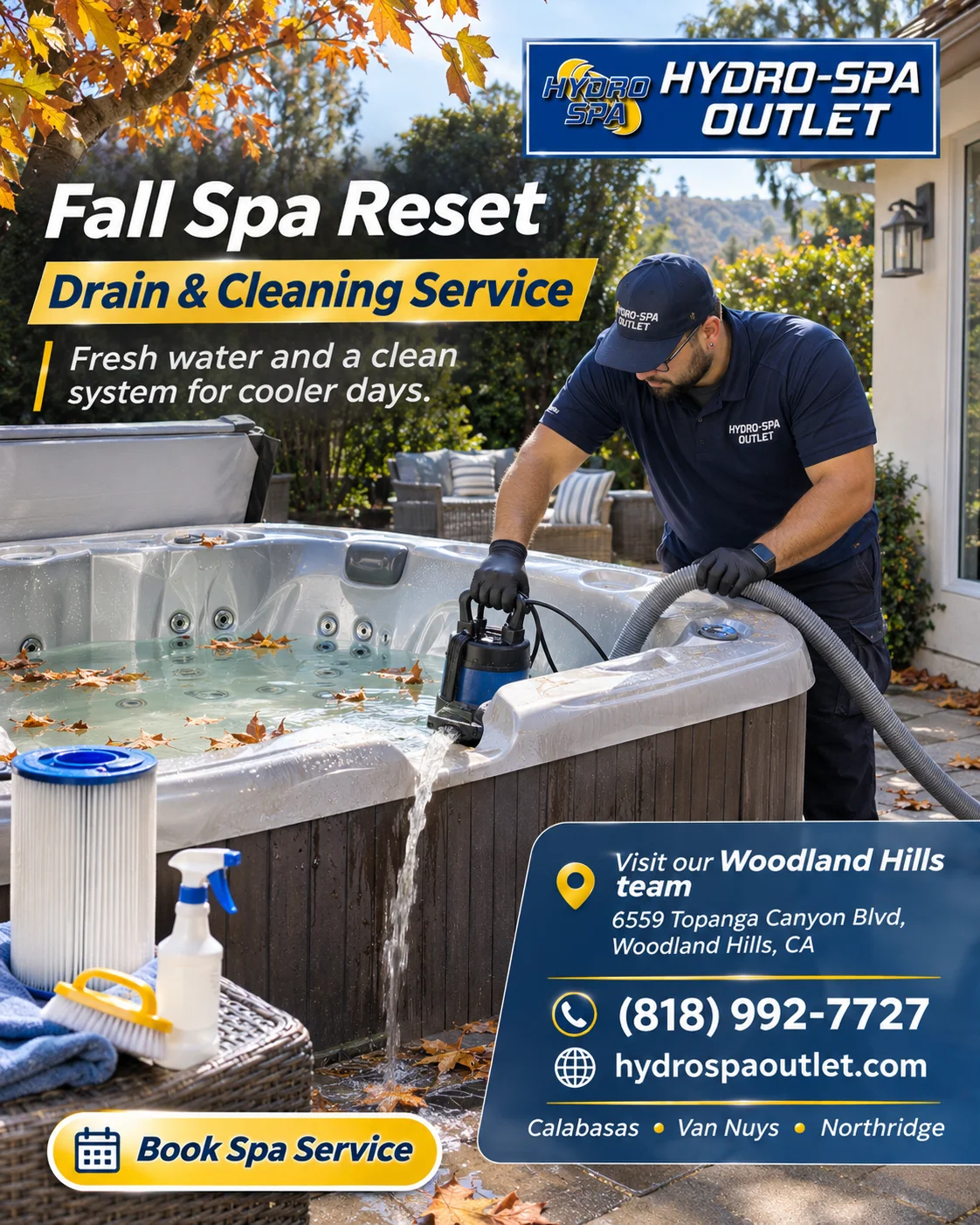
- Drain the tub. We use the drain valve or a submersible pump, directed to an appropriate discharge point for your property.
- Pull and deep-clean the filters. Cartridges get a rinse, then a soak in a filter cleaner to break down oils and minerals. Filters that are cracked, flattened or worn get flagged for replacement.
- Clean the shell. A spa-safe surface cleaner and a soft cloth handle the waterline ring, seats and footwell. No household cleaners, which can foam or damage acrylic.
- Detail the jets, pillows and filter well. Debris collects in corners and around jet faces. Headrests come off and get cleaned separately.
- Flush remaining debris. A final rinse clears the footwell so loosened residue doesn’t go straight back into the clean water.
- Clean and inspect the cover. The underside of a cover can grow mildew. We clean both sides and note waterlogging, tears or broken hinges.
- Refill through a prefilter. Filling through the filter well with a hose prefilter helps trap some minerals and sediment going in. This also helps prevent air locks in the pump.
- Restore power and circulate. Once full, the system comes back on and the water starts moving and heating.
- Balance in the right order. Alkalinity first, then pH, then calcium hardness, then sanitizer. For LA’s hard water, a scale or metal control product is often part of this step.
Twelve steps. Each one matters. Once the tub is refilled, our guide on what to do in the first days after a refill covers retesting and keeping the fresh water clear.
What a professional drain and clean adds
Plenty of owners handle the basics themselves. The trouble is the steps that are easy to skip: the full line purge, a proper filter soak, and balancing hard water correctly. Those are also the steps that decide whether fresh water stays fresh.
When our technicians handle a drain and clean, they’re also looking at the equipment while the tub is empty. That’s the best moment to notice a weeping pump seal, a corroded heater connection, a jet that won’t spin, or a cover that’s soaking up water. Because Hydro-Spa Outlet also does repair and installation, we can tell you what we see and fix it when you want us to, without a second visit from someone else.
It also saves your weekend. A full purge, drain, clean and refill takes hours, and the heat-up afterward takes longer. Many owners would rather come home to a ready tub.
Ready to hand it off? You can book a full spa drain and clean with our team and we’ll set a time that works for you. If you want to compare what different services include first, our guide to choosing a drain and clean service in Los Angeles lays out the questions worth asking.
Keeping it clean between drains
A good drain and clean resets the clock. Everyday habits decide how long that reset lasts.
- Test water a couple of times a week. Strips or a liquid kit both work. Consistency matters more than precision.
- Rinse filters regularly. A hose rinse between deep cleans keeps flow strong.
- Shower before soaking. Lotions, sunscreen and hair products are a big source of foam and cloudy water.
- Keep the cover on. It holds heat, keeps out leaves and dust, and limits evaporation that concentrates minerals.
- Watch the waterline. A quick wipe stops scale from settling in.
Prefer not to think about it at all? Our ongoing maintenance service keeps chemistry, filters and equipment on a regular schedule. Reach out through our contact page and we’ll talk through what fits your tub and how often you use it.
Frequently Asked Questions
How often should I drain and clean my hot tub in Los Angeles?
Many owners do it every few months, but heavy use, frequent guests, or water that won’t hold sanitizer can mean sooner. LA’s hard water and year-round use often push the schedule a bit tighter than in colder climates.
Is a plumbing purge really necessary?
We recommend it. Biofilm can live inside the lines where a simple drain doesn’t reach, and if it stays there it can cloud fresh water and eat sanitizer quickly.
Can I drain my spa into the street or storm drain?
Rules vary by city across LA County, and treated water reaching storm drains is a concern in the region. Check your local requirements or ask a licensed professional before draining.
Why does my water look cloudy right after a refill?
Common causes include residue left in the plumbing, unbalanced chemistry from hard tap water, or a dirty filter. A thorough purge and balancing in the right order help reduce the chance of it happening.
Do you also clean swim spas?
Yes. Hydro-Spa Outlet provides swim spa services alongside standard hot tubs. Contact us with your model and we’ll explain how the process differs for a larger vessel.
Ready for a fresh start?
Hot tub cleaning done right is a sequence: purge, drain, clean, refill, balance. Los Angeles water rewards owners who don’t skip steps. If you’d rather spend your evenings in the tub than scrubbing it, get in touch with Hydro-Spa Outlet. We’ll get your spa clean, balanced, and ready for those cool nights.