Most people think the white crust on a spa waterline is just cosmetic, a scrubbing problem. It isn’t. In Los Angeles, the same minerals that leave that ring also coat heater elements, narrow jet orifices and stiffen pump seals. You can’t see any of it. The hard water impact on hot tubs here is mostly hidden. This checklist helps you find it early.
Spot the early signs of mineral scale
Scale shows up in small ways before it causes a repair. Walk through these on your next water check.
- Check the waterline for a chalky white or gray ring that returns within days of wiping it.
- Feel the shell just below the waterline for a rough, sandpaper texture.
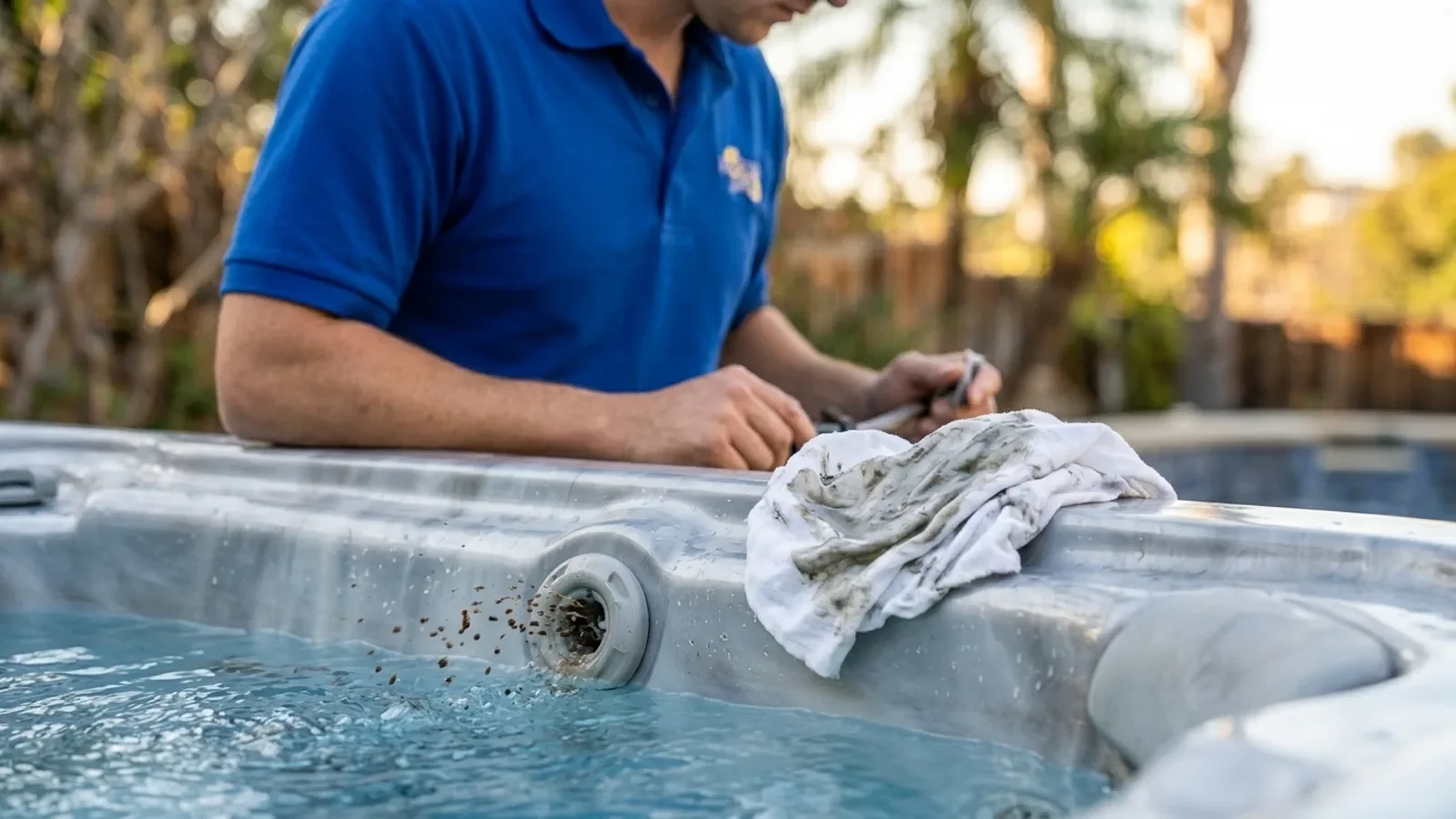
- Inspect jet faces and diverter valves for crusty white deposits around the openings.
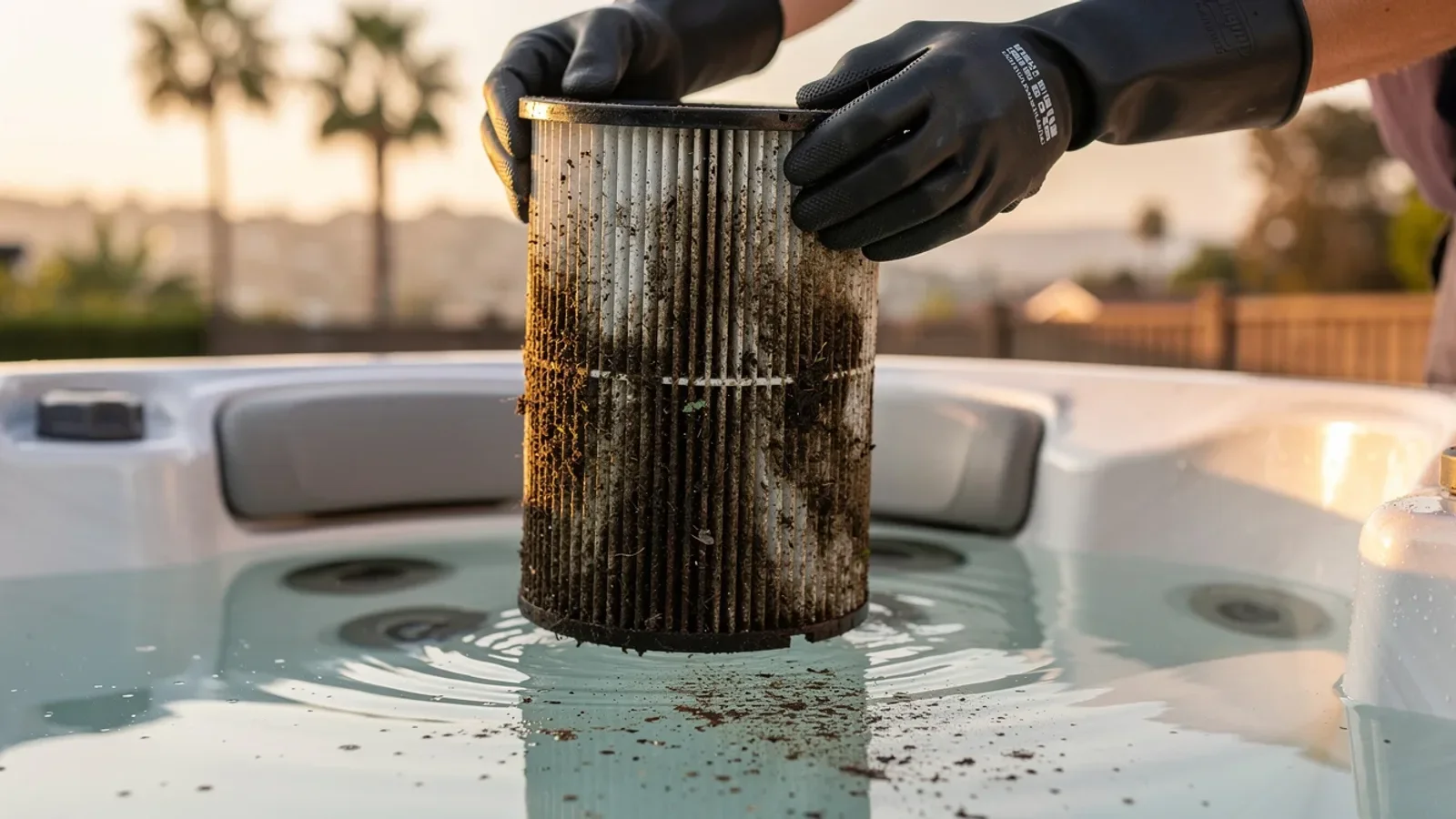
- Look at the filter pleats for stiff, gritty buildup that a hose rinse won’t remove.
- Watch for jets that feel weaker than they used to, even with a clean filter.
- Notice whether heat-up takes longer than it did when the spa was newer.
- Note cloudy water that clears briefly after a shock and then returns.
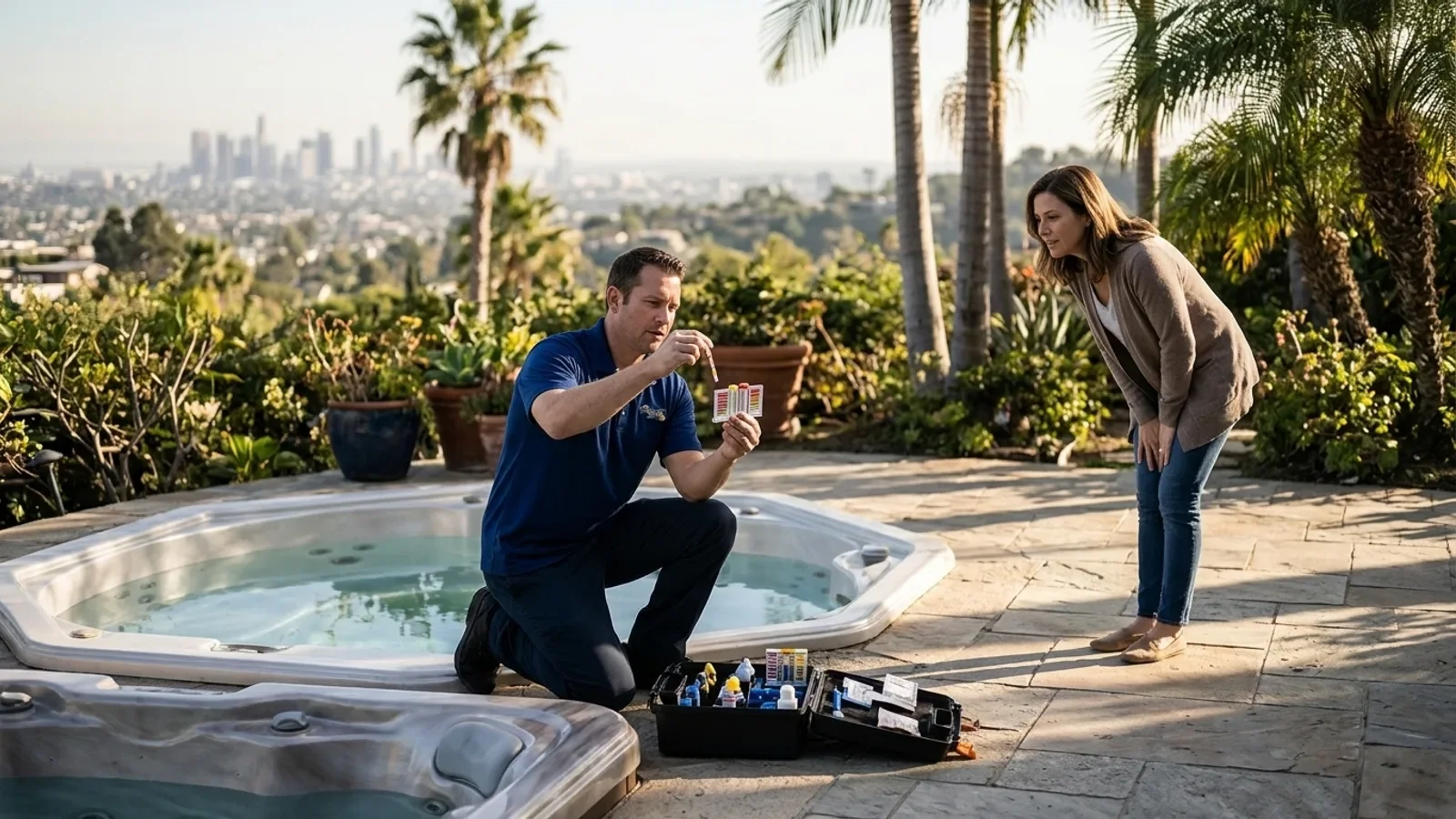
- Test calcium hardness with a reliable test strip or liquid kit, not just pH and sanitizer.
Cloudiness has several causes. Minerals are only one. Our guide on why spa water turns hazy helps you sort scale from other culprits.
What scale actually does to your equipment
This is where hard water costs you. Not in looks. In wear.
- Recognize that scale on the heater element acts like insulation, so the heater works harder to reach temperature.
- Expect heater elements coated in minerals to run hotter and wear out sooner.
- Understand that deposits inside jets and fittings reduce flow and pressure over time.
- Watch for pump seals and shaft surfaces that roughen as minerals grind against them.
- Keep in mind that flow and pressure switches can stick or misread when scaled, which may trigger error codes.
- Remember that mineral crust gives biofilm a rough surface to cling to inside the plumbing.
- Factor in that heavily scaled filters trap less debris and need replacing sooner.
That biofilm link matters more than most owners realize. If you’re seeing slime or flaky residue from the jets, read up on what biofilm in spa lines looks like.
Los Angeles-specific considerations
LA’s water story is unusual. A lot of what comes out of the tap travels a long way from the Colorado River, the State Water Project and local groundwater. Those sources carry noticeable dissolved minerals. Hardness can shift by neighborhood and supply. Southern California’s dry, sunny climate adds evaporation on top of that.
- Check your water supplier’s annual water quality report for hardness figures for your specific area.
- Test fill water from your hose before adding it, since hardness varies between parts of the LA basin and the Valley.
- Top off more often during dry, warm stretches. Remember every top-off adds fresh minerals while evaporation leaves the old ones behind.
- Expect Santa Ana wind days to speed evaporation, especially if the cover is off for long periods.
- Keep the cover on between soaks to slow evaporation and mineral concentration.
- Plan full drains around the cooler months, when mild LA days make refilling and reheating less of a chore.
- Follow any local watering or water-use guidance that applies when you drain and refill. Requirements vary, so check with your city or water provider.
- Ask where drained water may legally go on your property. Disposal rules differ by city across the county.
Fall and winter are a good window here. The weather stays mild enough to work outside comfortably. You’re not fighting summer heat during a refill.
Slow the buildup between drains
You can’t stop hard water. You can keep it from winning.
- Test calcium hardness at least monthly and pH and alkalinity more often.
- Keep pH and total alkalinity in the range your spa manufacturer recommends, because high pH speeds scale formation.
- Add a scale or stain inhibitor labeled for spa use, following the product directions.
- Use a pre-filter on your hose when refilling to catch some sediment and minerals.
- Rinse filters weekly and soak them in a filter cleaner regularly to dissolve trapped minerals.
- Rotate in a spare filter so one can dry fully while the other works.
- Wipe the waterline with a soft, non-abrasive spa cloth during routine checks.
- Avoid household cleaners on the shell, since they can foam up the water and damage the finish.
- Keep sanitizer steady instead of shocking heavily to correct problems after the fact.
- Log your readings so you can see when hardness is climbing toward a drain.
Fair warning: inhibitors buy time. They don’t reset the water.
Know when it’s time to drain, descale and call for help
At some point the water is simply too loaded with minerals and dissolved solids to balance. Then the fix is a full drain, a line flush and shell descaling.
- Drain and refill when calcium hardness stays high despite inhibitors and balancing.
- Schedule a drain when chemicals stop holding and you keep adding more to get the same result.
- Use a plumbing flush product before draining so it can loosen scale and biofilm inside the lines.
- Descale the shell and jets with a spa-safe product once the tub is empty.
- Clean or replace filters as part of every full drain.
- Call a licensed technician if the heater shows error codes, trips the breaker or won’t reach temperature. Don’t open electrical components yourself.
- Book a professional when jets stay weak after a flush. That can point to scale deep in fittings or a pump issue.
- Get help if crust has built up thick enough that scrubbing risks scratching the acrylic.
When scale has reached the lines and heater, a full service usually makes sense. Our professional hot tub cleaning checklist walks through the complete drain, purge and descale sequence. Once your spa is empty, see the steps to take after draining before you refill. Rather hand the whole job off? Hydro-Spa Outlet offers hot tub drain and cleaning across Los Angeles. We can also check the heater and pump while we’re there. For a broader look at the full process, our guide to draining and cleaning a spa the right way covers each stage in order.
Frequently Asked Questions
Does hard water damage a hot tub heater?
It can. Mineral scale coats the heater element and acts as insulation. That makes the heater work harder and can shorten its life. Regular testing, inhibitors and timely drains help reduce that risk.
How often should I drain my hot tub in Los Angeles?
It depends on use, bather load and your water’s starting hardness. Many owners drain every few months. LA’s mineral-heavy water and evaporation can push that sooner. Your test results are a better guide than the calendar.
Can I just add more chemicals to fix hard water?
Not really. Inhibitors slow scale, but once hardness and dissolved solids climb too high, chemicals stop holding balance. A full drain, flush and refill is the practical reset.
The takeaway: LA’s hard water works quietly on your heater and jets. Test often and drain before scale gets ahead. When you want a hand, reach out to Hydro-Spa Outlet and we’ll take a look.