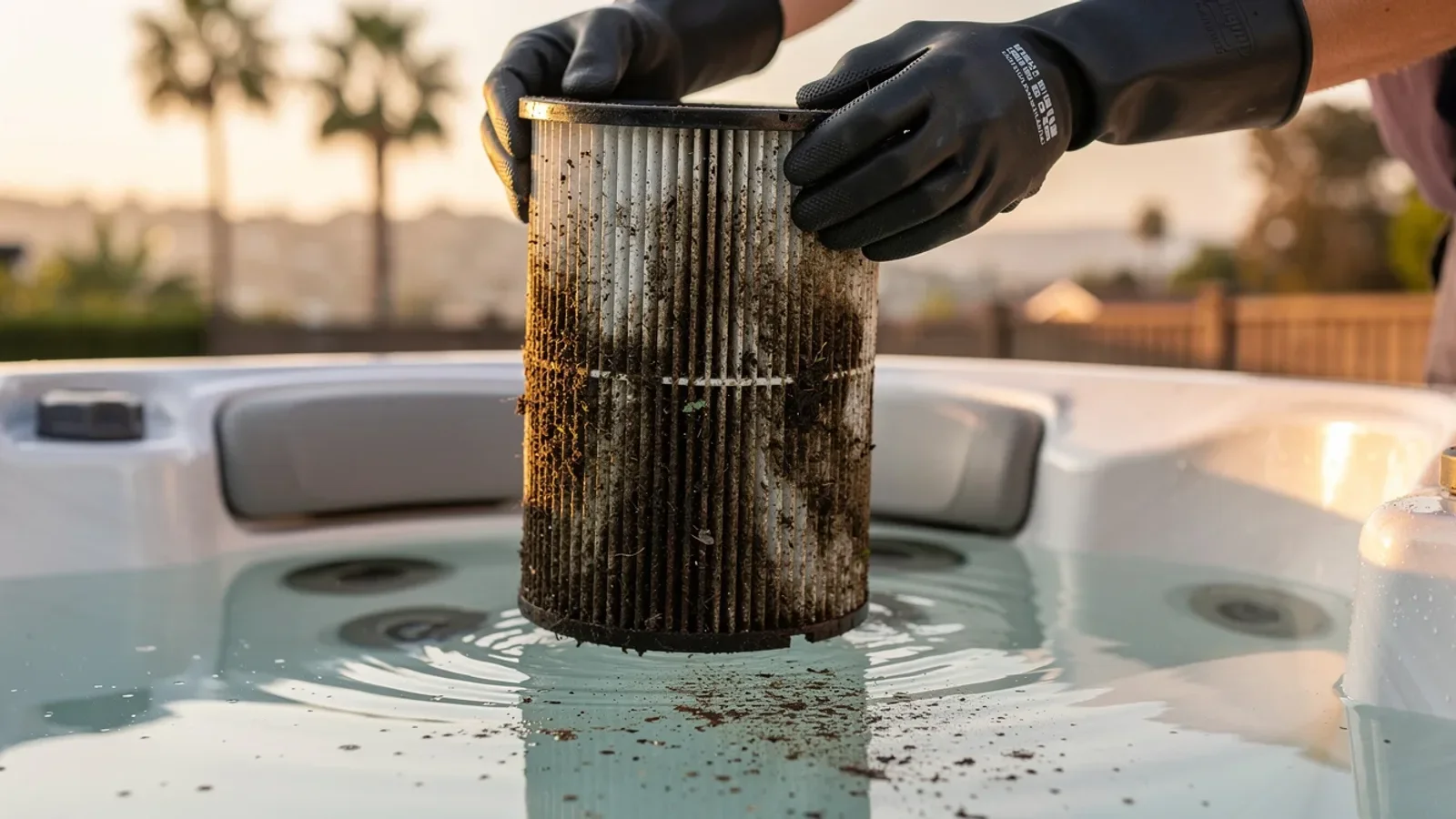
The shell is wiped down, the filters are rinsed, and the tub sits there empty and quiet, waiting. You drag the garden hose across the patio and realize you’re not totally sure what comes next. If you live in Los Angeles, that moment matters more than most owners think, because what flows out of an LA spigot isn’t a blank slate. Knowing how to refill a hot tub after a drain, then balance it for local water, is the difference between a clear spa by tomorrow night and a cloudy, scaly one by the weekend.
This guide picks up where the cleaning ends. If you haven’t drained and scrubbed yet, start with our walkthrough of the hot tub drain and clean steps first, then come back here. What follows is the refill and startup phase, step by step, written for spas across Los Angeles and the surrounding valleys.
Before you start
Gather everything before the water goes in. Once the tub is full and the heater is running, you don’t want to be hunting for test strips.
- A garden hose, rinsed out first so stale water and debris don’t go into the spa
- A hose-end pre-filter (a carbon or sediment style filter designed for spa filling)
- Clean, dry, reinstalled spa filter cartridges
- Fresh test strips or a liquid test kit that reads pH, total alkalinity, calcium hardness, and sanitizer
- Your sanitizer of choice (chlorine or bromine) plus pH and alkalinity adjusters
- A metal or scale sequestrant, which is especially useful with LA tap water
- Your owner’s manual, since startup procedures vary by brand and model
- A notepad or phone to log your readings
One safety note. Keep the spa’s power off at the breaker until the water is above the jets. Running pumps or a heater dry can damage them, and nothing about the electrical side should be improvised.
Step 1: Close the drain and check every fitting
Make sure the drain valve is fully closed and its cap is back on. Then look over the filter housing, unions, and any slices you opened during cleaning. Hand-tighten anything that was loosened. A loose union is easy to miss when the tub is empty and very obvious once it starts weeping onto the equipment bay floor. If you spot a cracked fitting or a valve that won’t seat, stop here and have it looked at before you fill.
Step 2: Fill through the filter well, not the footwell
Attach the pre-filter to the hose and place the hose end down inside the filter compartment, into the empty filter housing or standpipe. Filling this way pushes water backward through the plumbing and helps force air out of the lines. That’s the single best habit for avoiding an air lock. Filling from the footwell instead can trap air in the pump, which shows up later as a humming motor and no water flow.
- Run the water at moderate pressure so the pre-filter can do its job
- Stay nearby; an unattended hose is how patios flood
Step 3: Stop at the correct water line
Fill until the water sits at the level your manufacturer specifies, usually around the middle of the skimmer opening and comfortably above the highest jets. Too low and the skimmer pulls air. Too high and the skimmer can’t skim. Check the line again after a few minutes, since water settles into the plumbing and the level often drops a bit.
Step 4: Restore power and bleed out trapped air
Turn the breaker back on and let the spa run its startup cycle. Many tubs go into a priming mode on their own. Watch the jets: you want steady streams, not sputtering. If a pump hums but moves no water, you likely have an air lock. Your manual will describe the approved way to clear it for your model, often cycling the pump or briefly loosening a designated bleed point on the pump union. If that doesn’t solve it quickly, shut the pump off rather than letting it run dry and call for help.
Step 5: Test the fresh water before adding anything
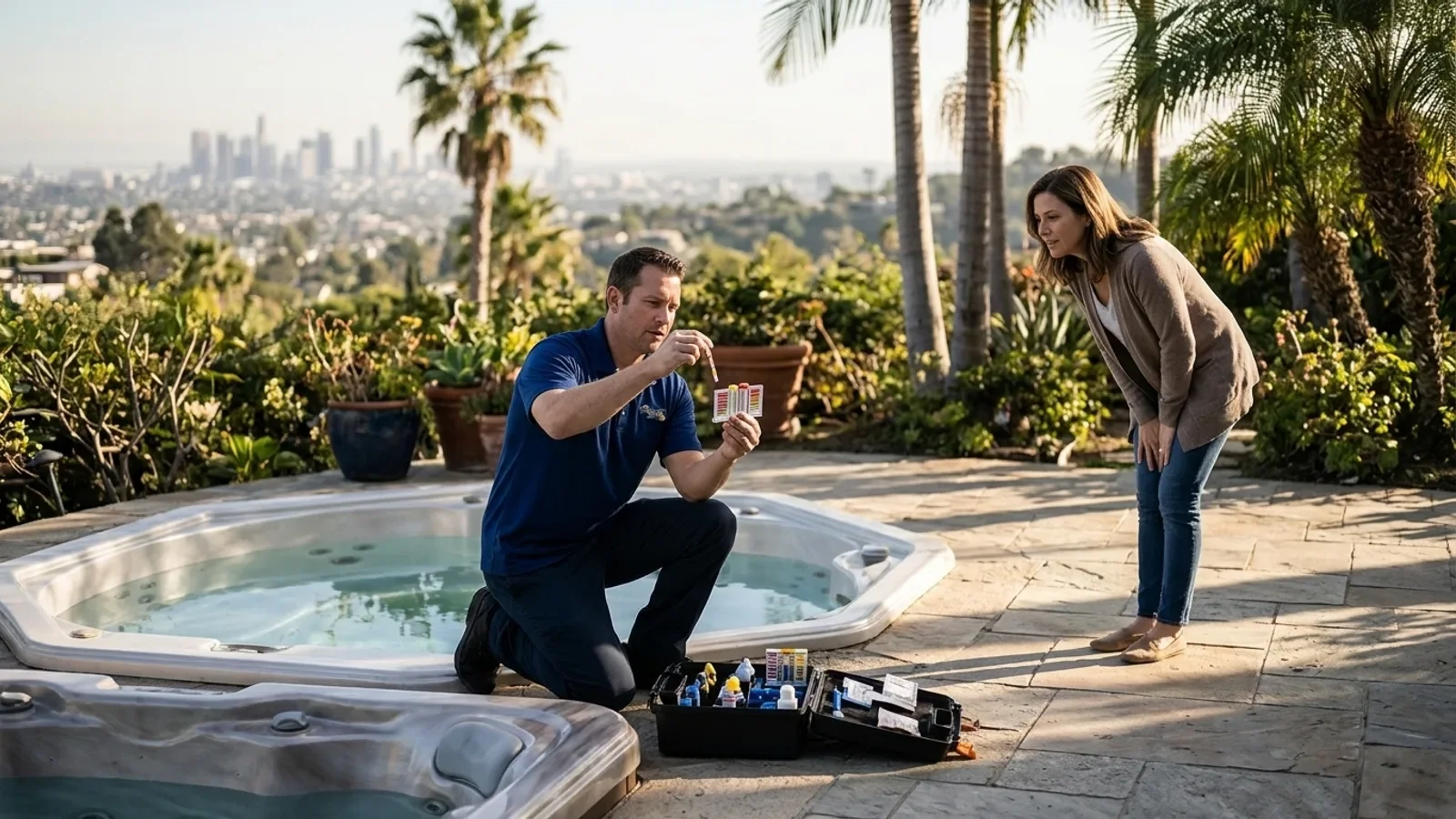
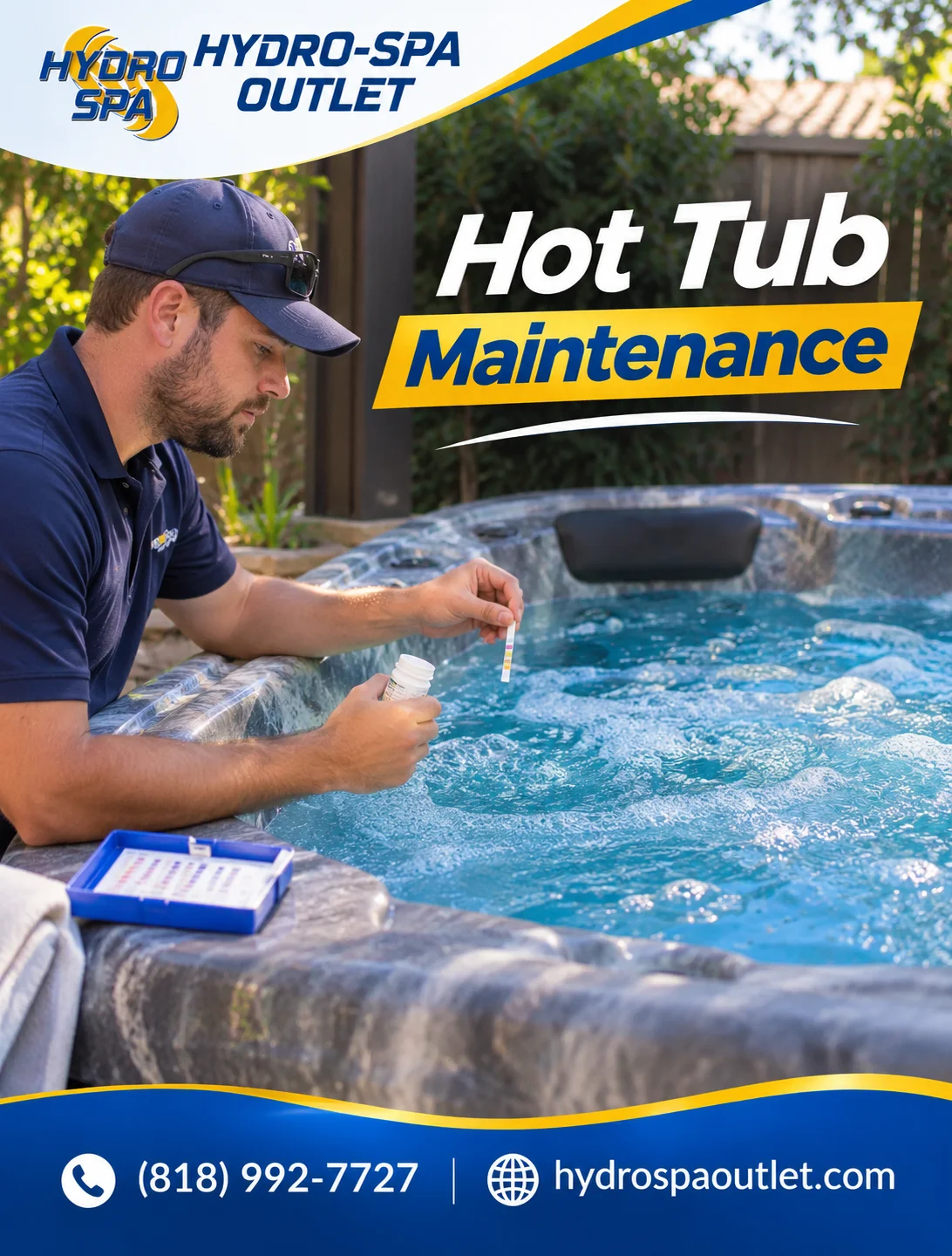
This is the step people skip. Don’t. Take a full set of readings on the raw fill water and write them down. You’re looking at total alkalinity, pH, and especially calcium hardness. In much of the LA area, the hardness reading on a fresh fill comes back on the high side. That baseline tells you what you’re actually correcting, instead of guessing from the label on a bottle.
Step 6: Add a sequestrant, then adjust alkalinity first
With hard local water, add a metal and scale sequestrant early, following the product directions. It helps keep minerals in solution so they’re less likely to cloud the water or crust onto the heater and jets. Then balance in the right order:
- Total alkalinity first. It buffers pH, so fixing it first keeps pH from bouncing around.
- pH second. Adjust toward your manufacturer’s target range once alkalinity is settled.
- Calcium hardness last. In LA you usually won’t need to add calcium. You’re more likely managing too much of it.
Add chemicals one at a time with the jets running and the cover open. Wait the time listed on each product, then retest. Small adjustments beat big swings.
Step 7: Shock and establish your sanitizer
Once the water is balanced, shock the spa to oxidize anything left over from the fill and the cleaning, then bring your chlorine or bromine up to its working range. Brand-new water can absorb a surprising amount of sanitizer at first. Keep the cover off while the shock gasses off, per the product label, and keep people out of the water until readings return to the range the label allows.
Step 8: Heat it up and retest the next day
Set the thermostat and close the cover. Heating a full tub takes a while, so plan for it. Warm water behaves differently than cold fill water, and pH tends to drift as it heats. Retest after the water reaches temperature and again the following day, then make final tweaks. If the water looks hazy at this point, our guide on why fresh spa water turns cloudy covers the usual culprits.
Why Los Angeles water changes the refill routine
Here’s the local part. Much of Los Angeles draws on imported water, including supply from the Colorado River, which is known for being hard and mineral-heavy. Many LA neighborhoods get water that tests high in calcium and total dissolved solids compared to softer-water regions. Utilities treat it with disinfectants such as chloramine, and that treatment is part of why a fresh fill can read differently than you’d expect. Supply can vary between neighborhoods and even across seasons, so your neighbor’s readings in Pasadena may not match yours in Torrance.
A few practical consequences follow. Scale is the big one. Hot water holds minerals poorly, so heater elements and jets in hard-water areas build crust faster. Total dissolved solids also start higher, which shortens the useful life of each fill. And the region’s dry air and long warm stretches mean more evaporation, so frequent top-offs keep feeding minerals back in. Mild LA weather also means many spas run year-round, including through the cooler late-fall and winter months, with no real off-season break. That makes a careful startup worth the time. For a deeper look at managing minerals between drains, see our hard water care guide for LA spa owners.
When to call a professional in Los Angeles
Plenty of owners handle the refill themselves. Some situations are worth handing off, though.
- The pump stays air locked after you’ve followed your manual’s priming steps
- The heater won’t come on, trips the breaker, or shows an error code
- You find a leak at a union, valve, or under the cabinet
- Water chemistry won’t stabilize after several careful adjustments
- You’d rather skip the whole drain, clean, and refill cycle entirely
Anything involving wiring, the heater, or the spa’s electrical connection belongs with a qualified technician. Our team at Hydro-Spa Outlet handles drains, cleans, refills, startups, and repairs across the LA area. If you’d like to see what a visit includes, read what to expect when you hire a drain and clean crew, or look at the full scope of our professional hot tub cleaning service. Ongoing help is available too through regular spa maintenance visits.
Frequently Asked Questions
How long after refilling can I use my hot tub?
Wait until the water is fully heated, balanced, and your sanitizer reads within the range on its label. For most spas that means waiting until at least the next day after a fresh fill.
Do I need a hose pre-filter in Los Angeles?
It’s strongly recommended. A pre-filter can catch sediment and some metals from the hose and supply line, which helps reduce staining and cloudiness in hard LA water.
Why does my pump hum but no water comes out after refilling?
That’s usually an air lock from air trapped in the plumbing. Follow your manual’s priming procedure, and if it doesn’t clear quickly, turn the pump off and call a technician so it doesn’t run dry.
Should I add calcium after refilling in LA?
Usually not. Much of the local water already arrives hard, so test first and add calcium only if your reading is actually below the manufacturer’s recommended range.
How often should I drain and refill?
It depends on bather load, sanitizer type, and how quickly dissolved solids build up. Many owners drain every few months; your manual and regular water tests are the best guide.
The short version
Fill through the filter well. Bleed the air. Test before you dose. Balance alkalinity, then pH, and treat LA hardness as something to manage rather than add. Then heat, retest, and enjoy it. If any part of the startup gets stubborn, Hydro-Spa Outlet is a phone call away, and we’re glad to take the refill off your hands.