Hot tub water sits at roughly body temperature or higher, and warm water holds onto dissolved minerals and organic matter very differently than a cool swimming pool does. That one fact explains most cloudy hot tub water causes, and it matters a lot in Los Angeles, where much of the tap water arriving at your backyard spa is considered hard. Add sunscreen, dust from Santa Ana winds, and a spa that may run year-round, and you get a recipe for haze.
So why is there so much bad advice floating around? Partly because cloudy water looks the same no matter what caused it. A bottle of clarifier, a quick shock, or a filter rinse sometimes helps for a day, so people assume they’ve found the fix. Then the haze comes back. Below, we sort the common myths from what we actually see servicing spas across the LA area.
Myth: Cloudy water always means you need more chlorine
Reality: Low sanitizer is one cause, but it’s far from the only one. Cloudiness is really just tiny particles suspended in the water, scattering light. Those particles can be bacteria and organic waste (where sanitizer helps), but they can also be dissolved minerals coming out of solution, fine debris your filter isn’t catching, or soap residue.
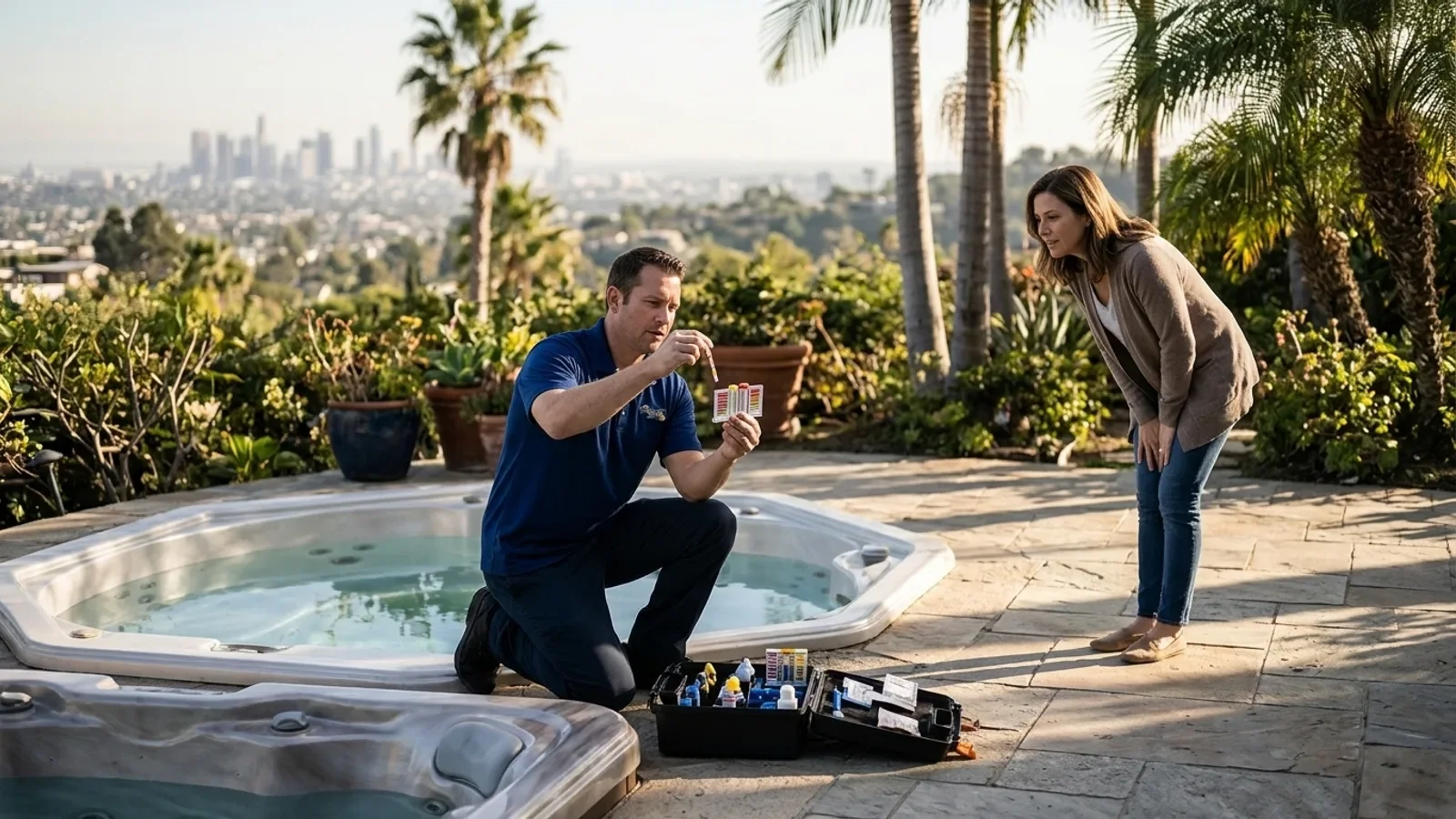
Dumping in more chlorine when the real issue is mineral scaling can actually make things worse. Higher sanitizer levels and swings in pH can push calcium out of solution faster. Test first. Look at sanitizer, pH, total alkalinity, and calcium hardness together before reaching for any bottle.
That’s the habit that saves the most frustration.
Myth: LA tap water is fine for a hot tub straight from the hose
Reality: This is the section where Los Angeles really is different. Much of the region’s supply blends imported water from the Colorado River and Northern California with local groundwater, and it tends to carry noticeable calcium and magnesium. Homeowners see the evidence on faucets and shower glass. Inside a spa, that same water is heated to around 100 degrees or more, which reduces how much calcium the water can hold in solution.
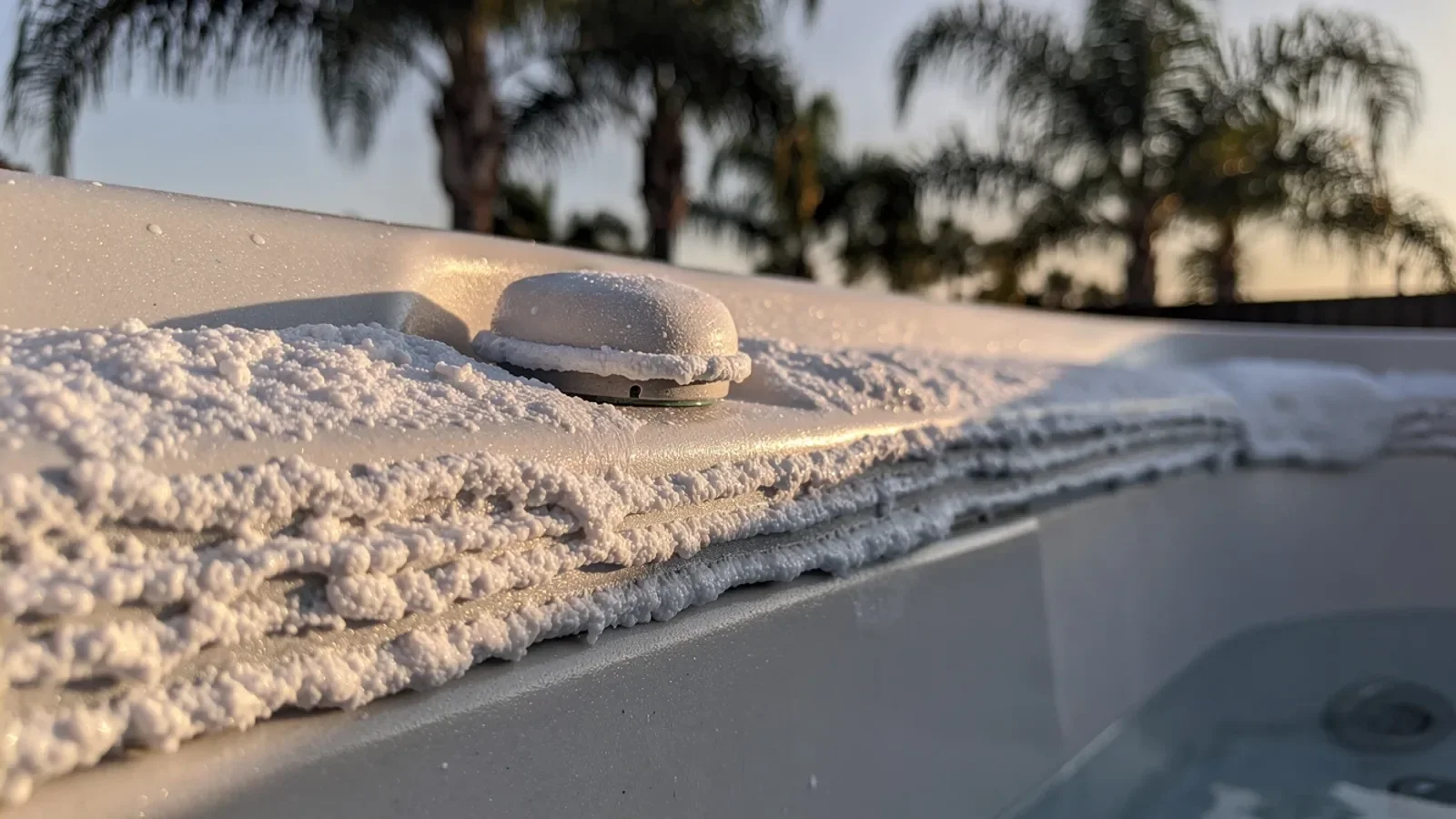
When calcium drops out, it can show up as milky water first, then as white crust at the waterline, on jets, and on heater elements. Older homes in neighborhoods like the Valley, Silver Lake, or the Westside may also have aging galvanized or copper supply lines, which can add metals that discolor water. Water character also varies between utilities and neighborhoods across the county, so a fill in Pasadena may not behave like one in Torrance.
Fill water isn’t “bad.” It just needs balancing from day one. Our guide to managing hard water in an LA spa goes deeper on fill strategies and balance targets.
Myth: Clarifier is a cure
Reality: Clarifiers clump fine particles together so your filter can trap them. That’s useful. But a clarifier doesn’t remove the source of those particles. If the cloudiness comes from high total dissolved solids, a worn filter, or biofilm in the plumbing, clarifier treats the symptom while the cause keeps producing more haze.
Think of it as a helper, not a fix. If you find yourself adding it every few days, something upstream needs attention.
Myth: If the filter looks clean, it’s working
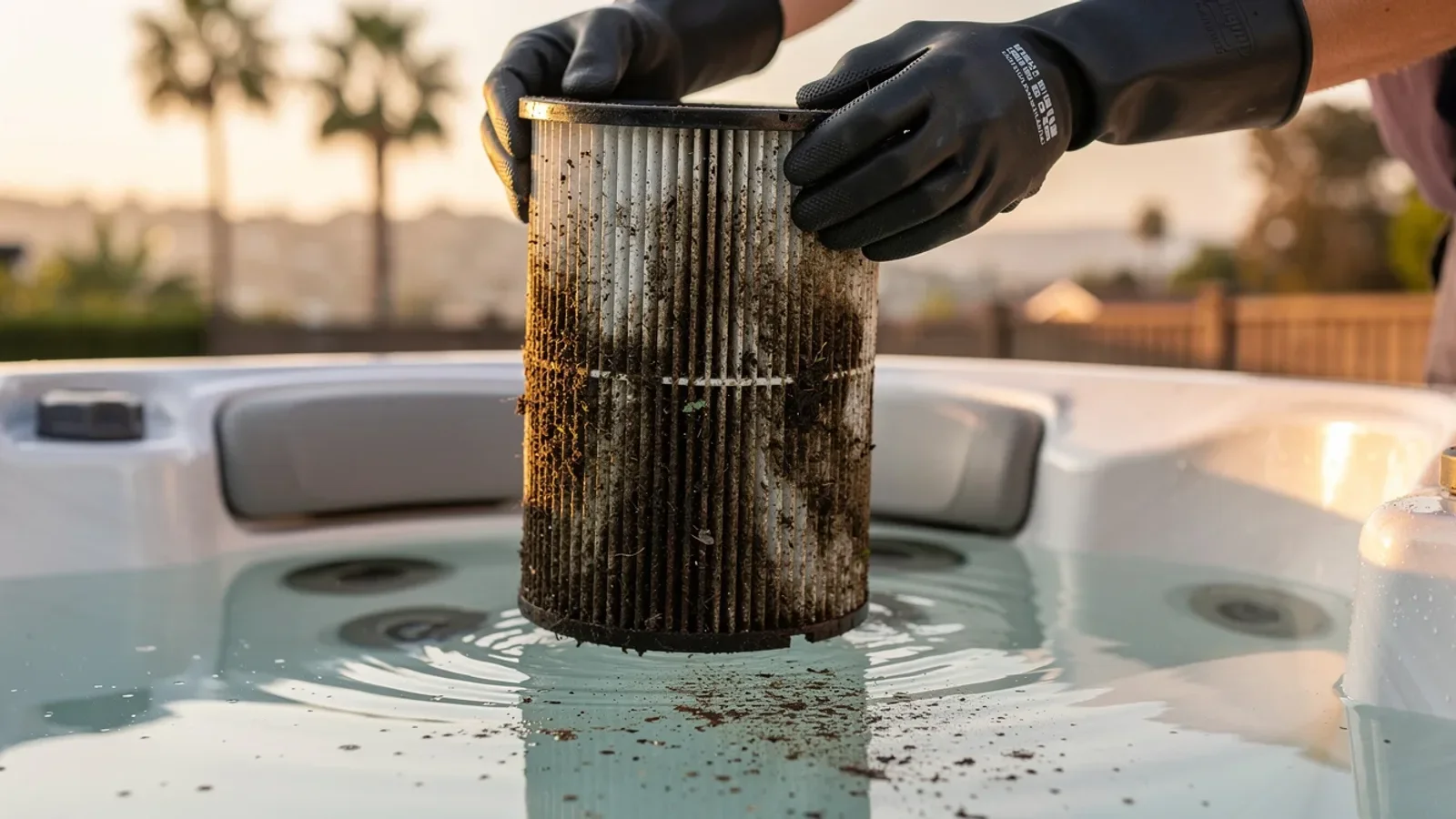
Reality: A filter cartridge can look white on the outside and still be loaded deep in the pleats with oils, lotions, and fine mineral scale. LA’s dry, windy stretches also blow fine dust into covers and onto water surfaces, and that silt works its way into the media.
Here’s the safe homeowner routine we suggest:
- Rinse cartridges with a garden hose regularly, working between each pleat.
- Soak them periodically in a filter cleaning solution made for spa cartridges.
- Rotate a spare set so one can fully dry while the other is in use.
- Replace cartridges when the pleats feel soft, frayed, or won’t come clean.
Rinsing helps. It doesn’t restore a cartridge that’s past its useful life.
Myth: Cloudy water is only about the water you can see
Reality: Some of the most stubborn haze starts where you can’t look: inside the pipes. Biofilm is a slimy layer of bacteria that anchors itself to plumbing walls, jet bodies, and air channels. It shields itself from normal sanitizer levels and sheds material back into the water.
Signs include water that clouds up soon after a refill, foam that keeps returning, flakes shooting out of jets, or a musty smell. If any of that sounds familiar, read our breakdown of what biofilm looks like inside spa lines. Chemistry adjustments alone rarely clear it. It usually takes a dedicated line flush before draining, followed by a proper refill, which is why we often recommend you schedule a full hot tub cleaning rather than chase it bottle by bottle.
Myth: You can top off forever instead of draining
Reality: Every time water evaporates, the minerals stay behind. Southern California’s warm, dry air speeds that evaporation up, so frequent top-offs gradually concentrate calcium and other dissolved solids. Add sanitizer byproducts, body oils, and cosmetics, and the water eventually reaches a point where balancing becomes a losing game.
Many manufacturers suggest draining every few months depending on use, but the real signal is behavior. When the water stays dull after you’ve balanced it, foams easily, or eats sanitizer quickly, it’s tired. A fresh start is usually the most efficient fix.
Once you’ve drained and refilled, the first days matter. Our checklist on what to do right after a drain and refill covers start-up balancing so the new water doesn’t cloud up right away.
Myth: Shocking at night or in the morning makes no difference
Reality: Timing matters more in sunny Los Angeles than many owners expect. Uncovered spas lose chlorine to UV light, so shocking midday with the cover off wastes much of the product. Shocking in the evening, with the cover open briefly so gases can vent, usually gives better results.

Heavy use matters too. A weekend party with several bathers can overwhelm sanitizer quickly, especially in warm water. A post-soak shock helps break down the organic load before it turns into haze.
Myth: Cloudy water always means equipment failure
Reality: Usually it doesn’t. Most cloudiness traces back to chemistry, filtration, or contamination. That said, mechanical problems can contribute. A circulation pump that isn’t running long enough, a failing ozonator or other secondary sanitizer, or air leaks can all reduce how well water is filtered and treated.
If you’ve balanced, cleaned the filter, and drained, and the water still clouds within days, it’s worth having a technician check circulation and components. Hydro-Spa Outlet handles hot tub repair and routine maintenance, so we can look at both the water and the equipment in one visit.
Frequently Asked Questions
What are the most common cloudy hot tub water causes?
The usual suspects are low sanitizer, unbalanced pH or alkalinity, high calcium hardness, a dirty or worn filter, and organic buildup from oils and lotions. In Los Angeles, hard fill water and evaporation make mineral-related cloudiness especially common.
Can hard water alone make my spa cloudy?
Yes. When hot water can’t hold all its dissolved calcium, the excess comes out of solution and can turn water milky before forming scale. Balancing calcium hardness and pH from the first fill helps reduce this.
How quickly should cloudy water clear after I fix the chemistry?
If chemistry was the cause, water often improves within a day of steady filtration. If it stays hazy longer, look at the filter, plumbing biofilm, or whether it’s time for a full drain.
Is it safe to use a cloudy hot tub?
Cloudy water can mean sanitizer isn’t keeping up, so it’s sensible to stay out until you’ve tested and corrected the water. Clear, balanced water is the standard to aim for before soaking.
When should I call a professional?
Call when the haze keeps returning after balancing and filter cleaning, when you see flakes or slime from jets, or when equipment seems off. Those are signs the problem sits deeper than the water surface.
The short version
Cloudy spa water is rarely a mystery once you stop treating it as one problem. In LA, hard water, evaporation, sun, dust, and plumbing biofilm all play a part. Test first. Fix the filter. Drain when the water is tired.
If you’ve done all that and the haze keeps coming back, it’s time for a deeper clean. Our team can handle a professional spa drain, flush, and refill, and if you’re comparing options, our notes on hiring a drain and clean service in LA explain what a thorough visit should include. You can also review our step-by-step hot tub drain and cleaning checklist before booking. Reach out to Hydro-Spa Outlet and we’ll help get your water clear again.