A hot tub that gets a fast rinse instead of a real clean usually looks fine for a week or two. Then the water clouds faster than it should, the jets start sputtering, and sanitizer seems to vanish. In Los Angeles, where many spas run year-round and the tap water carries a lot of dissolved minerals, a shallow cleaning can leave buildup behind that the next fill picks right back up. That’s why the questions you ask a spa cleaning service matter more than the appointment time.
This guide compares the three common ways LA homeowners handle hot tub cleaning: a one-time drain and clean visit, a recurring maintenance plan, and doing it yourself with occasional professional help. For each one, you’ll get the questions worth asking so you can decide what fits your spa, your schedule, and your water. If you want the full procedure first, our step-by-step checklist for a comprehensive hot tub cleaning walks through every stage a qualified technician should cover.
Option one: a one-time drain and clean visit
This is the classic service call. A technician purges the plumbing, drains the tub, cleans the shell and filters, refills, and balances the water. Most owners book it a few times a year, or when the water simply won’t behave.
It works well if you’re comfortable with weekly chemistry yourself but don’t want to handle the heavy lifting of a full drain. It’s also the right move when something feels off and you want a clean baseline.
Here’s what to ask before you book:
- Do you purge the plumbing before draining? A line flush with a purge product loosens residue inside pipes and jets. Draining without it can leave the worst buildup exactly where it was.
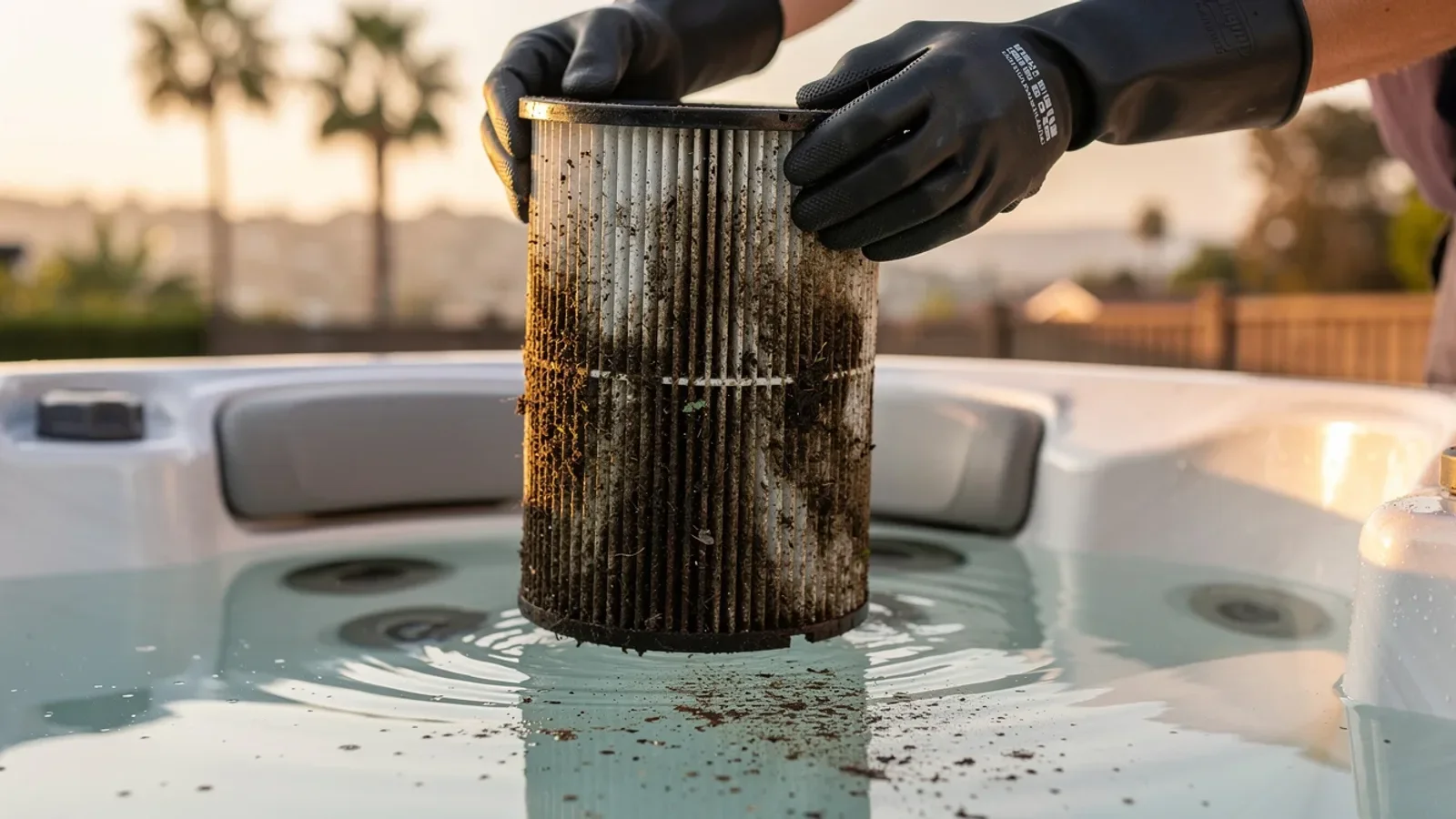
- How do you handle the filters? Ask whether they rinse, chemically soak, or recommend replacing them, and how they decide.
- What do you use on the shell? The answer should be a cleaner made for acrylic spa surfaces, not household products that can foam or leave residue.
- Do you refill and balance, or just refill? A fresh fill of LA tap water usually needs adjustment for pH, alkalinity, and calcium hardness.
- Will you point out anything that looks wrong? A drain is a good moment to spot a worn jet, a weak pump, or a cracked filter housing.
That last question matters. A technician who notices problems saves you a second visit.
Option two: a recurring maintenance plan
With a recurring plan, a technician visits on a set schedule to test and balance water, clean filters, wipe down the waterline, and check equipment. Full drain and clean visits get folded in at sensible intervals.
This suits busy households, rental properties, and anyone whose spa sees heavy use. It also suits people who simply don’t want to think about chemistry. Consistency is the real benefit here.
Questions to ask about a maintenance plan:
- What happens at each visit, specifically? Get a list. Testing, adjusting, filter care, cover check, and equipment glance should all be on it.
- How often do you schedule full drains? The answer should depend on bather load and water condition, not a fixed number pulled from a brochure.
- Do you keep records of water readings? A running log makes it much easier to catch slow trends like creeping calcium.
- Who do I call if something breaks between visits? Ask whether repair is handled by the same team.
- Can you adjust the schedule around heavy-use periods? Holiday guests and summer parties change how fast water degrades.
At Hydro-Spa Outlet, our maintenance and repair work sit under one roof, so a problem spotted during a routine visit doesn’t have to start from scratch with someone new.
Option three: DIY with occasional professional help
Plenty of owners handle weekly testing, chemical dosing, and filter rinses themselves. They bring in a pro only for the full drain, a stubborn water problem, or a repair.
This works if you enjoy the routine and actually stick to it. It falls apart when life gets busy and testing slides for a few weeks. Small lapses compound.
If this is your approach, the questions shift toward what you hand off:
- Can you do a purge and drain without a plan? Many owners want a one-off deep clean on their own timing.
- Will you review my water routine? A quick look at your products and readings can explain recurring cloudiness or foam.
- What signs mean I should call you instead of adjusting chemicals again? Some symptoms are mechanical, not chemical.
If your water keeps going hazy no matter what you add, our guide on why spa water turns cloudy in LA covers the usual suspects. And if you’re draining on your own, this rundown of the steps to take once the tub is empty helps you avoid common refill mistakes.
How the three approaches compare
The table below lines up each option against the factors LA spa owners tend to weigh most when choosing a service model.

| Criteria | One-time drain and clean | Recurring maintenance plan | DIY with occasional pro help |
|---|---|---|---|
| Your weekly time commitment | Moderate (you handle chemistry between visits) | Low (technician handles routine care) | High (testing and dosing are on you) |
| Plumbing purge included | Should be, ask to confirm | Included at scheduled drain intervals | Only when you book a pro drain |
| Water records kept | Usually a single reading at refill | Ongoing log across visits | Only if you keep your own |
| Early problem detection | At each visit only | Regular, frequent checks | Depends on your eye for equipment |
| Best fit | Confident owners wanting a periodic reset | Busy households, rentals, heavy use | Hands-on owners with steady routines |
No column is wrong. The best choice is the one you’ll actually keep up with.
Why Los Angeles water changes the questions
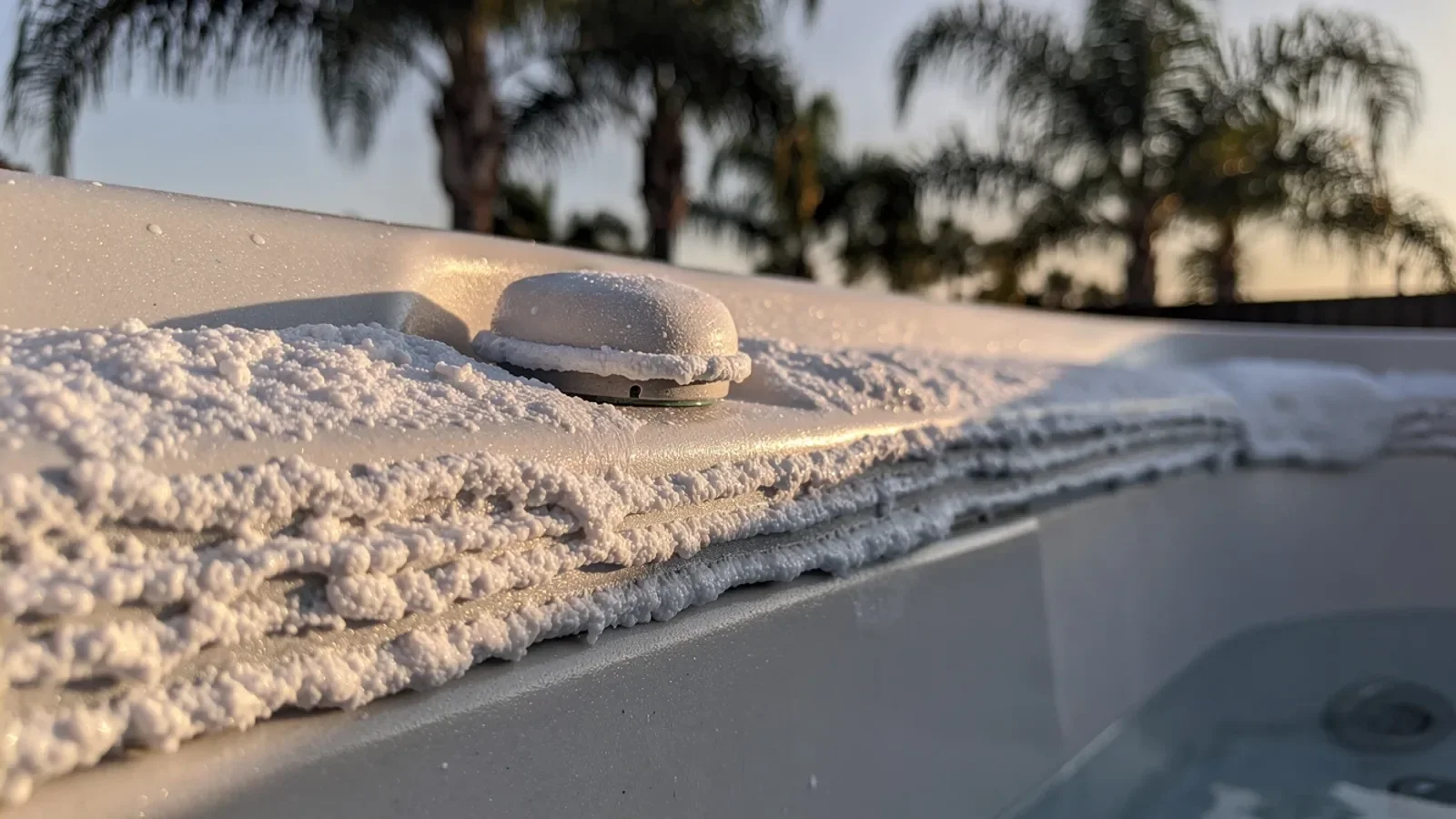
Most of Southern California’s municipal water is hard. Much of what reaches LA homes comes from imported sources, including the Colorado River, which is known for high mineral content. When that water heats up in a spa and slowly evaporates, calcium and other minerals concentrate. Over time they can show up as scale at the waterline, crusty deposits on jets, and residue on heater elements.
Climate adds to it. Mild winters mean many LA spas never get winterized or shut down, so they run and evaporate nearly all year. Topping off with fresh tap water adds more minerals each time. Dry Santa Ana wind periods in fall and winter can speed evaporation and blow dust and leaf debris under poorly fitting covers.
So ask any service how they handle hard water. Do they test calcium hardness at refill? Do they use a pre-filter or recommend a scale-control product? Do they check for scale on the heater and jets? Our deeper guide to managing hard water in an LA spa explains what to watch for between visits.
Older homes add another wrinkle. Spas tucked behind 1950s and 1960s houses in the Valley or on hillside lots sometimes have tight access and long hose runs to a drain point. A good technician will ask about access before arriving.
Which is right for Los Angeles homes
Here’s the short version.
If your spa gets light use and you already test water weekly, a one-time drain and clean a few times a year is usually enough. Just make sure the visit includes a real plumbing purge and a balanced refill, since that’s where LA’s hard water does its quiet damage.
If the tub is used most nights, sits at a rental, or keeps slipping down your to-do list, a recurring plan tends to work better. Regular visits catch mineral creep and filter wear before they turn into repairs.
If you like the routine and have a good handle on chemistry, DIY with a pro drain on your schedule is a solid middle path. Be honest about how consistent you’ll be.
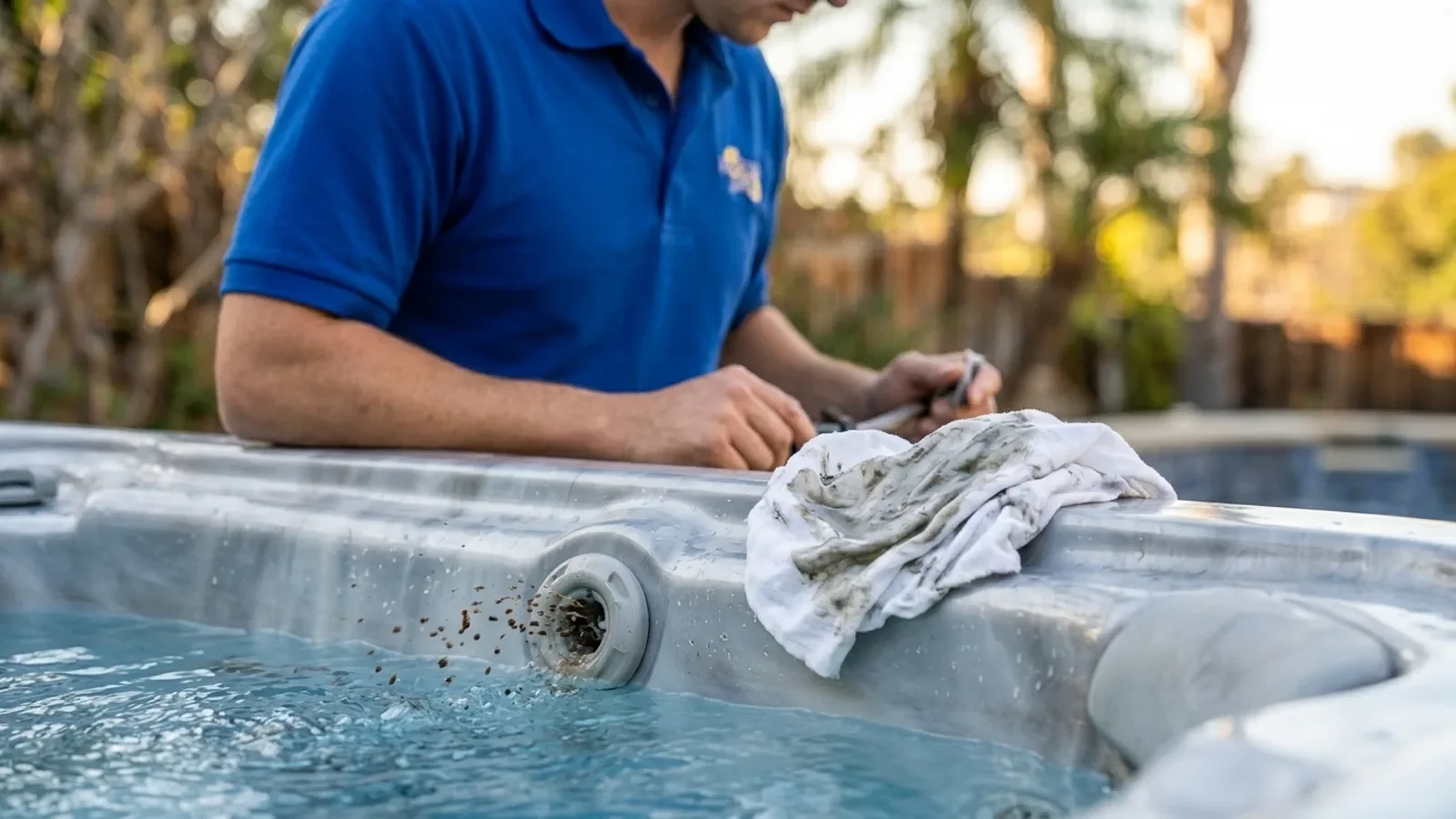
Whichever model you pick, one sign should push you to book a full clean quickly: slimy residue or flakes coming out of the jets. That often points to buildup inside the lines, and our article on spotting biofilm in spa plumbing explains what it looks like.
Red flags worth noticing during a quote
Good answers are specific. Vague ones are a signal to keep asking.
- No mention of purging the lines before draining.
- No plan for testing or balancing the refill water.
- Unwillingness to explain what products they’ll use on the shell.
- No clear contact for problems found during the visit.
None of these automatically disqualify a provider. They just mean you should get clearer answers before booking.
Frequently Asked Questions
How often should a hot tub be drained and cleaned in Los Angeles?
It depends on how often the spa is used and how quickly minerals build up from local tap water. Many LA owners drain every few months, and heavier use or hard-water scale usually means more often. A technician can suggest an interval based on your water readings.
Should a spa cleaning service purge the plumbing every time?
A purge before a full drain is standard good practice because it loosens residue inside pipes and jets. Without it, much of that buildup stays in the lines and contaminates the fresh water.
Can the same company clean my spa and handle repairs?
At Hydro-Spa Outlet, yes. We offer drain and cleaning, ongoing maintenance, and hot tub repair, so issues spotted during a cleaning can be addressed without bringing in a separate team.
Is a recurring maintenance plan worth it if I already test my water?
If your routine is consistent, you may only need periodic deep cleans. Plans are most useful for busy households, rentals, and spas with heavy use where testing tends to slip.
What should I ask about hard water specifically?
Ask whether they test calcium hardness at refill, how they handle scale on jets and heaters, and whether they recommend a pre-filter or scale-control product for LA tap water.
Ready to compare answers?
The right questions turn a vague service call into a clear plan. Whether you want a single deep clean or steady ongoing care, we’re glad to walk through exactly what a visit includes. When you’re ready, you can book a hot tub drain and clean with our LA team and ask us anything on this list. You can also review the full drain, purge, and refill process we follow before we arrive.