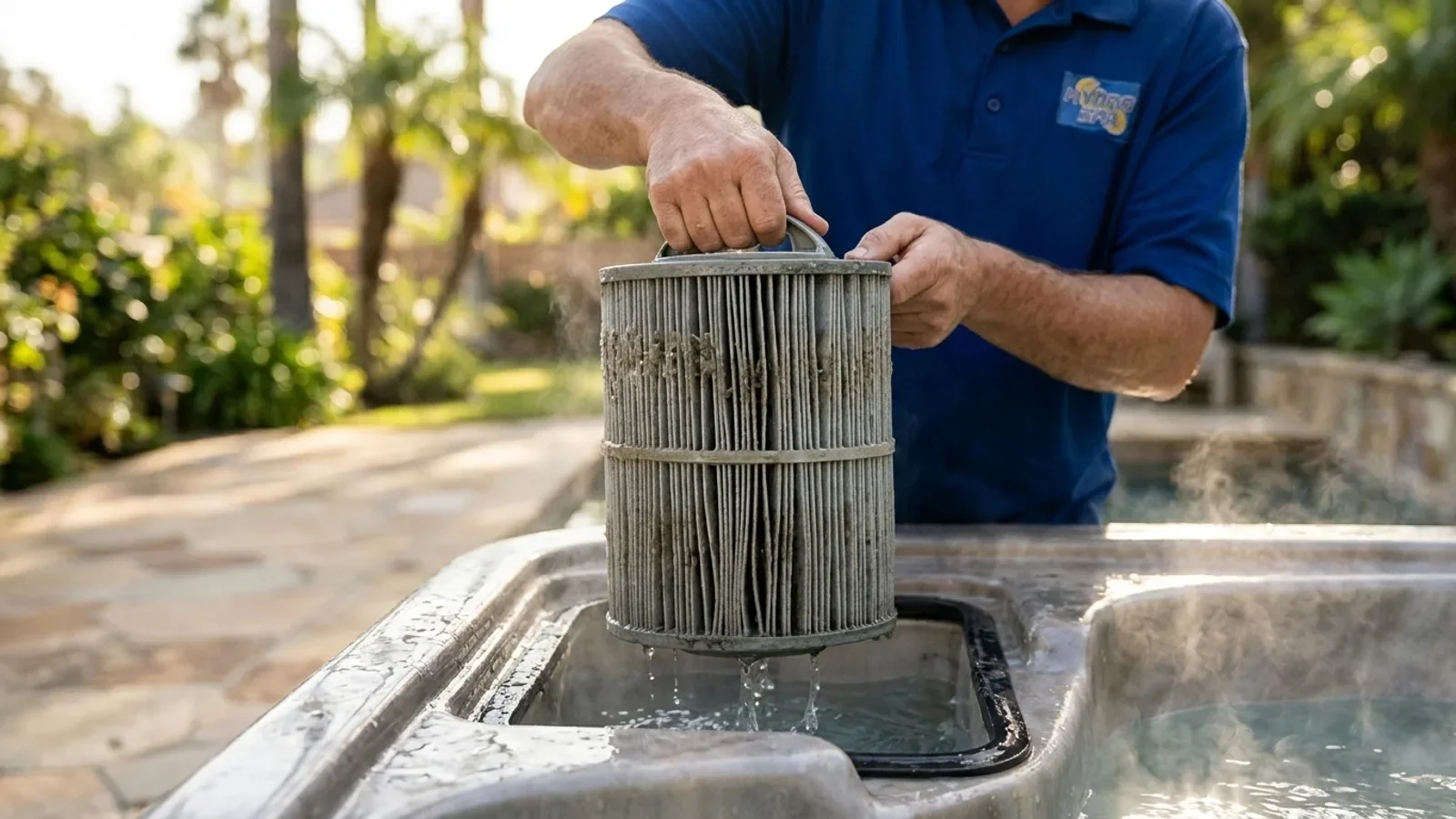
Water hardness is measured as calcium carbonate in parts per million, and much of the tap water delivered across Los Angeles lands in the hard range. That matters for spa owners. Every fill brings dissolved minerals into your tub, and heat pushes them out as scale. Here’s how hard water hot tub care in Los Angeles actually works.
What does “hard water” actually mean for a hot tub?
Hard water simply carries a lot of dissolved calcium and magnesium. In a glass of drinking water, you’d never notice. In a hot tub, the situation changes. Spa water sits at high temperatures for weeks, evaporates constantly, and gets topped off with more mineral-rich water. Evaporation leaves the minerals behind, so concentration climbs over time. Once the water can’t hold any more, calcium drops out of solution and bonds to whatever it touches: the shell, jets, heater element, and the inside of the plumbing. That crusty white or gray deposit is scale. It isn’t dirt you can wipe off with a cloth. It’s mineral rock, and it builds in layers. Managing it is less about scrubbing and more about controlling the water chemistry before deposits form.
Why is scale such a problem in Los Angeles spas specifically?
Los Angeles draws its water from a mix of sources, including imported supplies from the Colorado River and Northern California plus local groundwater, and the blend varies by neighborhood and season. Many of those sources run mineral-heavy, so the hardness you start with in Woodland Hills may differ from what fills a tub in Long Beach or Pasadena. Then there’s the climate. Our dry air and long stretches of sun speed up evaporation, especially on uncovered tubs and during Santa Ana wind events. More evaporation means more top-offs, and every top-off adds minerals. Even in the cooler months, when most LA owners keep their spas hot and in steady use, the heater runs longer cycles, which is exactly where scale likes to form. Mild winters mean year-round use. Year-round use means year-round mineral buildup.
How can I tell if hard water is affecting my tub?
The signs usually show up gradually. Look for a chalky ring at the waterline that resists normal wiping. Check the jet faces for crusty white deposits or nozzles that seem to spray weaker than they used to. Cloudy water that won’t clear after you’ve balanced sanitizer can also point to high calcium. Rough patches on the shell surface are another clue. Inside the equipment, scale is harder to spot, but it shows itself through symptoms: the heater taking longer to reach temperature, flow errors on the control panel, or filters that clog faster than normal. Test strips or a liquid test kit that reads calcium hardness will give you a number to work with. If you’re seeing several of these at once, minerals have probably been building for a while.
What damage can hard water do if I ignore it?
Scale is an insulator. When it coats a heater element, the element has to work harder to transfer heat into the water, which can shorten its working life and raise energy use. Deposits inside narrow plumbing lines and jet bodies restrict flow, and reduced flow puts extra strain on the pump. Pressure switches and flow sensors can start tripping. Over time, scale can also make seals and moving jet parts stick. None of this happens overnight. That’s the trap. Because the decline is slow, many owners don’t notice until a component stops working entirely. At that point the fix moves from water chemistry to hardware, and you may need a technician to diagnose and repair the affected parts. Catching hardness early is far easier than replacing what it damaged.
What’s the right calcium hardness level for a spa?
Most spa manufacturers and water care references put the target calcium hardness range somewhere around 150 to 250 ppm, though acrylic shells and specific equipment may call for slightly different numbers. Check your owner’s manual first. Interestingly, very soft water isn’t the goal either. Water with too little calcium can become aggressive and pull minerals from surfaces and metal parts. So the job is balance, not elimination. Calcium hardness also works together with pH and total alkalinity. High pH makes calcium far more likely to drop out as scale, so a tub with moderate hardness but high pH can still scale badly. Keep pH in its recommended band, keep alkalinity steady, and test hardness on a regular schedule. Write the readings down. Trends tell you more than single tests.
Can I manage hard water myself between professional visits?
Yes, for the routine side of it. Safe homeowner habits make a real difference:
- Test pH, alkalinity, sanitizer, and calcium hardness on a regular schedule.
- Add a scale or stain control product (a sequestering agent) per the label directions.
- Keep the cover on whenever the tub isn’t in use to slow evaporation.
- Rinse filters between uses and deep-clean them on the manufacturer’s schedule.
- Wipe the waterline before a ring hardens.
- Use a pre-filter on your hose when filling or topping off.
What you shouldn’t do is open up the heater, pull apart electrical components, or pour aggressive acids into the system hoping to dissolve buried scale. That’s work for a trained technician. Pairing your own testing with routine jacuzzi maintenance in Los Angeles keeps both the water and the equipment in check.
How often should a hard water hot tub be drained?
Draining is the most reliable way to reset mineral concentration. No chemical removes dissolved calcium the way fresh water does. A common rule of thumb ties drain frequency to how much the tub is used and how much it holds, and in a hard water area like LA, many owners lean toward the more frequent end of that range. Heavy use, frequent top-offs, and climbing hardness readings all point toward draining sooner. A proper drain is also the right moment to flush plumbing lines, descale jets, and clean the shell while it’s empty. We cover timing in more depth in our guide to setting a drain and clean schedule for LA spas. Short answer: let your test results guide you.
Does a professional cleaning actually remove existing scale?
A professional drain and clean goes further than a quick refill. Our technicians can flush the plumbing with a line-cleaning product designed to loosen mineral and biofilm buildup, then treat visible scale on the shell and jets with appropriate descaling methods for your surface type. Filters get cleaned or flagged for replacement. Heavily scaled filters often can’t be fully restored. During the visit we can also look for early signs of equipment strain, like a slow heater or weak jets, before they turn into breakdowns. Some deposits, especially thick buildup inside a heater, may take more than one treatment or point toward a part that needs attention. After the work is done, the next few weeks matter, and our notes on caring for your tub after a service visit walk through how to keep the fresh water balanced.

How does hard water affect what I spend on upkeep?
Hard water doesn’t set a price, but it does shape the cost drivers. More frequent drains mean more water and more chemicals for each refill. Scale control products become a regular line item. Filters may need replacing sooner. The bigger factor is equipment. A heater or pump working against scale is more likely to need repair, and repairs typically cost more than prevention. When you compare service options, ask what’s included: water testing, scale treatment, filter care, and an equipment check. A plan that handles minerals proactively often looks more expensive on paper and less expensive over the life of the tub. Our full guide to keeping an LA jacuzzi in good shape breaks down the other factors that influence ongoing care.
The short version
Los Angeles water brings minerals into every fill. Heat, evaporation, and year-round use concentrate them until they form scale on your shell, jets, heater, and plumbing. You can slow that process with regular testing, balanced pH, scale control products, a covered tub, and timely drains. What you can’t do safely is tear into the equipment yourself. When the readings keep climbing or the tub starts acting sluggish, that’s the time to bring in help. Hydro-Spa Outlet handles drains, cleanings, ongoing maintenance, and repairs for spas across the Los Angeles area. If hard water is getting ahead of you, reach out and we’ll take a look at what professional spa maintenance looks like for your tub.