A freshly cleaned hot tub can slide backward fast. Skip the follow-up and the water clouds, the filters load up again, and scale starts to form on the shell before you’ve had many soaks. Here in Los Angeles, our mineral-heavy tap water and dusty, dry air speed that process up. This guide covers spa care after professional cleaning in Los Angeles, step by step, so the work you just paid for keeps paying off.
The goal is simple. Get the new water balanced, keep the filters clean, and settle into a routine you can actually stick to. Most of it takes a few minutes at a time.
Before you start
Gather these before you touch the chemicals. Having everything in one place makes the first week much easier.
- Fresh test strips or a liquid test kit (check the expiration date)
- Your sanitizer of choice (chlorine or bromine, whichever your tub already uses)
- pH increaser and pH decreaser
- Alkalinity increaser
- Calcium hardness reducer or a scale and stain control product
- A garden hose with a spray nozzle for rinsing filters
- A clean bucket and a soft cloth
- Your spa’s owner manual, for its recommended ranges and filter details
- A small notebook or phone note to log readings
One safety note: always add chemicals to water, never water to chemicals. Store products separately, out of the sun and away from kids and pets.
Step 1: Let the water circulate and heat before testing
Fresh fill water needs time to mix. Run the pumps and let the heater bring the tub toward its set temperature before you test anything. Testing cold, unmixed water often gives readings that shift a few hours later, and you end up chasing numbers. If your technician already added a startup dose, check the service notes so you don’t double it. Give it several hours of circulation with the cover off briefly at the start to release any trapped air, then close it up.
Step 2: Test and adjust total alkalinity first
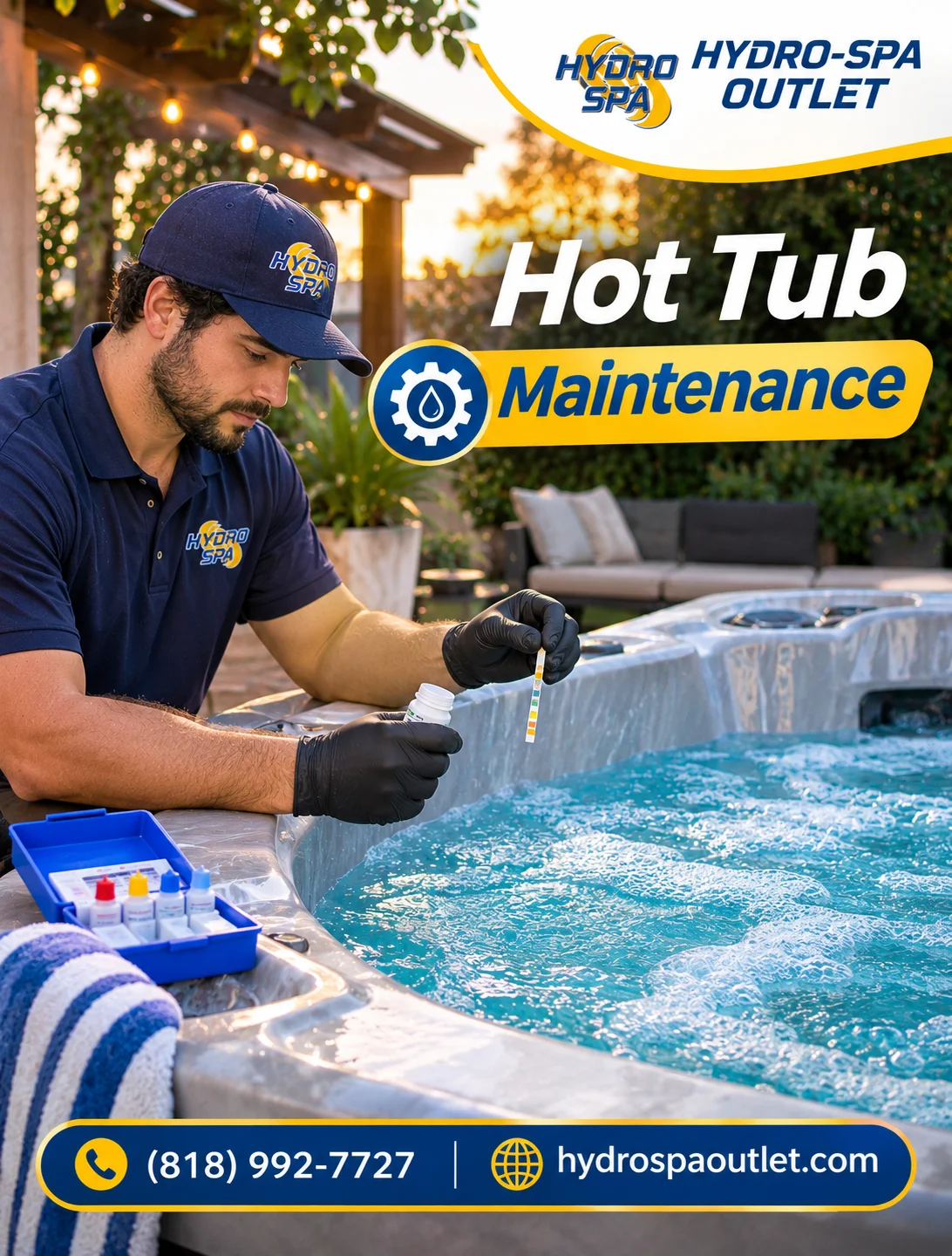
Alkalinity acts as a buffer for pH. Get it right first and pH becomes far easier to control. Dip your strip or run your liquid test, then compare against the range in your owner’s manual. If it’s low, add alkalinity increaser in small amounts, let it circulate, and retest. If it’s high, a pH decreaser will bring both down over time. Go slow here.
- Add small doses, never the whole bottle
- Wait at least 20 to 30 minutes with jets running before retesting
- Write every reading down
Step 3: Bring pH into range
Once alkalinity is steady, check pH. Water that runs high tends to scale and cloud, and sanitizer works less effectively. Low pH can feel harsh and may wear on equipment over time. Adjust in small steps with increaser or decreaser, circulate, and retest. Patience matters more than precision on day one. Getting close and refining tomorrow is fine.
Step 4: Address calcium hardness for LA tap water
This step matters more here than in many places. Check calcium hardness and compare it to your manual’s range. If it reads high, a scale and stain control product helps keep minerals in solution rather than crusting on the shell, jets, and heater. Some owners pre-filter fill water with a hose-end filter on future refills. For a deeper look at this problem, our guide to managing hard water in an LA hot tub walks through the options in detail.
Step 5: Establish your sanitizer level
Now add sanitizer. Use the same type your tub ran before the cleaning unless your technician recommended a switch. Bring it up to the level your manual suggests and confirm with a test after circulation. Mixing chlorine and bromine products is a common mistake, so keep it to one system. In the first week, test sanitizer daily. You’ll quickly learn how fast your tub uses it with your soaking habits.
Step 6: Protect the clean filters from the start
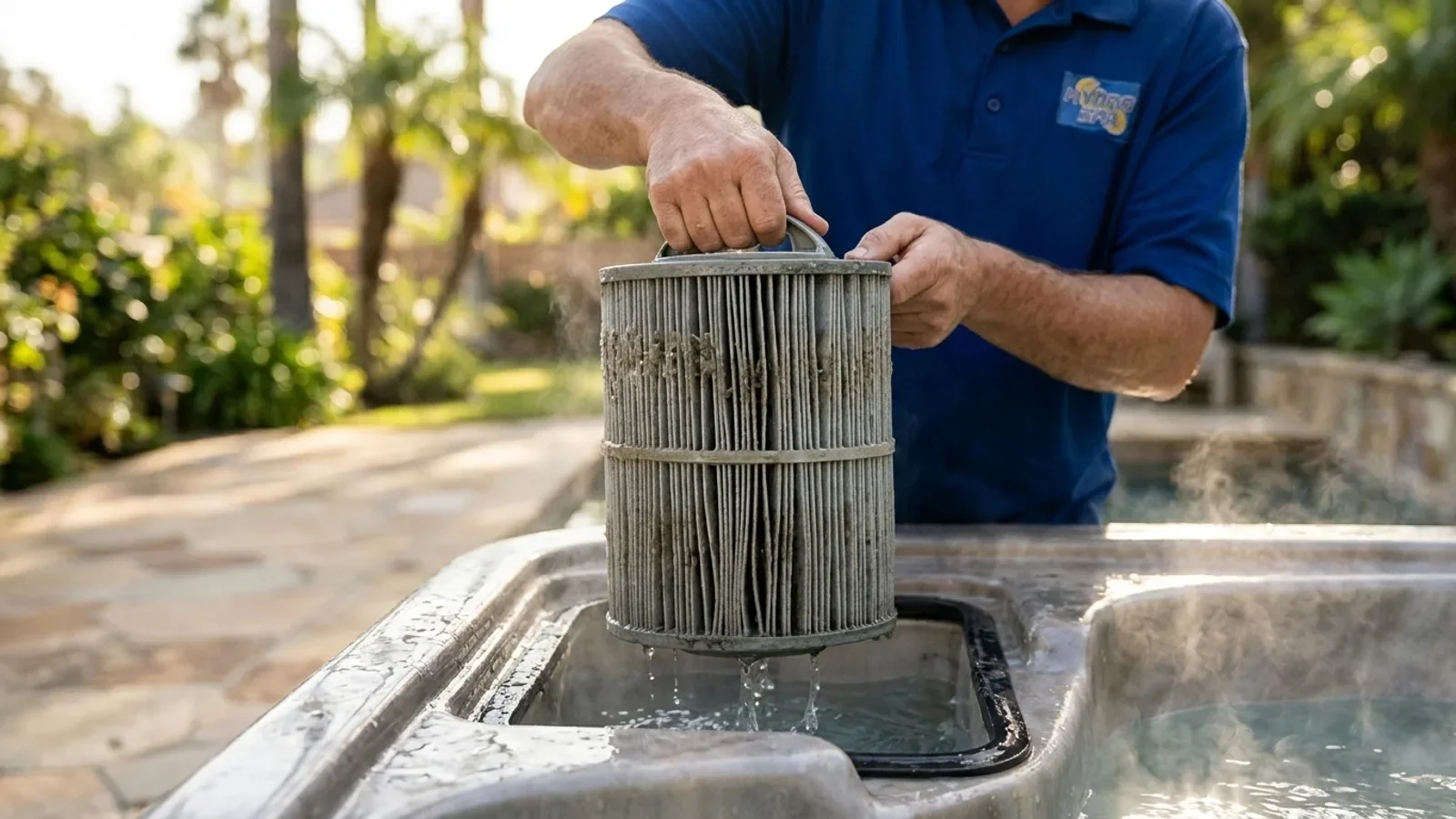
Your filters were cleaned or replaced during the service. Keep them that way. Lotions, deodorant, makeup, and hair products are a big source of filter gunk, so a quick rinse-off shower before soaking makes a real difference. Once a week, pull the cartridge and rinse it with a hose, working the spray down between the pleats from top to bottom. Don’t use a pressure washer, which can tear the pleat material.
- Weekly: hose rinse between pleats
- Monthly or so: soak in a filter cleaning solution, then rinse well
- Keep a spare cartridge so one can dry fully while the other works
Always turn the power off at the breaker or control panel before removing filters. If anything about your filter housing looks cracked or won’t seat properly, leave it alone and call a pro.
Step 7: Keep the cover and waterline clean
Dust and leaves blow onto covers constantly in Southern California. Wipe the cover top with a damp cloth and a mild, spa-safe cleaner, and lift it to check the underside for moisture or mildew. Wipe the waterline on the shell with a soft cloth when you notice a film. Skip household cleaners entirely. Soap residue is one of the quickest ways to get foamy water.
Step 8: Build a simple weekly routine
After the first two weeks, the tub usually settles. Shift to testing two or three times a week, adjusting as needed, and shocking after heavy use or a party. Log your readings so patterns jump out. A sudden pH swing or sanitizer that vanishes overnight is easier to spot when you have notes to compare. When the water starts resisting balance or turns dull no matter what you do, it’s probably nearing time for the next drain. Our guide to timing your next drain and clean explains the usual signs.
Why Los Angeles water makes the first week matter
LA’s conditions put specific pressure on a freshly filled spa. Much of the region’s tap water is imported from distant sources, including the Colorado River, which tends to carry significant dissolved minerals. That means each fresh fill starts with hardness already in the tub, and evaporation concentrates it further. Our long dry stretches and Santa Ana wind events also push dust, ash, pollen, and debris onto covers and into the water whenever the lid comes off.
Then there’s the sun. Strong UV exposure through much of the year breaks down unstabilized chlorine and dries out cover vinyl. The cooler, shorter days we see in the late fall and winter bring the opposite issue: more soaking, more bather load, and more sanitizer demand in the evenings. Many homes in older neighborhoods also have tubs tucked under mature trees, which means leaf litter and organics. Put together, LA spas reward an owner who tests often in the first weeks and keeps filters clean.
When to call a professional in Los Angeles
Water chemistry and filter rinsing are homeowner territory. Equipment is not. Call a technician if you notice any of these:
- The heater won’t reach temperature or trips the breaker
- Error codes on the control panel that don’t clear
- Pumps humming without moving water, or jets that suddenly weaken
- Leaks under the cabinet or a water level that drops faster than evaporation explains
- Water that stays cloudy or green despite balanced readings
- Burning smells, scorched wiring, or GFCI trips
Anything electrical or involving the heater, pumps, or plumbing belongs with a trained pro. Never open the equipment bay to troubleshoot wiring yourself. Hydro-Spa Outlet handles hot tub repair across Los Angeles, and we’re glad to look at anything that seems off after a cleaning. If you’d rather hand off the routine entirely, our team offers ongoing jacuzzi maintenance support so testing and filter care stay on schedule. Not sure what to look for in a tech? Our article on choosing a hot tub technician in LA covers the questions worth asking.
Frequently Asked Questions
How soon can I use my hot tub after a professional cleaning?
Once the water has circulated, heated, and tests within your manual’s ranges for alkalinity, pH, and sanitizer, it’s generally ready. That’s often the same day or the next, depending on how quickly it heats.
Why is my freshly filled hot tub water foamy?
Foam usually comes from soap, lotion, or detergent residue on swimsuits or skin. Rinse off before soaking, rinse suits in plain water, and check that no household cleaner touched the shell.
How often should I rinse my filters after the service?
A weekly hose rinse works well for most households, with a deeper chemical soak roughly monthly. Heavy use or lots of debris may call for more frequent rinsing.
Do I need to drain my tub more often because of LA’s hard water?
Hard water can shorten the time before water becomes difficult to balance, so some LA owners drain a bit sooner than the general guideline. Regular testing tells you more than the calendar does.
Can someone handle this upkeep for me?
Yes. Hydro-Spa Outlet offers ongoing hot tub maintenance in Los Angeles, including water testing, balancing, and filter care, so you can simply enjoy the tub.
Keep the clean water clean
The work right after a service is what decides how long that fresh water lasts. Balance alkalinity, then pH, then watch hardness and sanitizer. Rinse the filters weekly. Log what you see. It’s a small routine with a big payoff in clear water and fewer surprises.
If something doesn’t look right, or you’d just prefer to hand the routine off, reach out to Hydro-Spa Outlet. We’re happy to help keep your Los Angeles spa running smoothly.