Most people think the hardest part of hiring a hot tub tech is finding someone who’s available. It isn’t. In Los Angeles, there’s no shortage of people willing to come look at a spa. The hard part is telling a real diagnostician from someone who swaps parts until the error code goes away.
If you’re figuring out how to choose a hot tub technician in Los Angeles, you’re really choosing between a few different service models. Each fits a different kind of owner and a different kind of problem. This guide compares them side by side, gives you a screening checklist that works anywhere from the Valley to the Westside, and helps you decide which approach suits your spa. We’re Hydro-Spa Outlet, and we work on hot tubs, swim spas and saunas across the LA area, so we’ll tell you plainly what good service looks like.
First, what are you actually hiring for?
Before comparing technicians, name the job. A spa that won’t heat is a different call than a spa that needs its water and filters kept on track. Mixing those up is how owners end up paying for the wrong visit.
Broadly, LA homeowners pick from three approaches:
- On-call repair: you call when something breaks.
- Recurring maintenance service: a tech visits on a set schedule to handle water, filters and inspections.
- A full-service spa company: one team covering repair, maintenance, draining, moving and installation.
None of these is automatically right. Let’s look at each.
Option one: the on-call repair technician
This is the classic model. Your heater stops, the jets go quiet, or the topside panel flashes a code, and you call someone to fix it. You pay for the visit and the repair, and that’s the relationship.
For owners who handle their own water chemistry and only need occasional help, it works. The risk is that a repair-only visit tends to treat the symptom in front of the tech. A tripped heater might be a failed element. It might also be low flow from a clogged filter, a sticking pressure switch, or scale buildup on a sensor. A careful tech checks the whole chain.
Here’s what to screen for when you hire for repair:
- They ask questions before quoting. What’s the error code? When did it start? Has the water been drained recently? Good diagnosis starts on the phone.
- They explain the cause, not just the part. If a tech can’t tell you why a component failed, it may fail again.
- They test before they replace. Expect them to check voltage, flow and sensors with proper tools rather than guessing.
- They know electrical limits. Spas run on dedicated circuits. A trustworthy tech will tell you when an issue sits on the home’s electrical side and needs a licensed electrician.
- They give a clear written scope. You should know what’s being done before work starts.
Short version: hire the one who diagnoses out loud.
Option two: recurring maintenance service
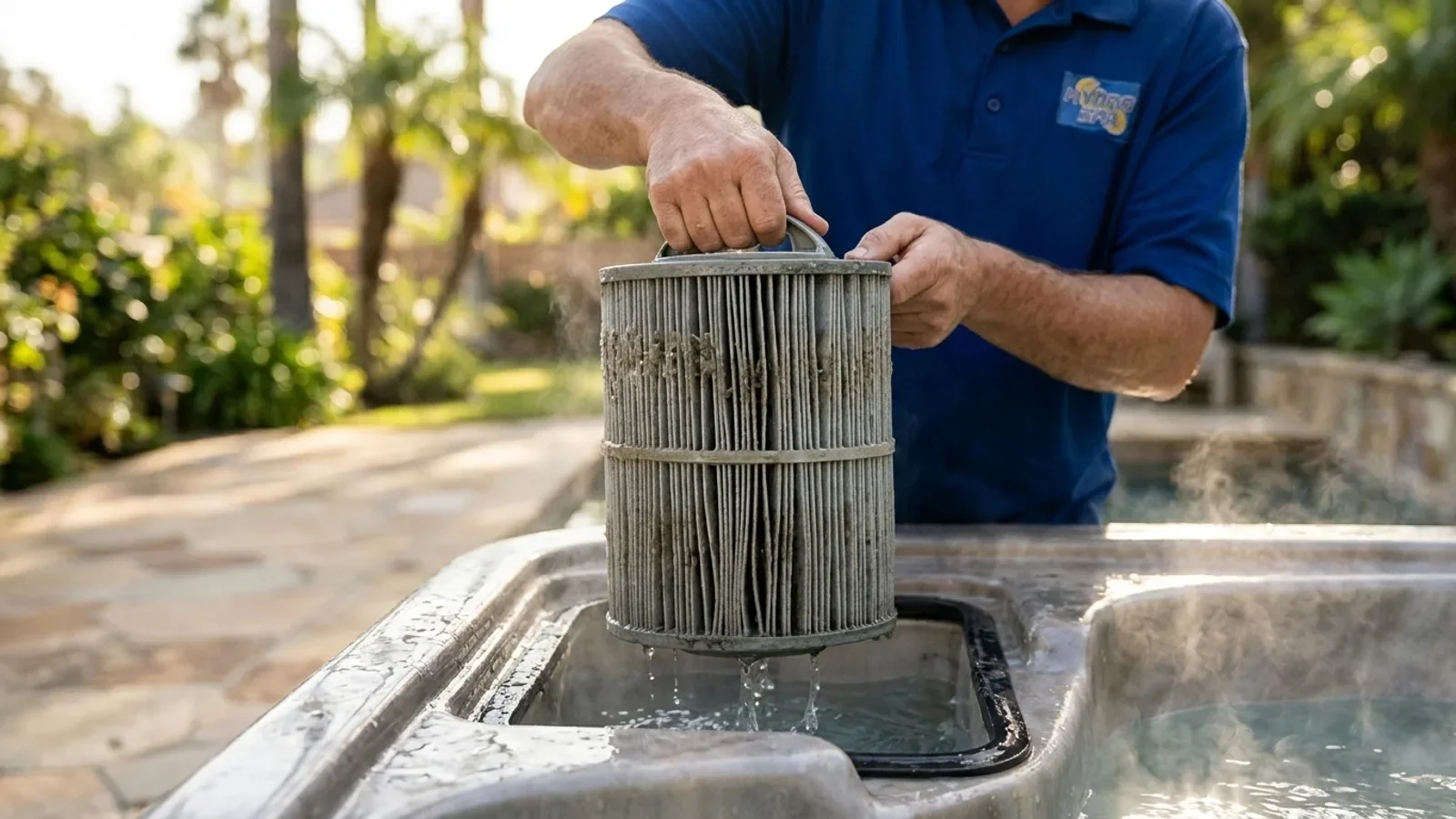
A recurring service puts a tech on your property on a schedule. They balance water, clean or rotate filters, check equipment and catch small issues before they turn into repair calls. For busy owners and rental properties, this is often the calmer option.
The quality gap here is in consistency. Anyone can drop chemicals in a tub. A good maintenance tech tests and records readings, adjusts for how heavily the spa is used, and notices when something’s drifting. A slow pump, a weeping fitting, a cover that’s starting to waterlog. Those notes are where the value lives.
Questions worth asking a maintenance provider:
- Do you test the water every visit, and will you share the readings?
- How do you adjust for our local water?
- What happens if you spot a mechanical problem during a routine visit?
- Do you handle draining and deep cleaning, or only chemical service?
- Is the same tech usually assigned to my spa?
If your interest is mostly in keeping water healthy between visits, our guide to keeping your spa in shape after a service visit covers the owner’s side of the routine.
Option three: a full-service spa company
Some spa problems don’t stay in one lane. A tub with a cracked shell might need to be moved. A failing older unit might be better replaced than repaired. A new backyard layout might need a swim spa or sauna placed alongside the hot tub. A full-service company handles all of that with one point of contact.
That’s the model we run at Hydro-Spa Outlet. Our team covers hot tub repair, maintenance, drain and cleaning, installation, hot tub moving, swim spa services, and traditional and outdoor saunas. The practical benefit is continuity. The people who installed or moved your spa understand its setup when it needs service later.
The thing to vet with any full-service outfit is honesty about repair versus replace. A company that also sells spas should be able to explain, in plain terms, why a repair makes sense or doesn’t. Ask them to walk you through that reasoning. If they can, that’s a good sign.
Comparing the three approaches
The table below lines the three service models up across the criteria that matter most when vetting a technician in LA. It doesn’t rank them. It shows where each one fits.
| Criteria | On-call repair | Recurring maintenance | Full-service spa company |
|---|---|---|---|
| Best suited for | Owners who manage their own water and need occasional fixes | Busy owners, rentals, heavy-use spas | Owners with mixed needs (repair, moving, replacement, saunas) |
| Diagnostic depth | Varies widely by tech; ask how they test | Steady, catches drift between failures | Broad, with knowledge of installation and equipment history |
| Water chemistry handling | Usually not included | Core of the service | Available as part of maintenance plans |
| Drain and deep clean | Sometimes, on request | Often included or scheduled | Included in service offerings |
| Help with moves or replacements | Rarely | Rarely | Yes, one point of contact |
| Record keeping | Per visit only | Ongoing readings and notes | Ongoing, tied to the spa’s full history |
Why vetting a spa tech is different in Los Angeles
LA puts its own pressures on hot tubs, and a good local tech should bring them up before you do.
Hard water. Much of the LA area gets water that runs high in dissolved minerals, much of it imported from the Colorado River and Northern California. In a hot tub, heat drives those minerals out of solution, and scale settles on heater elements, jets and sensors. Ask any technician how they handle calcium hardness and scale. If they shrug, keep looking. We go further into this in our piece on handling LA’s mineral-heavy water in a spa.
Sun and heat exposure. Long, dry summers and strong UV are tough on covers, cabinet panels and exposed plumbing. Late-summer heat waves also push sanitizer demand up fast. A tech who knows the area will check cover condition and adjust chemistry for the season.
Tight lots and hillside access. Between canyon homes, narrow side yards and multi-level properties, getting equipment to a spa isn’t always simple. Access affects how a repair or move is planned, and an experienced local crew will ask about it up front.
Cool-season use. LA’s mild winters mean people use their spas more in the cooler, damp months, not less. Heaters work harder on chilly evenings, which is when weak elements and tired circulation pumps tend to give out. A tech worth hiring will check heater performance and flow ahead of that stretch.
Permits and electrical work. New installations and electrical changes can involve permits, and requirements vary between the City of Los Angeles and surrounding cities. A good tech won’t hand you a legal answer. They’ll tell you to check local requirements or bring in a licensed electrician where needed.
Red flags and green flags during the first call
You can learn a lot in five minutes on the phone. Listen for these.
Green flags:
- They ask about the spa’s age, model and symptoms.
- They explain what the visit will cover and what might come after.
- They mention water testing, even on a repair call.
- They’re clear about what they do and don’t handle.
- They talk about cost in terms of what drives it, like parts, access and diagnosis time.
Red flags:
- A firm diagnosis before anyone has seen the spa.
- Pressure to replace the whole unit without explanation.
- No written scope or estimate before work begins.
- Vague answers about electrical safety.
- No mention of how they’ll follow up if the issue returns.
Trust the pattern, not one answer.
For a sense of what pushes service quotes up or down, our breakdown of expert jacuzzi maintenance Los Angeles walks through the main cost drivers without the guesswork.
Which is right for Los Angeles homes?
Here’s our honest take.
If you’re comfortable testing and balancing water yourself and your spa is fairly new, an on-call repair relationship is enough. Just pick a tech who diagnoses carefully and explains the cause.
If you use your spa often, rent out your property, or simply don’t want to think about chemistry, recurring maintenance is usually the better fit in LA. Hard water and heat swings mean small problems build quietly. Regular visits catch them.
If your spa is older, you’re weighing repair against replacement, you’re planning a move or remodel, or you’ve got a sauna or swim spa in the mix, a full-service company saves you from coordinating three different vendors.
Many LA owners end up blending these. They keep a maintenance schedule and rely on the same company for repairs when they come up. That’s a sensible middle path. It also keeps one set of records on your spa, which makes every future diagnosis faster.
Not sure where your tub fits? It helps to read through our full guide to caring for a jacuzzi in LA before your first call, so you know which questions matter for your setup.
Frequently Asked Questions
What should I ask a hot tub technician before hiring them?
Ask how they diagnose problems, whether they test water during repair visits, and how they handle LA’s hard water. Also ask for a written scope before work begins and what happens if the issue comes back.
Is recurring maintenance worth it for a Los Angeles hot tub?
For many owners it is, especially with frequent use or rental properties. Regular visits help catch scale, chemistry drift and early equipment wear before they turn into bigger repairs.
How often should a hot tub be drained and cleaned in LA?
It depends on how heavily the spa is used and how mineral-heavy your water is. Our guide to a realistic drain-and-clean schedule for LA spas explains how to set the right interval.
Can a hot tub technician handle electrical problems?
A spa tech can diagnose and repair the spa’s own components. Issues with the home’s wiring, breaker panel or dedicated circuit should go to a licensed electrician, and a good tech will tell you when that’s the case.
Should I repair or replace an older hot tub?
It depends on the shell, the cabinet, the equipment and how often repairs have been needed. Ask your technician to explain their reasoning in plain terms so you can make the call with full information.
Ready to talk to a tech who explains the work?
Choosing a hot tub technician in Los Angeles comes down to fit and clarity. Know which service model suits your spa, screen for careful diagnosis, and favor the person who explains rather than guesses. If you’d like a team that handles repair, maintenance, draining, moving and installation under one roof, book a visit with the Hydro-Spa Outlet service crew and we’ll walk you through what your spa needs.