You lift the cover after a few busy days and something’s off. The water has a faint haze, there’s a chalky ring at the waterline, and the jets sound a little strained when they kick on. If you own a hot tub in Los Angeles, that moment is familiar. Good jacuzzi maintenance in Los Angeles comes down to a handful of habits, a sensible drain schedule, and knowing when to call a technician. This guide covers all of it.
What jacuzzi maintenance in Los Angeles actually involves
People search for “jacuzzi” when they mean any hot tub or home spa. The care is the same. A spa is a small body of hot water that gets heavy use, so it changes fast. Heat speeds up chemical reactions, bathers bring in lotions and sweat, and the filters work constantly. Small lapses show up within days.
Routine care falls into three buckets:
- Water chemistry: keeping sanitizer, pH and alkalinity in range so the water stays clear and comfortable.
- Physical cleaning: filters, waterline, shell, cover and the plumbing lines that hide biofilm.
- Equipment health: pumps, heater, jets, control panel and seals, which wear over time.
The first two are mostly homeowner jobs. The third is where a trained technician earns their keep. Skip any one of them and the other two get harder.
The short version: a routine that works
Here’s the rhythm we recommend for most residential spas in the area. Treat it as a starting point, then adjust for how often your tub gets used and how many people use it.
- Every few uses: test the water with strips or a reagent kit and adjust sanitizer. Check that the cover is seated and the straps are latched.
- Weekly: test pH and total alkalinity, shock the water if bather load was heavy, and wipe the waterline with a soft cloth to keep scale and oils from bonding to the shell.
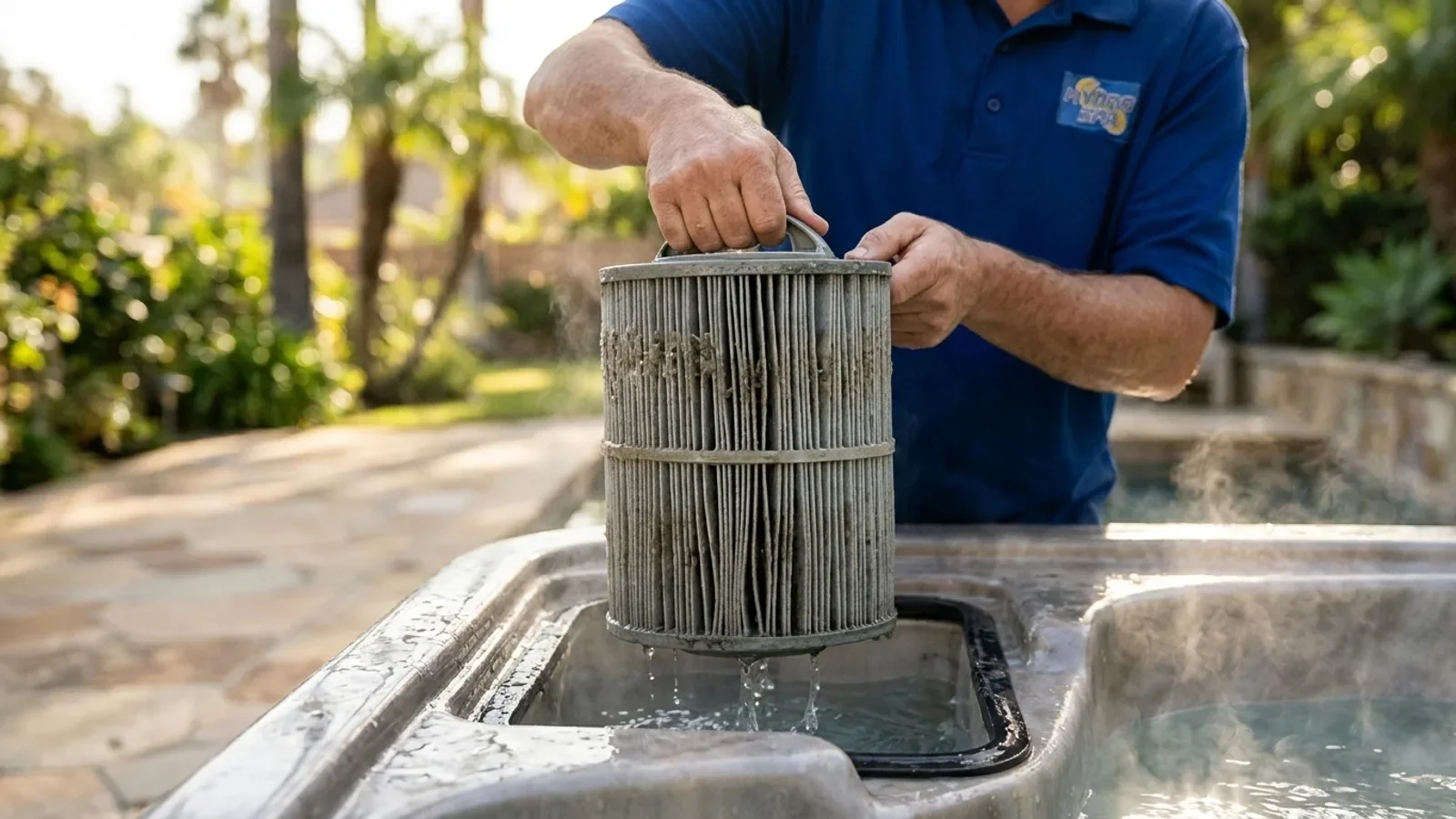
- Every couple of weeks: pull the filter cartridges and rinse them with a garden hose, working the spray between the pleats from top to bottom.
- Monthly: clean and condition the cover, inspect for cracked hard-cover seams or waterlogged foam, and look under the cabinet for drips.
- Every few months: soak filters in a filter cleaner, then let them dry fully before reinstalling. Many owners keep a spare set and rotate them.
- Every three to four months (often sooner with heavy use): drain, flush the plumbing, clean the shell and refill. This is the reset button for your water.
- Yearly: replace filter cartridges and have the equipment inspected by a technician.
That’s it. Consistency beats intensity. A tub that gets a few minutes of attention every week rarely needs a rescue.
If you’d rather hand the routine off entirely, our team handles recurring hot tub maintenance visits so the water and equipment stay on schedule without you thinking about it.
Spa water care in Southern California: getting the chemistry right
Water chemistry is where most problems start. It’s also where most can be prevented.
The three numbers that matter most
Sanitizer (chlorine or bromine) keeps bacteria in check. pH controls how effective that sanitizer is and how the water feels on skin and eyes. Total alkalinity acts as a buffer that keeps pH from swinging. Get alkalinity in range first, then pH, then sanitizer. Fixing them in the wrong order is why some owners feel like they’re chasing their tails.
Calcium hardness matters too, especially here. More on that below.
Signs the chemistry is off
- Cloudy or dull water, even after shocking
- Foam that builds up when the jets run
- A strong “chlorine” smell, which usually means used-up sanitizer rather than too much
- White crust on jets, the waterline or the heater element
- Water that feels slick or leaves skin itchy
When you see two or three of these at once, testing and balancing usually isn’t enough. The water is tired. A full drain and refill is the faster fix.
Why Los Angeles water and weather are hard on hot tubs
This is the local part, and it matters more than most generic care guides admit.
Hard water. Much of the Los Angeles area draws on imported supplies from the Colorado River and Northern California, and the tap water is widely known for being hard, meaning it carries a lot of dissolved calcium and magnesium. Heat drives those minerals out of solution. In a spa, that shows up as scale on the shell, crusted jets, and deposits on the heater element that make it work harder. Hard water also makes pH drift upward. Owners in the Valley and across the basin often notice the chalky waterline first. We go deeper on this in our guide to managing hard water in an LA hot tub.
Sun and heat. Strong Southern California sun breaks down chlorine quickly when the cover is off, and UV exposure fades and cracks vinyl covers and cabinet panels over time. Inland neighborhoods like the San Fernando and San Gabriel valleys run hotter than coastal ones, which raises evaporation and concentrates minerals between refills.
Dust, ash and debris. Dry Santa Ana wind events tend to arrive in fall and winter, blowing dust, leaves and sometimes ash into uncovered tubs. That organic load eats sanitizer and clogs filters fast. After a windy stretch, it’s worth rinsing filters and testing the water even if you haven’t used the spa.
Mild winters mean year-round use. Here in November, while much of the country is shutting spas down, LA owners are heading into their favorite soaking months. Cooler evenings mean the heater runs more, and steady use means the tub never really gets an off-season. That’s why consistent maintenance matters more here, not less.
Water rules. The region periodically puts conservation measures in place during droughts, and requirements differ between cities and water providers. If you’re planning a drain and refill during a restricted period, check current rules with your local water agency before you start.
Hot tub drain and cleaning in Los Angeles: when and how often
Draining is the step owners put off longest. It shouldn’t be.
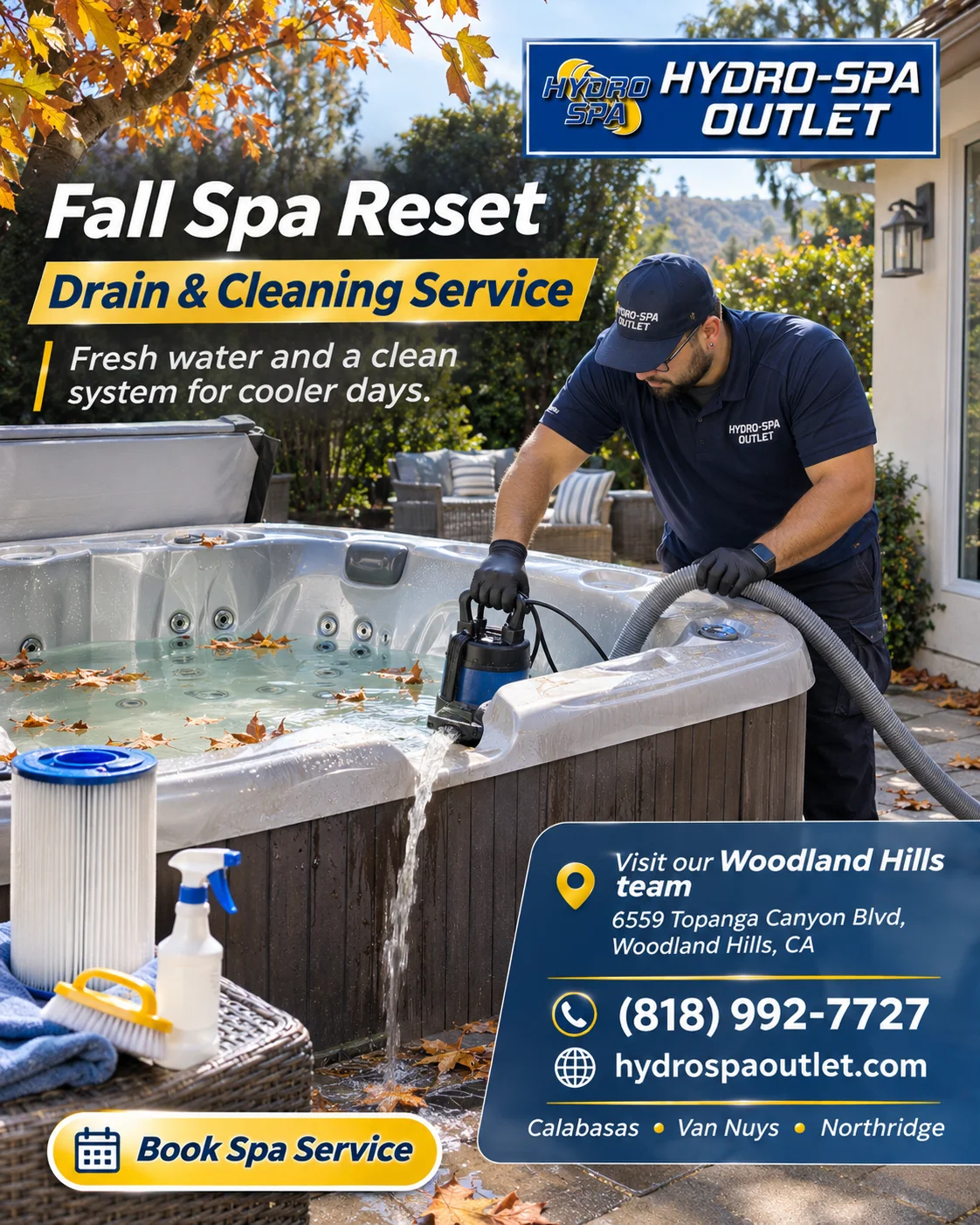
Every time you add chemicals, dissolved solids build up. Eventually the water can’t hold any more, and no amount of balancing makes it right. Given our hard source water, LA tubs often hit that point sooner than the label on a chemical bottle suggests.
A proper drain and clean usually includes:
- A line flush before draining to loosen biofilm hiding in the plumbing
- Draining the tub fully, including low spots
- Cleaning the shell with a non-foaming spa-safe cleaner and descaling the waterline
- Deep-cleaning or replacing filters
- Wiping down jets, the cover underside and the filter compartment
- Refilling, ideally with a pre-filter on the hose, then rebalancing from scratch
Where you send the drained water matters too. Discharge rules vary by city, so check your local guidance before running a hose to the street. For a deeper look at timing, see our drain and clean schedule for LA spas.
Many owners prefer to book this one out. Our technicians handle the flush, drain, descale and refill in a single visit. If your water is looking tired, reach out to Hydro-Spa Outlet and we’ll set up a time.
Jacuzzi repair in Los Angeles: signs it’s more than maintenance
Good care extends equipment life. It doesn’t make parts last forever. Some symptoms point past water chemistry to hardware:
- Water won’t heat or heats slowly. Could be a scaled heater element, a sensor, a flow problem or a failing component.
- Error codes on the panel. Flow, temperature and sensor codes each point to different causes.
- Grinding, humming or screeching from the pump. Bearings and motors give audible warnings before they quit.
- Weak or dead jets. Sometimes a clogged filter, sometimes an airlock or a failing pump.
- The water level drops faster than evaporation explains. Look for damp spots under the cabinet.
- Breaker or GFCI trips. Stop using the tub and call a professional.
Hot tubs combine water, high-amperage electrical circuits and heating elements. Opening the equipment bay to diagnose electrical faults isn’t a DIY job. Safe owner checks stop at the basics: is the filter clean, is the water level above the skimmer, is the breaker on. Past that, call a licensed technician.
Our crew handles hot tub repair and maintenance across Los Angeles, from heater and pump problems to leaks and control issues. Not sure who to trust in your backyard? Our guide on what to look for in a spa technician covers the questions worth asking.
Hot tub maintenance cost factors to understand
We won’t quote figures here, because every tub and every yard is different. But the factors that move the cost are predictable, and knowing them helps you compare options fairly.

| Factor | Why it affects cost | What you can control |
|---|---|---|
| Service frequency | Recurring visits spread effort out; one-off rescues of neglected water take more labor and chemicals. | Stick to a schedule so problems stay small. |
| Tub size and seating | Larger spas and swim spas hold more water, need more chemicals and take longer to drain and refill. | Not much, but plan care around the volume you have. |
| Water hardness and condition | Heavy scale means descaling, extra flushing and sometimes filter replacement. | Use a hose pre-filter and keep calcium in range. |
| Filter condition | Worn or torn cartridges need replacing and can cause downstream equipment strain. | Rinse regularly and replace on schedule. |
| Access to the tub | Tight side yards, stairs, hillside lots or decks slow every visit. | Keep a clear path to the equipment bay. |
| Equipment age | Older pumps, heaters and controls fail more often and parts can be harder to source. | Address small noises and codes early. |
| Cover condition | A waterlogged or cracked cover lets in debris and heat loss, raising chemical and energy demands. | Clean, condition and replace when foam saturates. |
When comparing quotes, ask exactly what’s included. Does a drain and clean include a line flush? Are chemicals and filters separate? Is a diagnostic visit credited toward a repair? Clear scopes make fair comparisons.
After the service visit: keeping results longer
Fresh water and clean filters give you a clean slate. What you do in the first couple of weeks decides how long it lasts.
Test the water a day after refill and again a few days later, since fresh fill water settles as it heats. Keep the cover on whenever the tub isn’t in use. Rinsing off before soaking cuts down on lotions and deodorant entering the water, which may help keep foam and cloudiness down. And keep an eye on the waterline. Catching scale early is far easier than scrubbing it off later.
Our guide to caring for your spa after a service walks through those first days in more detail.
Frequently Asked Questions
How often should I drain my hot tub in Los Angeles?
Most residential spas do well with a drain and refill every three to four months. With heavy use or very hard fill water, many LA owners find they need to drain sooner, especially if the water stays cloudy after balancing.
Is a jacuzzi different from a hot tub when it comes to maintenance?
No. “Jacuzzi” is commonly used for any hot tub or home spa, and the care routine of water testing, filter cleaning, draining and equipment checks is the same.
Why does my spa have white crust on the jets and waterline?
That’s usually mineral scale from hard water, which is common in the Los Angeles area. Keeping calcium hardness in range, using a hose pre-filter and descaling during drains helps reduce buildup.
Can I use my hot tub year-round in LA?
Yes, and most owners do, since winters here are mild. Year-round use means filters and water chemistry need consistent attention through every season.
When should I call a technician instead of handling it myself?
Call a professional for error codes, heating failures, pump noises, leaks or any tripped breaker. Electrical and heater work on a spa should be handled by a trained technician.
Do you service swim spas too?
Yes. Hydro-Spa Outlet works on swim spas as well as standard hot tubs, covering maintenance, cleaning and repair.
Keep your spa ready for the next soak
A clean, balanced hot tub doesn’t happen by accident. It’s a steady routine, adjusted for LA’s hard water, strong sun and year-round use. Handle the weekly basics yourself, drain on schedule, and bring in help when the equipment starts talking back. If you’d like a hand with any of it, contact Hydro-Spa Outlet to schedule maintenance, a drain and clean, or a repair visit.