How often should you drain a hot tub in Southern California? For most Los Angeles households, every three to four months is the working rule. Your water will tell you sooner if it needs it. Here are seven signals that set the real schedule for spas from the Valley to the coast, and what to do about each one.
1. The calendar says it’s been three or four months
Start with the baseline. Most manufacturers suggest a full drain and refill every three to four months for a typical residential spa, and that’s the interval we use as a default for Los Angeles homes. It isn’t magic. Over time, every dose of sanitizer, every bit of sunscreen and every rinse of shampoo residue leaves dissolved solids behind. Filters can’t remove them, and chemicals can’t break them down. Eventually the water gets “tired” and stops responding the way it should. Put a reminder in your phone the day you refill. If none of the other signs on this list show up first, that reminder is your cue. Light-use spas can sometimes stretch a bit longer. Heavy-use spas almost never can.
2. Your chemicals stop working the way they used to
This is the most reliable sign, and owners often miss it. You add sanitizer, test an hour later, and the reading barely moved. You adjust pH, and it drifts back by morning. That’s usually a sign of high total dissolved solids, and no amount of extra product will fix it. Pouring in more chemicals just adds to the problem. When balancing starts feeling like a daily fight, a drain is cheaper than chasing numbers. If you’re unsure whether it’s the water or the equipment, that’s where our professional jacuzzi maintenance service helps, because a technician can test properly and rule out a failing component before you dump a full tub.
3. Foam, cloudiness or a smell that won’t go away
Healthy spa water is clear and close to odorless. Foam that rises the moment the jets kick on usually comes from built-up lotions, detergents left in swimsuits and body oils. Cloudiness that survives a filter rinse and a shock treatment points the same direction. So does that sharp, chemical smell people often mistake for “too much chlorine.” It’s often the opposite, a sign the sanitizer is tied up and working poorly. Defoamers can mask the symptom for a weekend gathering. They don’t solve it. If the water looks dull, feels slick or smells off after a reasonable round of treatment, plan the drain. You’ll get better results from a clean start than from a fourth bottle of clarifier.
4. You use it more than you used to
Bather load changes everything. A couple who soaks twice a week is on a very different schedule from a family of five using the tub every night, or a home that hosts friends most weekends. More people means more oils, more sweat and more contaminants per gallon. A rough way to think about it: if your household uses the spa a lot more than when you last refilled, shorten the interval. Many busy Los Angeles households end up draining closer to every two months. Short-term rental hosts often go shorter still, since guest turnover adds unknowns. Showering before getting in genuinely helps. So does keeping swimsuits rinsed in plain water instead of washing them in detergent.
5. Los Angeles sun, heat and water change the math
This is where Southern California differs from the manuals written for colder places. Our spas run outdoors almost all year, and that matters. Strong, steady sunshine breaks down unstabilized chlorine quickly whenever the cover is off. Long dry stretches and warm afternoons in areas like the San Fernando Valley and the Inland Empire edge raise water temperature and evaporation. Every time you top off lost water, you add more minerals. And Los Angeles tap water is on the hard side in much of the region, so calcium and dissolved solids climb faster than they would with softer water elsewhere. Add Santa Ana wind events that blow dust, ash and leaves under loose covers, and SoCal tubs simply age their water faster. Our guide to managing hard water in LA spas goes deeper on the mineral side.

Seasonally, the drain itself is easier in our cooler months. Late fall through early spring brings milder days, so refilling and reheating puts less stress on the water and on you. Many owners schedule a fresh fill before the holidays, when the tub sees the most guests.
6. Scale, slime or grit on the shell and jets
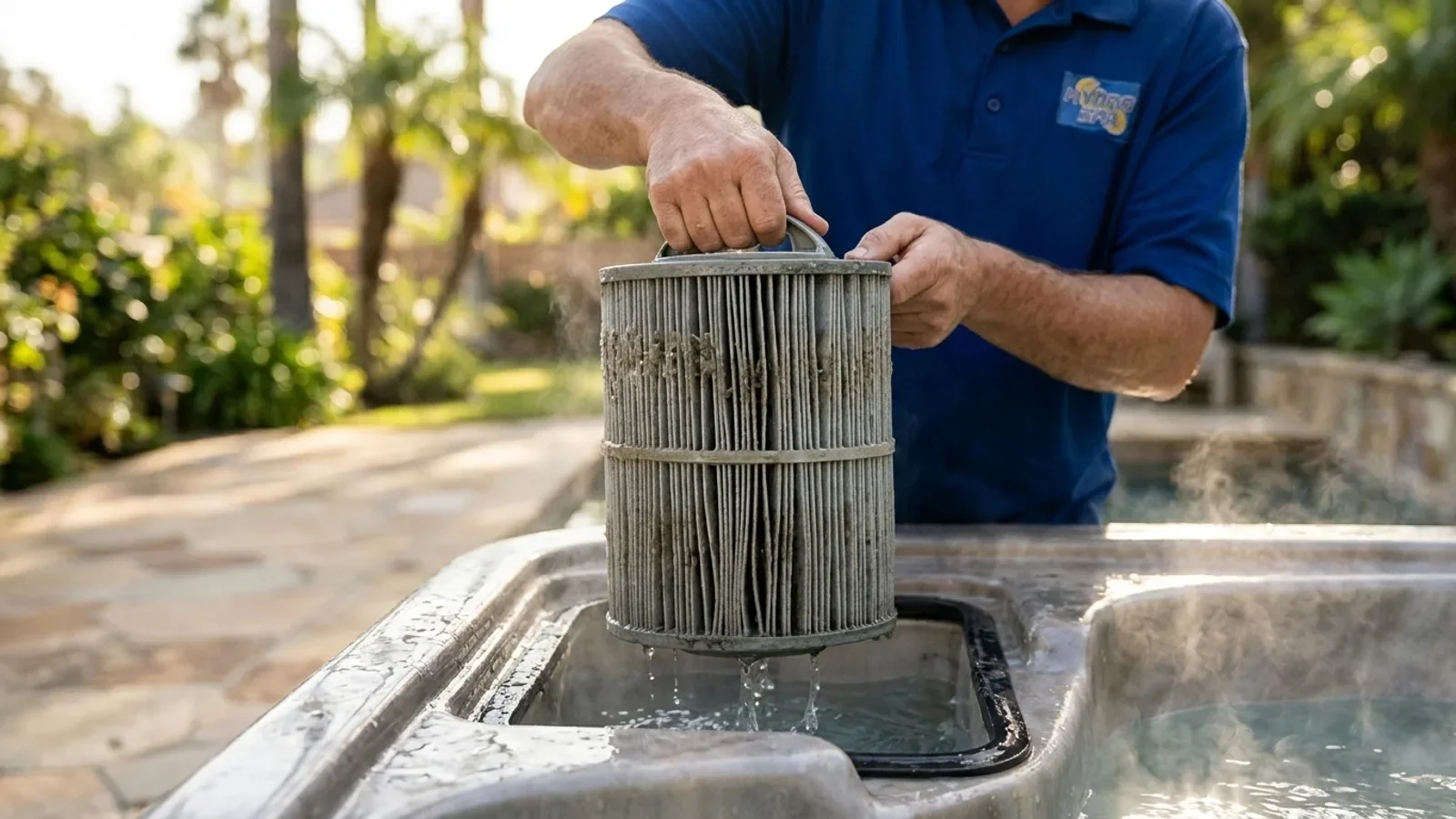
Look and touch. A chalky white ring at the waterline is scale, a classic hard-water symptom around Los Angeles. A slick feel inside the filter well or around the jets can mean biofilm, which builds up inside plumbing where you can’t see it. Grit on the floor of the tub usually means debris is getting past the cover or the filters need more attention. Any of these is a good reason to drain, and a drain is the right moment to clean properly. That means flushing the lines with a purge product before emptying, wiping down the shell with a spa-safe cleaner, and cleaning or replacing filter cartridges. Skip household cleaners. Many of them foam or leave residue that cause the next fill to start out unbalanced.
7. Something sounds or behaves differently
Sometimes the clue isn’t the water at all. A heater that takes longer to reach temperature, jets with weaker pressure or a pump that sounds rougher than usual can all be tied to scale, clogged filters or debris. A drain gives a technician a clear look at the shell, fittings and plumbing. That said, electrical components, heaters and pumps aren’t homeowner projects. If you notice tripping breakers, error codes or a burning smell, turn the spa off and call a licensed professional. Our team handles hot tub drain, cleaning and repair visits across Los Angeles, and we can usually tell during a drain whether the issue is maintenance or something that needs a repair. Not sure what to look for in a tech? Read our tips on choosing a hot tub technician.
A sensible drain-and-clean routine
Between full drains, the small habits keep the interval from shrinking. Rinse filters every week or two with a garden hose. Test water a couple of times a week, more in summer. Keep the cover closed and secured, especially during wind events. Shock after heavy use. And after any professional visit, follow the guidance in our after-service care checklist so the fresh water stays fresh longer.
If testing, balancing and draining every few months sounds like more than you want to handle, recurring service is an option. We can set a schedule based on how your household actually uses the tub, then adjust it as the seasons change. Learn more through our complete Los Angeles jacuzzi care guide.
Frequently Asked Questions
How often should I drain my hot tub in Los Angeles?
Every three to four months works for most households. Heavy use, hard water and frequent top-offs during hot, dry weather can push that closer to every two months.
Is it better to drain a hot tub in winter or summer in Southern California?
Our mild late fall and winter months are usually easier, since refills reheat with less strain and the water holds chemistry well in cooler weather. Summer drains are fine too, just keep the cover on so the sun doesn’t eat through sanitizer.
Can I just add more chemicals instead of draining?
Not for long. Once dissolved solids build up, extra chemicals tend to make balancing harder, and a fresh fill is often the more practical fix.
The bottom line
Three to four months is the starting point. In Los Angeles, sun, heat, hard water and heavy use often move that date up. If your water is fighting you, Hydro-Spa Outlet can drain, clean and reset your spa so it’s ready to enjoy again.